Hayadan > S
S
- Avi Blizovsky
- No comments
Although all observations of 3I/ATLAS point to a natural comet, SETI researchers took advantage of its rare visit to search for technological signatures. The search did not turn up an artificial signal, but it showed that it is possible to quickly check
- Avi Blizovsky
- No comments
A new study does not claim to have found alien spacecraft, but rather highlights another problem: Most of the solar system has not yet been scanned with sufficient resolution to rule out small artificial objects or technological remnants.
- Avi Blizovsky
- No comments
The International Academy of Astronautics has updated SETI protocols: scientific verification before announcement, transparent publication of data, protection of researchers — and a ban on responding to a signal without international consultation.
- Avi Blizovsky
- 2 תגובות
SETI researchers used the VLA and MeerKAT telescope to search for narrow radio signals from the intriguing exoplanet. None survived the noise filters, but the method will be used in future searches
- Avi Blizovsky
- No comments
Astronomers propose a new way to identify alien megastructures: look for extremely cold "stars" that emit mostly infrared light and appear free of dust.
- Avi Blizovsky
- No comments
Even if signals from technological civilizations reached our region, they may not have been detected due to limitations in range, duration, and intensity. The researchers conclude that the chance of detection will increase mainly with prolonged searches over greater distances.
- Avi Blizovsky
- 5 תגובות
A mathematical analysis of the Fermi Paradox suggests that if intelligent life is widespread in the galaxy, the fact that we have not detected any signals from it may indicate that most technological civilizations do not survive more than a few thousand years.
- Avi Blizovsky
- 3 תגובות
New study suggests intelligent life is rare for the Milky Way – and if another civilization exists, it is much older than us
- Avi Blizovsky
- One response
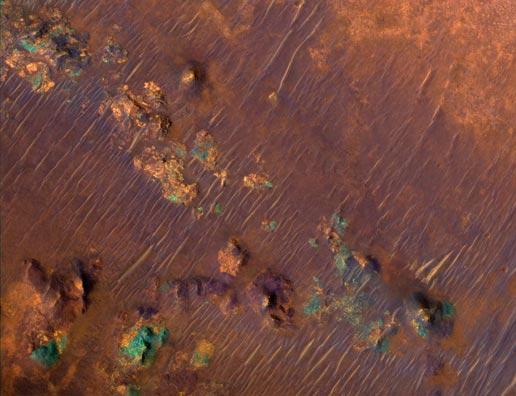
The study indicates that if an alien civilization is trying to detect signals from Earth, the highest chance is during an alignment between Earth and Mars, when transmissions are made to spacecraft and rovers on Mars.
- Avi Blizovsky
- 3 תגובות
New research reveals that civilian and military radar systems emit radio signals strong enough to be detected from hundreds of light years away – and could reveal our existence to intelligent civilizations
- The Hebrew University
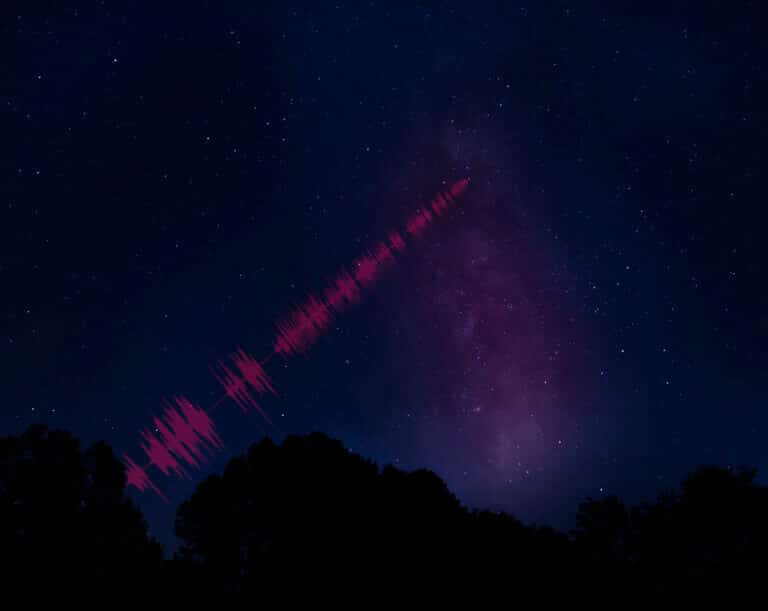
Researchers used machine learning to distinguish between signals from space and signals originating from human activity
- Avi Blizovsky
- 5 תגובות
Scientists propose a new way to search for advanced civilizations: detecting energy signatures of structures around black holes, which may be visible up to 17,000 light-years away
- Science site The Conversation
- No comments
From the revolutionary astronomical achievements to the social activism and inspiration for generations of scientists - how Carl Sagan shaped science and our understanding of the universe.
- Avi Blizovsky
- No comments
The SETI Institute, the SETI Research Center in Berkeley, and the International Center for Radio Astronomy Research in Western Australia. The research is the first attempt to search for extraterrestrial technology in galaxies outside our galaxy, focusing on low frequencies
- Avi Blizovsky
- 4 תגובות
The team identified 1,519 candidate signals that could not be attributed to radio frequency interference. After algorithmic processing, matching signal properties with known interference, and extensive visual inspection, no convincing evidence of signatures was found
- Avi Blizovsky
- 7 תגובות
Akshay Suresh, a graduate student at Cornell University, is leading an unusual scientific activity - a groundbreaking mission called BLIPSS to detect periodic signals emanating from the center of the Milky Way
- Avi Blizovsky
- 7 תגובות
A new project called Signal in Space simulates how Earth will respond to a signal from aliens and invites the public to help decode an extraterrestrial message (roughly)
- Avi Blizovsky
- One response
To filter out unwanted noise and identify interesting signals, the researchers used a machine learning algorithm called a convolutional neural network (CNN). CNNs are a type of artificial neural network that can identify patterns in data,
- Avi Blizovsky
- One response
- Avi Blizovsky
- 25 תגובות
- Avi Blizovsky
- 18 תגובות
- Young Galileo
- Universe Today
- One response
- Avi Blizovsky
- 47 תגובות
- Scientific American Israel
- 30 תגובות
- Avi Blizovsky
- 15 תגובות
- Galileo - The Science Magazine
- 41 תגובות
- Avi Blizovsky
- 75 תגובות
- Universe Today
- 89 תגובות
- Avi Blizovsky
- 41 תגובות
- Galileo - The Science Magazine
- 20 תגובות
- Galileo - The Science Magazine
- 7 תגובות
- Avi Blizovsky
- 4 תגובות
- The knowledge site system
- No comments
- Haim Mazar
- No comments
- The knowledge site system
- No comments
- Avi Blizovsky
- 3 תגובות
- Avi Blizovsky
- No comments
- Dikla Oren
- No comments
- Avi Blizovsky
- No comments
- Avi Blizovsky
- No comments
- Aryeh Seter
- 2 תגובות
- Avi Blizovsky
- One response