Hayadan > Society and history > Scientists
Scientists
- Avi Blizovsky
- No comments
At CES 2026, NVIDIA introduced a new generation of data centers; the choice of name is a tribute to a scientist whose measurements provided crucial evidence for the existence of dark matter
- Avi Blizovsky
- One response
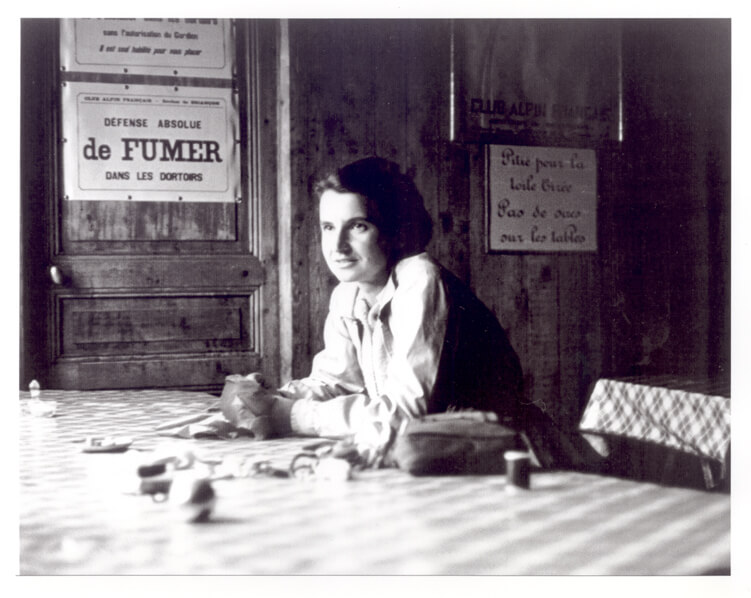
Nobel laureate James Watson has died at the age of 97; along with his seminal contribution to uncovering the structure of DNA with Francis Crick, new historical research highlights Rosalind Franklin’s central role – and
- Prof. Alex Gordon
- 9 תגובות
The surprising life path of Ludwig Wittgenstein – a member of the wealthy Wittgenstein family from Vienna, a student at the Gymnasium in Linz alongside Hitler, an engineer influenced by Frege, a student and friend of Bertrand Russell, an officer on the fronts of World War I
- Prof. Alex Gordon
- One response
From Richard Wagner's article (1850) and Wilhelm Marr's coining of the term "anti-Semitism" (1879), through Lennard and Stark's "German physics" and Bieberbach and Jansch's psychological engineering—to Hilbert's counter-reaction: "Mathematics has no races"
- Prof. Alex Gordon
- 2 תגובות
- Davidson Institute
- 3 תגובות
Nobel Prize winner who identified reverse transcriptase, formulated the “Baltimore Classification” and laid the foundations for modern virology, PCR and antiviral drugs
- Avi Blizovsky
- No comments
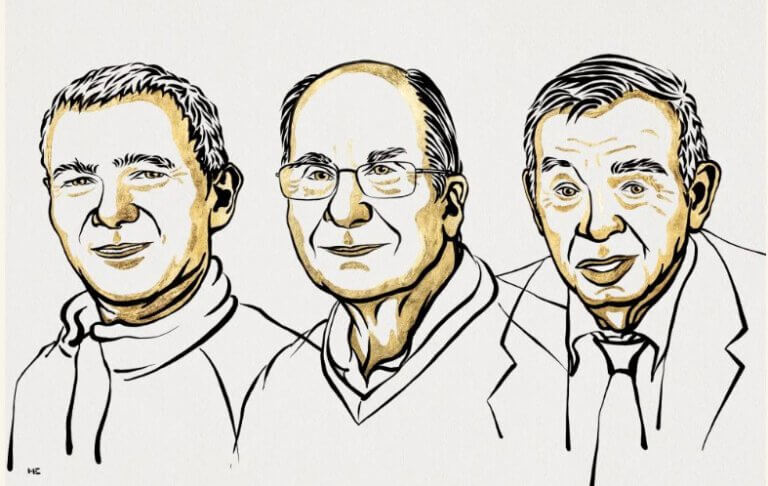
Three researchers – Susumu Kitagawa, Richard Robson and Omar Yagi – have won the Nobel Prize for developing novel porous materials capable of storing, filtering and trapping molecules, with applications ranging from medicine to the climate crisis.
- Dr. Noam Chai
- No comments
This year, three researchers from the University of Santa Barbara won for a series of groundbreaking experiments that established the superconducting qubit – the central component that scientists around the world are now using to build quantum computers. In the article
- Prof. Alex Gordon
- One response
The Jewish-Russian bacteriologist and immunologist who developed vaccines for cholera and tuberculosis, led the fight against epidemics in India, and worked to preserve Jewish identity (although he recommended that the yeshivots he donated to teach students practical subjects) alongside extensive philanthropy.
- Prof. Alex Gordon
- One response
After the American atomic bomb was revealed, Soviet scientist Yuli Khariton moved quickly to achieve deterrence parity for the Soviet Union. How did he become the classified face of the Soviet nuclear program, and what was the personal cost?
- Prof. Alex Gordon
- No comments
Jewish-German physicist, Nobel Prize winner, who helped develop chemical weapons in World War I – and resigned in protest against the Nazis and fought against the use of the atomic bomb
- Prof. Alex Gordon
- 2 תגובות
In 1931, the Central Committee of the Communist Party issued a decree banning philosophy and science that were not "party." The theory of relativity was among them. Semyon Bronstein-Semkovsky defended the theory of relativity and paid for it with his life.
- Prof. Alex Gordon
- One response
The father of mathematician Prof. Abraham Frankel foresaw the danger to Bavarian Jewry due to Jewish participation in the leadership of the communist republic – and from there began Frankel's path towards Zionism and the Hebrew University.
- Prof. Alex Gordon
- 8 תגובות
Matvey Bronstein was one of the first scientists to study quantum theory. Being an expert in many fields of physics and knowing many languages did not help him when he was executed in 1939 by the Soviet authorities.
- Prof. Alex Gordon
- 2 תגובות
- Prof. Alex Gordon
- No comments
Paul Ehrlich, Nobel Prize, chemotherapy, syphilis, immunology, magic bullet, Judaism and science, medical history, pharmacology, Hebrew University
- Science site The Conversation
- No comments
It is likely that we will see more Nobel medals awarded to researchers who used AI tools. As this happens, we may find that the scientific methods honored by those Nobel Prize committees will move away from the simple categories of "physics," "chemistry," and "physiology."
- Dr. Moshe Nahamani
- One response
David Baker from the University of Washington and researchers Demis Hasevis and John Jumper from Google's DeepMind company won the prize for designing artificial proteins and predicting protein structure with the help of a computer
- Dr. Moshe Nahamani
- No comments
John Hadfield and Geoffrey Hinton won the prize for their pioneering research in machine learning using neural networks inspired by the structure of the brain
- Avi Blizovsky
- No comments
The two, John Hopfield from Princeton University and Prof. Geoffrey Hinton from the University of Toronto changed the way machine learning is done for artificial intelligence and promoted the technology becoming as powerful as we know it today
- Dr. Moshe Nahamani
- No comments
The two scientists were recognized for their contribution to the understanding of genetic regulatory mechanisms through the discovery of microRNAs - tiny RNA molecules that play an essential role in the processes of development and function in cells
- Dr. Noam Chai
- One response
The Nobel Prizes are announced at the beginning of October every year, and about a month before that rumors, predictions and speculations are spread about the identity of the candidates and the chances of winning. In recent years, using innovative data analysis tools, forecasting experts
- The Technion
- 2 תגובות
Founder of the Faculty of Physics at the Technion, co-author of the historical article EPR with Albert Einstein and Boris Podolsky
- Dr. Moshe Nahamani
- 2 תגובות
Today, quantum dots, which are tiny nanoparticles whose size determines their properties, illuminate computer monitors and TV screens when these are based on QLED technology. In the field of medicine, quantum dots are currently used
- Dr. Moshe Nahamani
- One response
The 2023 Nobel Prize in Physics was awarded to three researchers: Pierre Agostini, Ferenc Krausz and Anne L'Huillier for "the development of their methods that produce short attosecond pulses
- Dr. Moshe Nahamani
- No comments
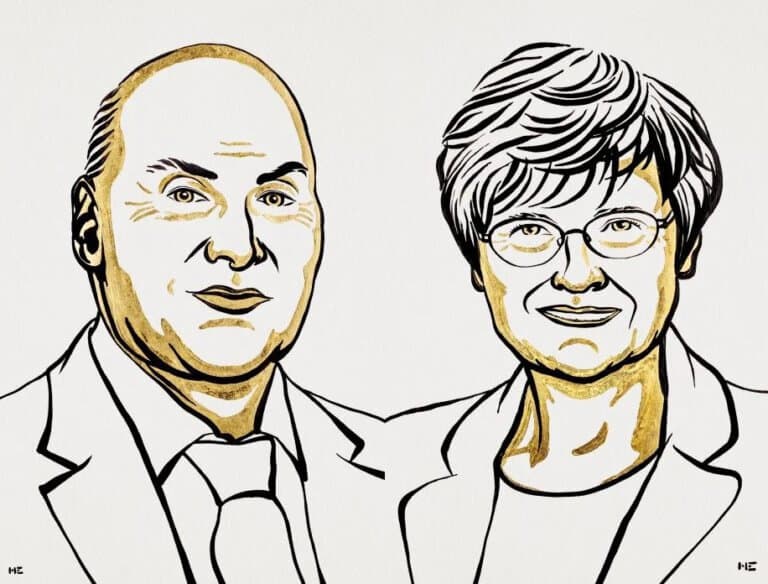
Kariko and Weissman immediately realized that their discovery was of enormous significance for the possible use of messenger RNA in medicine. These important findings were published in 2005, 15 years before the outbreak of the Corona epidemic.
- Avi Blizovsky
- One response
The two, Katalin Kariko and Drew Weissman, were informed about a month ago that they had won the HARVEI Award at the Technion
- The Voice of Science website - the Israel National Science Foundation
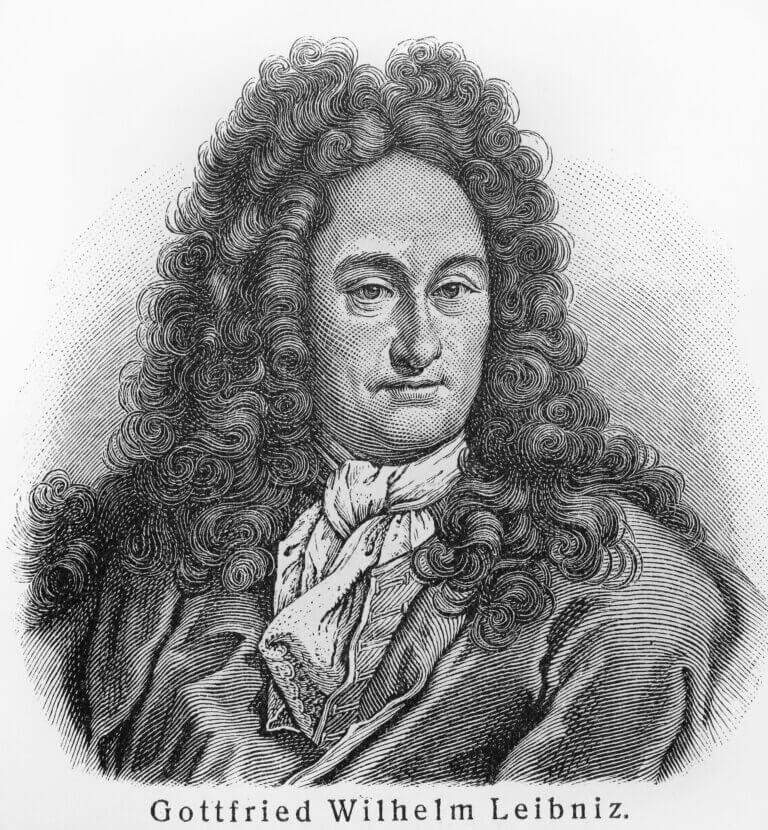
Prof. Ohad Nachumi, Head of the Department of Humanistic Studies and Arts at the Technion, investigates the connection between the old and new world of thought in Leibniz's thought.
- Science site The Conversation
- 5 תגובות
The Soviets did manage to plant spies who provided the secrets of the atomic bomb to the Kremlin and allowed them to detonate the first bomb in August 1949, it was a copy of the bomb built in Los Alamos and dropped by the Americans
- Avi Blizovsky
- 4 תגובות
An article published in Nature details Franklin's part in discovering the "backbone" of the DNA molecule. However, due to the competition between the groups, she avoided publishing a large part of them herself, as well as Watson and Crick
- Prof. Asher Yahlom
- 46 תגובות
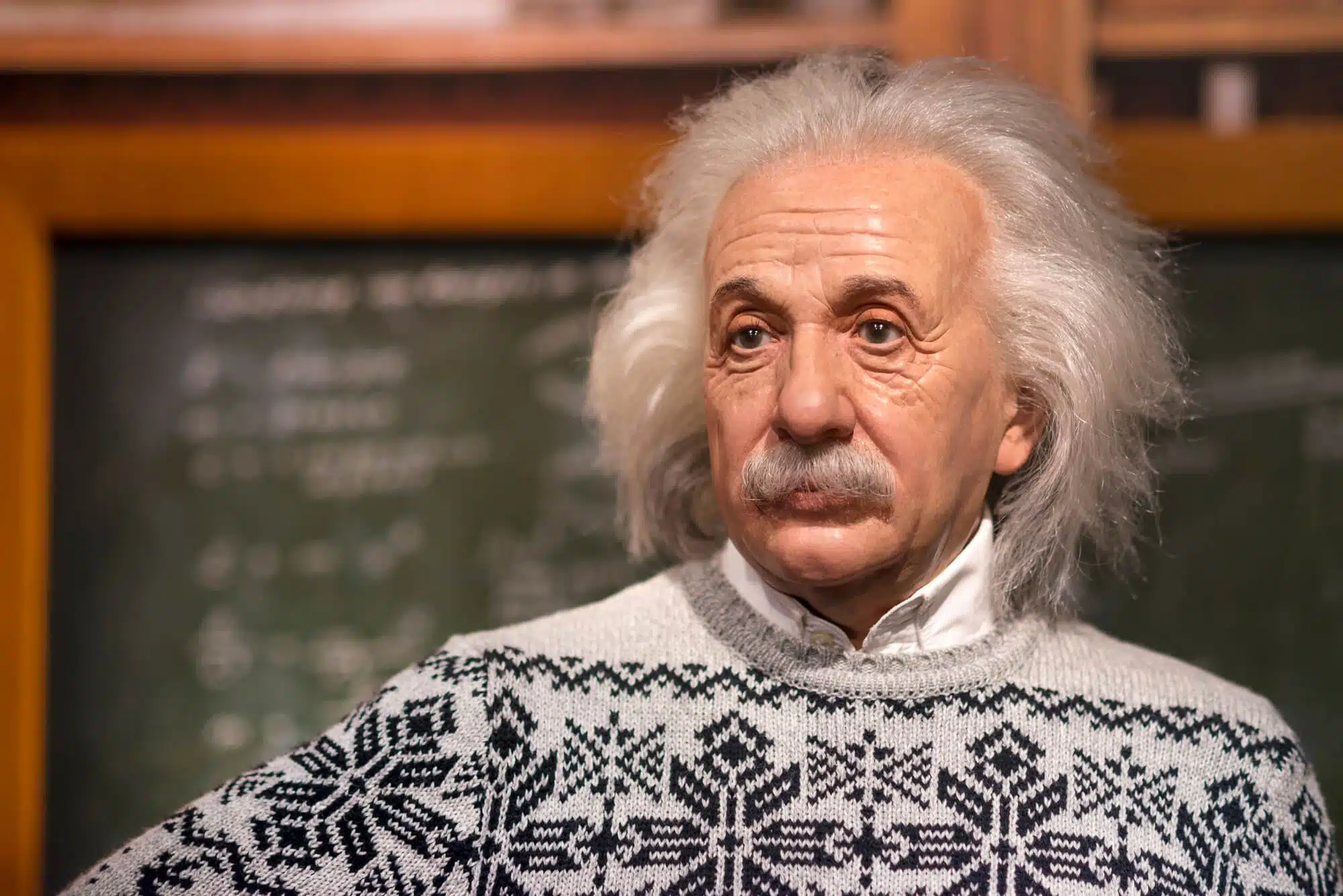
Einstein is considered the greatest theoretician, along with Isaac Newton, the father of classical mechanics. His name became synonymous with genius. He gained worldwide fame in the first quarter of the 20th century thanks to the theory of relativity he developed
- Avi Blizovsky
- No comments
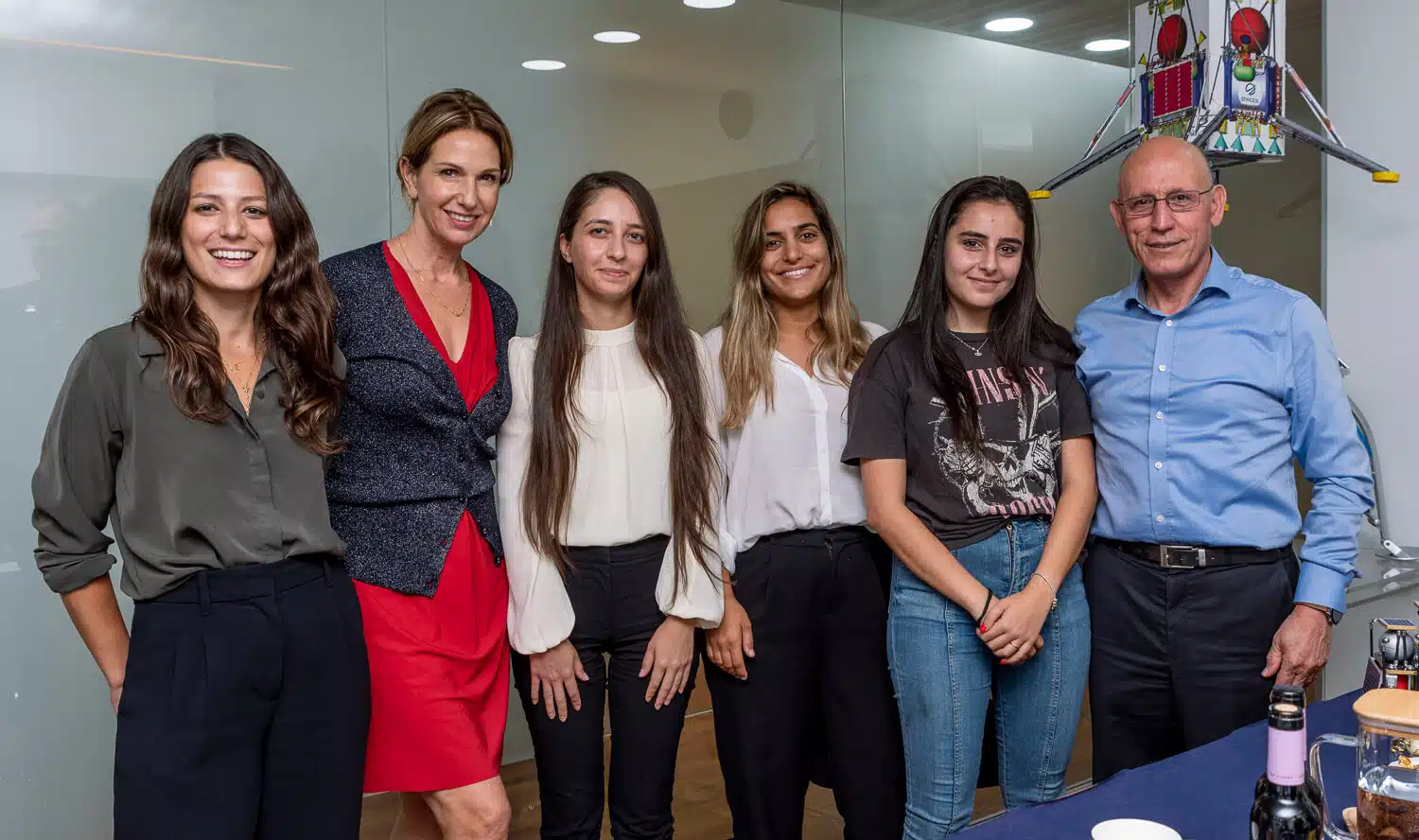
Two of them will be integrated into the development of the Genesis 2 mission which is expected to be launched in 2025
- Avi Blizovsky
- 3 תגובות
- Dr. Moshe Nahamani
- One response
Santa Febo is a Swedish evolutionary geneticist, one of the founding fathers of the field of paleogenetics, leader of the international project to map the Neanderthal human genome, and co-discoverer of Denisovan man
- Avi Blizovsky
- 3 תגובות
From English: Haim Shmueli. Philosophy and Science series edited by Dr. Yehuda Meltzer Attic Books and Yediot Books 312 pages.
- The Technion
Last year Asil Naama, who was then studying for a bachelor's degree in the Faculty of Biomedical Engineering at the Technion, discovered two new asteroids. This is within the framework of NASA's "Asteroid Hunting Campaign".
- Young Galileo
- 2 תגובות
Yes ma'am! Astronaut Peggy Whitson was the first woman appointed mission commander to the International Space Station, was the first woman to command two missions to the space station, and is scheduled to be the second mission commander to be launched
- Avi Blizovsky
- 8 תגובות
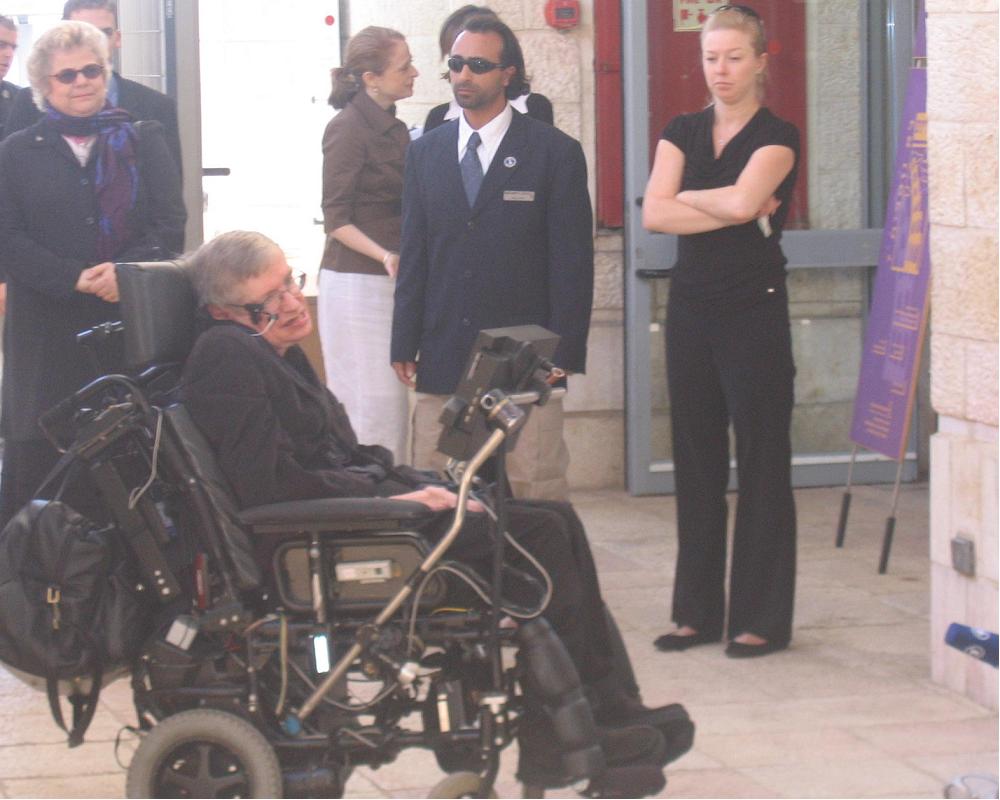
Over the years, we have covered this one of a kind man on the Scientist website, whose eightieth birthday the world celebrates with the help of a Google doodle. Although he is no longer with us for three years, but the idea of
- Bar-Ilan University
On November 7, 1867, Maria Skoldowska, known as Marie Curie, was born in Warsaw, one of the masterpieces of modern science. Curie was the first person to win two Nobel Prizes and the only one to date to win in two fields
- Avi Blizovsky
- No comments
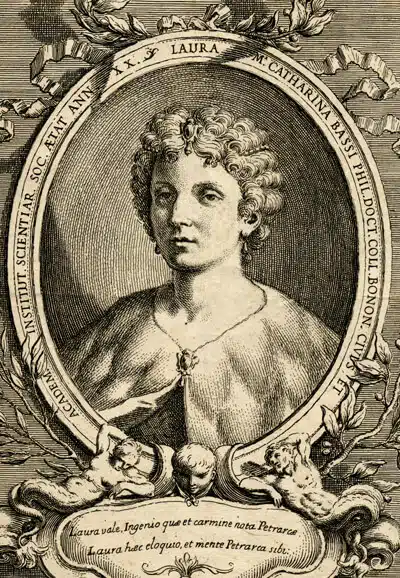
Laura Bassi continuously fought to achieve equal conditions for women who chose an intellectual and professional career in public teaching and research institutions at a time when the universities and the world of academia in Italy and throughout the world were exclusively male environments. With
- Avi Blizovsky
- 14 תגובות
The number of women who received the Nobel Prize in physics increased from three to four, and in chemistry from five to seven (in both cases including Marie Curie). Is this a coincidence or the start of a trend?
- Avi Blizovsky
- 3 תגובות
This is what Prof. Harmona Sorek from the Institute of Life Sciences at the Hebrew University says in an interview with the Scientist website, who is happy about the decision to award Emmanuel Charpentier and Jennifer Doudna the Wolf Prize last year. Now Charpentier is establishing the
- Avi Blizovsky
- 2 תגובות
Prof. Shechtman, chairman of the Wolf Foundation, also tells about the ratio of one-third of the Wolf Prize winners in the respective fields who later win Nobel Prizes, and why there are such large differences in the gaps. Crisper, like nitroglycerin, can be used
- Avi Blizovsky
- One response
Says Prof. Hagai Netzer from the School of Physics and Astronomy at Tel Aviv University who wrote dozens of joint articles with Ganzel
- Dr. Moshe Nahamani
- 11 תגובות
- Dr. Moshe Nahamani
- No comments
The winners are: Harvey Alter from the USA, Mike Houghton from the UK and Charles Rice from the USA
- Science site The Conversation
- 3 תגובות