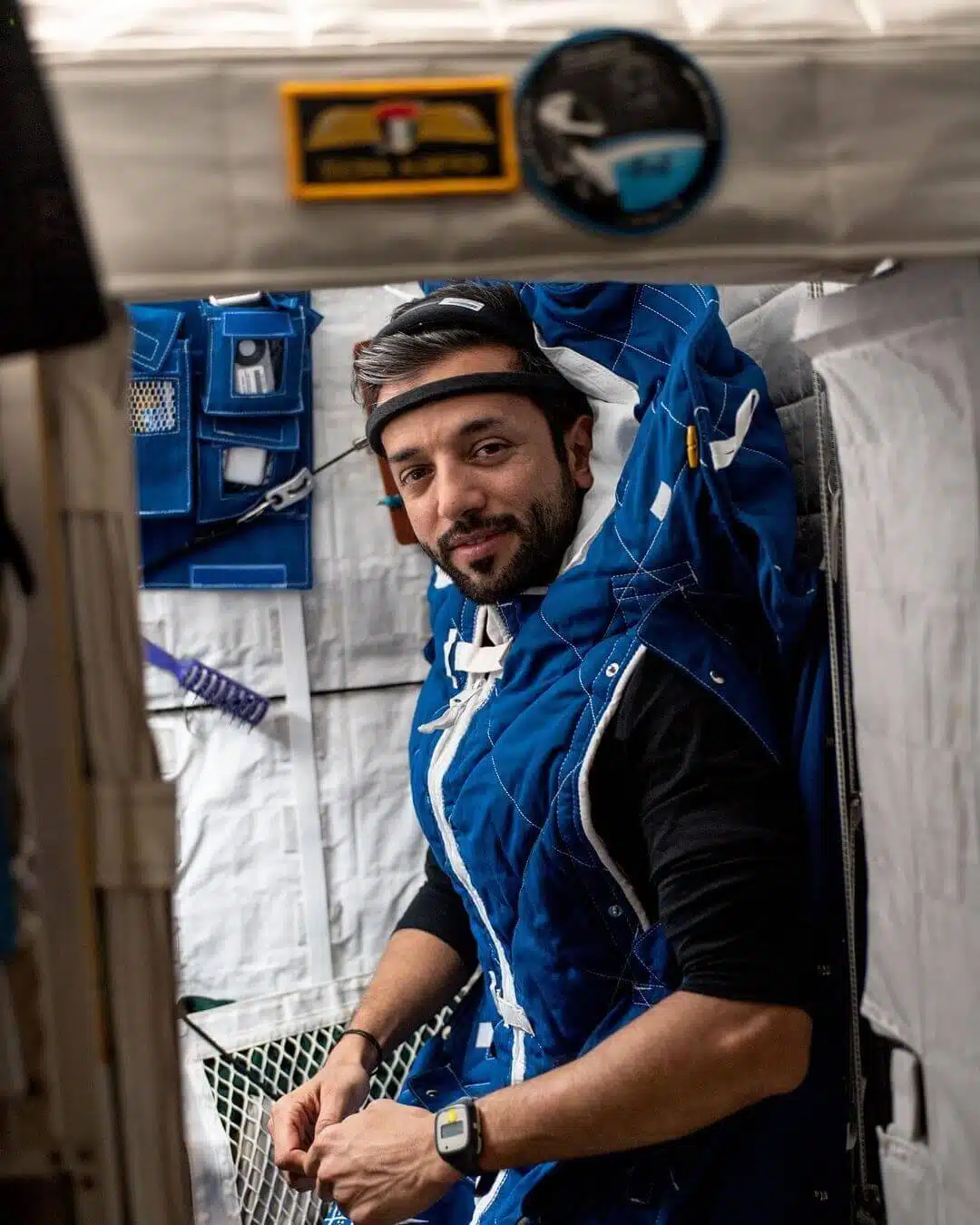
man in space

Atomic bomb in space. Illustration: depositphotos.com.

Protons in space may reveal nuclear weapons hidden in satellites

A study published in Nature suggests using a tiny satellite to detect neutrons that are created when high-energy protons hit nuclear material. According to calculations, monitoring from a distance of four kilometers for about a week could be enough – but
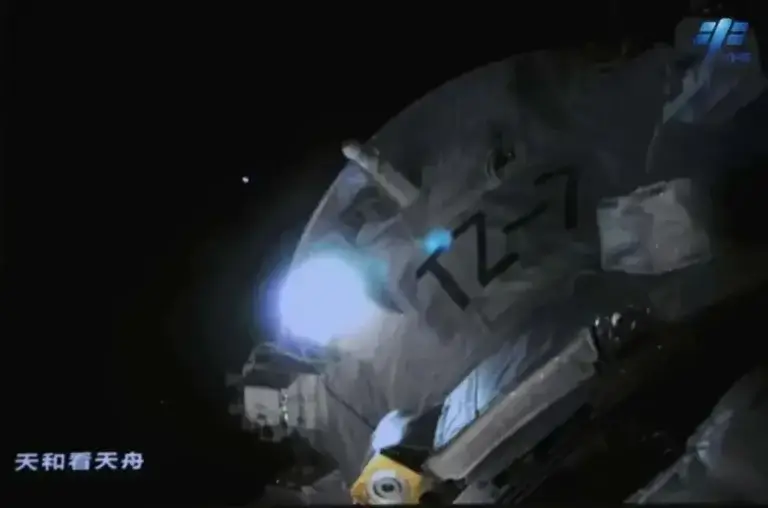
China recovers orbital launch stage for first time – and traps it in a containment net at sea

China recovers orbital launch stage for first time – and traps it in a containment net at sea

In the maiden flight of the Long March 10B, a satellite was launched into orbit, and the first stage returned vertically and was captured using hooks and a net stretched over an offshore platform. This is the first achievement of its kind in China and the world's first capture of a satellite.
The color of feces reveals from space what Adélie penguins eat

The color of feces reveals from space what Adélie penguins eat

Satellites can't spot a single penguin from the Landsat program, but they can identify the spots left by nesting colonies. New research shows that the spectral signature of droppings can reveal not only the
Jeff Bezos, CEO of Blue Origin

Blue Origin addresses investors for the first time: seeks to raise $10 billion

Blue Origin, which has been funded primarily by Jeff Bezos since its inception, is reportedly in talks to raise $10 billion in private capital. The money is intended to support expanded launch operations, lunar missions, satellite networks, and rehabilitation.
Satellite tracks observed for one hour over the northern Atacama Desert in Chile, October 2025. Credit: F. Kamphues, ESO/M. Kornmesser.

More than a million satellites could make the night sky three times brighter

A new model has examined how light reflected from satellites and mirrors in space affects astronomical cameras and the brightness of the night sky. The results show that even dim satellites can erase parts of wide-field sky images,
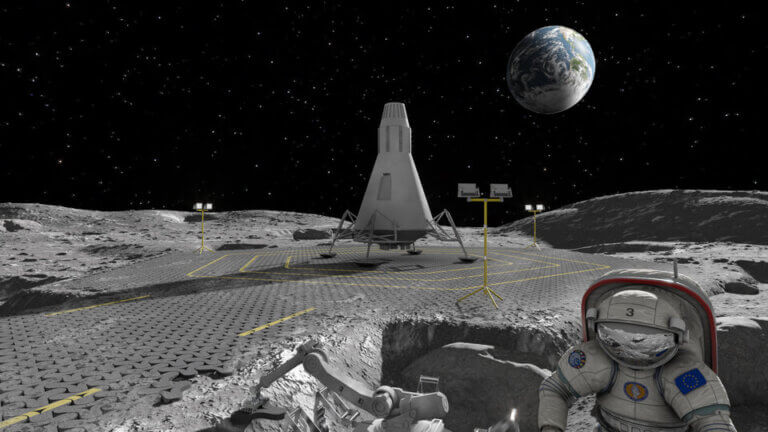
Future research station on the moon

Proposal: Test samples from Mars in a quarantine facility on the Moon before bringing them to Earth

Two researchers propose setting up an isolated robotic laboratory on the moon to test samples from Mars and other worlds. They say the moon could serve as an additional layer of protection against possible biological contamination, but this is a proposal at this stage.
An artist's rendering of PExT communicating directly with a ground station on Earth.

NASA is testing a more flexible “space internet”: spacecraft that will move between communication networks

The PExT experimental communications terminal has completed a demonstration transmitting data over both NASA's relay network and commercial networks. The extended mission will test direct communications with ground stations and software to manage communications services.
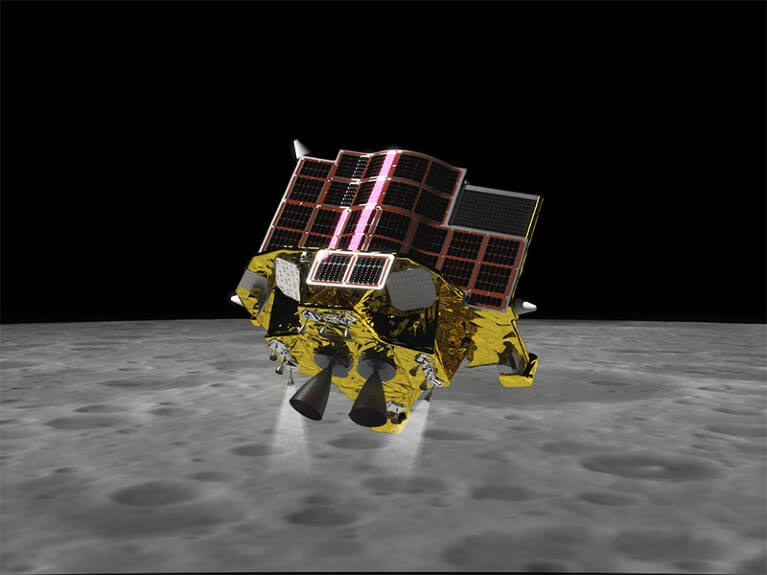
The SLIM mission included three rovers in addition to the lander, one exploring the lunar surface and the others serving as a relay station. Credit: JAXA / Takara Tomy / Sony Group / Doshisha University

Baseball-sized rover successfully operates autonomously on the moon

The Japanese rover SORA-Q, sent to the Moon with the SLIM lander, launched from a small two-wheeled vehicle, navigated around the lander, and photographed its surroundings. The findings, published in Science Robotics, demonstrate how tiny robots may expand the
NASA's Artemis 3 crew: Andre Douglas, Luca Parmitano, Randy Breznik and Frank Rubio in an official mission portrait.

NASA selects Artemis 3 crew, but New Glenn explosion casts shadow on path back to the Moon

The next Artemis mission will remain in low Earth orbit and test docking with SpaceX and Blue Origin lunar landers. The New Glenn explosion could delay the 2028 manned landing plan.
Blue Origin's New Glenn launcher on the launch pad. An explosion during a static ignition test could delay the schedules of the launcher and the Blue Moon lander. Credit: Blue Origin

New Glenn launcher explosion: A blow to Blue Origin – and a warning sign for the moon return plan

Blue Origin's New Glenn launcher on the launch pad. An explosion during a static ignition test could delay the schedules of the launcher and the Blue Moon lander. Credit: Blue Origin
The launch of the Shenzhou-23 manned spacecraft aboard the Long March-2F launcher from the Jiuquan Launch Center in China

China has launched a manned mission to its space station, in preparation for a moon landing by 2030.

The Shenzhou-23 spacecraft carried three astronauts to the Tiangong space station. One of them is expected to remain in orbit for a full year, in China's first-of-its-kind experiment in prolonged human spaceflight.
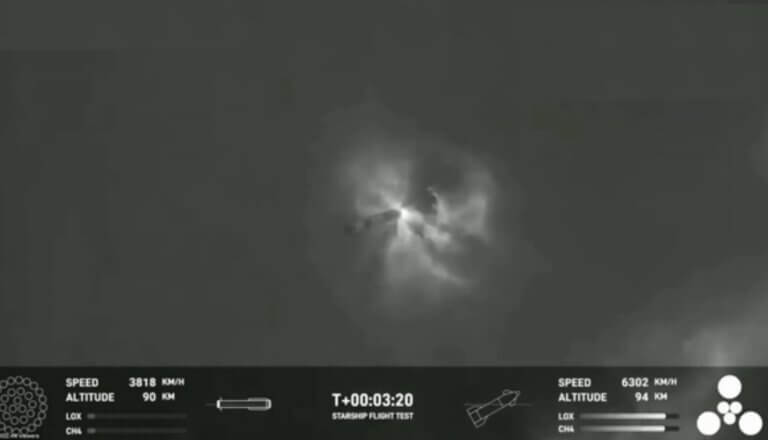
Starship V3 launches from Starbase in Texas on the 12th test flight of the Starship system. Credit: SpaceX

Starship V3 takes off for the first time: SpaceX is getting closer to the moon, but there's still a long way to go

SpaceX has completed the first test flight of its Starship V3, the giant rocket that will be used in NASA's Artemis program in the future. The flight achieved most of its goals, but engine failures show that the path to success is still uncertain.
NASA's High Performance Spaceflight Computing Processor. The processor is designed to survive harsh space conditions and provide a leap in processing capability for future spacecraft. Credit: NASA/JPL-Caltech.

NASA is developing a new “brain” for spacecraft: an AI processor that will allow them to operate more independently

The new processor is designed to allow spacecraft to analyze information, respond to unexpected situations, and make certain decisions without waiting for instructions from Earth. According to NASA, initial tests indicate a leap in performance compared to computers
Environmental tests of Blue Origin's Blue Moon Mark 1 (MK1) lunar lander have been completed inside Thermal Vacuum Chamber A at the Johnson Space Center in Houston. Credit: NASA

Blue Origin's lunar lander passes critical thermal vacuum test at NASA

Blue Moon Mark 1, an unmanned cargo lander from Blue Origin, has completed environmental testing in the thermal vacuum chamber at Johnson Space Center. The lander is designed to demonstrate landing, propulsion and navigation technologies for lunar missions.
Satellite Internet. Illustration: Avi Blizovsky via DALEE

Amazon acquires Globalstar for $11.57 billion, bringing Amazon Leo closer to the world of satellite cellular

The deal will strengthen direct-to-phone communications capabilities, preserve Apple's satellite services, and put Amazon in more direct competition with Starlink.
Launching large satellites in LEO increases the density around the Earth and the need for continuous evasive maneuvers. Illustration: depositphotos.com

A little over two and a half days – Expect a massive satellite collision following loss of control after a solar storm

New study suggests a metric that estimates how quickly a significant collision could occur if satellites' tracking and maneuvering capabilities are compromised
Seconds before the Artemis II spacecraft lands. Screenshot: NASA

Live broadcast: Artemis II landed safely

Orion's first crewed deep-space test flight tested launch, flight, return and recovery systems — paving the way for the next phase of the lunar return program
On April 7, 2026, the Artemis II crew was captured in a rare moment of shared embrace inside the Orion spacecraft on the way back from the Moon. Pictured are Christina Koch, Jeremy Hansen, Reed Wiseman, and Victor Glover. The crew members were selected in April 2023 and trained together for three years in preparation for the mission. Photo: NASA

Artemis II Day 9: Orion orbit correction complete, preparing for atmospheric reentry and landing near San Diego

In the past 24 hours, NASA completed another correction maneuver on the way back from the moon, restored contact after a brief communications glitch, and accelerated final preparations for atmospheric entry. Now all eyes are on the heat shield.

Not all cold traps at the moon's south pole preserved ice equally well

New scientific evidence suggests that ice has been accumulating on the moon for the past billion and a half years, revealing where it's best to look for it.
Moon colony. Illustration: depositphotos.com

Life on the Moon Won't Be Romantic: This Is What the True Test of the Human Body Will Look Like

In preparation for an extended stay on the lunar surface, scientists warn of a dangerous combination of low gravity, cosmic radiation, lunar dust, isolation, and possible damage to bodily systems.
Artemis II crew members celebrate the completion of the passage behind the moon, April 7, 2026. Photo: NASA

Artemis II on the way back: Completed transit around the moon, human distance record broken, and viewing a solar eclipse

Update 7/4 14:00: Orion passed behind the moon, came within 6,546 kilometers of the surface, set a new record of 406,770 kilometers from Earth, and also photographed areas from the far side.
In this fully illuminated photo of the Moon, taken by the Orion spacecraft, the near side of the Moon is visible on the right with the dark lava plains familiar from Earth-based observations. To the left is the Orientale Basin, a giant crater about 966 km wide that crosses both the near and far sides. Credit: NASA.

Day 6, Live: Artemis II Around the Moon; Orion Breaks Human Distance Record and Enters Mission Highlights

The Artemis II crew surpassed the record of Apollo 13, making a historic pass around the moon and entering a window of scientific observations, communications blackout and a solar eclipse as seen from the spacecraft.
The Moon as photographed from the window of the Orion spacecraft at the end of Artemis II's fifth flight day (April 6, 2026), shortly before the historic pass around the far side of the Moon. Credit: NASA.

Live broadcast: The decisive day – Artemis II preparing to pass around the far side of the Moon

NASA reports that Orion is on a precise trajectory for its passage around the moon on April 6, 2026. During the orbit, astronauts are expected to break the record for the distance humans have traveled from Earth and pass behind the moon.
Astronaut Christina Koch controls the Orion spacecraft during a manual flight test on day four of the Artemis II mission. She is flanked by Canadian Space Agency astronaut Jeremy Hansen and astronaut Victor Glover. Credit: NASA

Artemis II Day 4: Crew practices manual flight of Orion and approaches historic flyby around the moon tomorrow

NASA reported that Christina Koch and Jeremy Hansen took manual control of the spacecraft for 41 minutes, while the entire crew completed scientific preparations for the lunar flyby on April 6. At the same time, NASA
A view of Earth taken by NASA astronaut and Artemis II commander Reid Weisman from one of the Orion spacecraft windows after completing the lunar orbit injection maneuver on April 2, 2026. The image shows two auroras, at the top right and bottom left, while the **Zodiac Light** is visible at the bottom right as the Earth obscures the Sun. Credit: NASA

Artemis II Day 3: Orion continues precisely toward the Moon without need for trajectory corrections; the receding Earth is fully imaged

After the lunar orbit injection, the mission control center determined that the spacecraft was already on the correct path to pass near the moon on April 6, and the team began preparations for the scientific observation window around the moon.
An image of the Artemis II spacecraft orbiting the Moon. The transit is expected on April 6. Photo: NASA

Artemis II left Earth orbit and headed for the Moon

Artemis II has completed a lunar injection maneuver and left Earth orbit. The Orion spacecraft and its four crew members are making their way to the Moon in a historic NASA mission.
A view of Earth from NASA's Orion spacecraft as it orbits the planet during the Artemis II test flight. The spacecraft launched on Wednesday, April 1, 2026, for a mission of about 10 days around the moon and back to Earth. Credit: NASA

Live broadcast: Artemis II nears lunar landing: orbit change maneuver expected tonight (Thursday-Friday)

After completing the first orbit maneuvers around Earth and a close flight demonstration, NASA is preparing for the ignition that will send Orion into a free-return orbit around the moon; a brief communication loss was also reported in the first hours of the mission
The Artemis II SLS launcher with the Orion spacecraft on its way back to the assembly building at the Kennedy Space Center in February 2026, after being returned to fix a helium flow problem. NASA has now approved moving forward again towards a launch attempt in April. Photo: NASA

NASA approves Artemis II for April launch to orbit the moon

The Artemis II spacecraft aboard the SLS launchers on February 2, 2026. Credit: NASA/John Kraus

NASA changes Artemis program: Artemis 3 will not land astronauts on the Moon

Instead of a crewed landing in 2027, Artemis 3 will become a test mission in Earth orbit, while the program's first crewed landing is now postponed to Artemis 4 in 2028.
Downscaling attempts to reconstruct a more detailed map using variables measured at high resolution. Illustration: depositphotos.com

AI enhances satellite imagery to know what's happening "between the pixels"

Satellites provide a wide picture, but sometimes with limited resolution: the pixel is too large, and the details on the ground are lost. This is where downscaling comes in: using computational models to estimate temperature in more detail.
14 chip manufacturing plants in space. Photo: Space Forge

A factory that takes off into space: Space Forge wants to grow the “seeds” of next-generation chips there

The British startup claims that microgravity and the vacuum of orbit allow for purer crystals for chips for AI, communications and defense infrastructure; ForgeStar-1 launched in 2025 on SpaceX and demonstrated plasma creation as a step towards commercial production and return
Dr. Sian Proctor on stage at the Ilan Ramon Conference, Tel Aviv 1/28/2026. Photo: Avi Blizovsky

Dr. Sean “Leo” Proctor at the Ilan Ramon Conference: “Art is part of the way to open up space to everyone”

Inspiration4 mission pilot recounts how a poem she wrote as part of the “Prosperity” seat competition became the “JEDI Space” vision, and explains why combining creativity, science, and diverse representation is a prerequisite for the future of manned space
Illustration of the Artemis II spacecraft's trajectory and the lack of radiation protection for most of the trajectory. A. Fisher/Science

Artemis II returns humans to lunar orbit – and cosmic radiation becomes the main health challenge

Space and astronomy, space medicine, cosmic radiation, Artemis II, NASA, Orion, space flight safety, personalized medicine
A photo of the SLS rocket with the Orion spacecraft on launch pad 39B at the Kennedy Space Center during preparations for refueling. NASA photo, January 29, 2026

Unusually cold weather in Florida postponed Artemis II's wet general reentry to Monday and the launch itself a week later.

There are only three possible dates left for the February launch window: February 8, 10, and 11. If that is not possible, a postponement to March or April will be required.
Artemis II crew members who will orbit the Moon: NASA's Reed Wiseman, Victor Glover and Christina Koch, along with Canadian Space Agency (CSA) astronaut Jeremy Hansen. Photo: NASA

Randy “Comrade” Bresnik of NASA presented at the Ilan Ramon conference: This is how the Artemis program returns humanity to the moon

At the 21st Ilan Ramon International Space Conference, a NASA astronaut described Artemis II as the first manned step around the moon, and Gateway as the interim station for the era after the International Space Station.
Amit Kshetriya, deputy administrator of NASA, at the 21st Ilan Ramon Space Conference held at Tel Aviv University, January 28, 2025. Photo: Avi Blizovsky

Risk management on the way to the moon

Amit Kshatriya, the deputy administrator of NASA, said at the 21st Ilan Ramon Space Conference held in Tel Aviv that the lessons of the Challenger and Columbia disasters, as well as the recent incident in which they were returned, must be internalized.
A lunar colony, also including energy solutions. Illustration: depositphotos.com

NASA and the Department of Energy: A nuclear reactor on the moon by 2030

New MoU Promotes Fission-Based Power System for Artemis Missions, with Target for Multi-Year Operation Without Refueling
A perfect cosmic circle captured by Webb shows a distant spiral galaxy twisted around a closer elliptical galaxy. This Einstein ring provides a glimpse into the warped nature of spacetime. Credit: ESA/Webb, NASA & CSA, G.

2025 in Space Summary: Hints of Life, a Commercial Moon, and a Sharper Look at the Risks

Webb reignited the debate about signs of life on distant planets, the Moon advanced thanks to commercial missions, and Earth's orbit reminded us how crowded and fragile it is – with launches, a nearby asteroid, and preparations
Swearing-in ceremony: Jared Isaacman is sworn in as NASA's 15th administrator at the Eisenhower Office Building, Washington. Credit: NASA/Bill Ingalls.

New NASA Administrator: Jared Isaacman; Race Against China Returns to Center Stage

The Senate confirmed by a bipartisan majority, Isaacman, who has flown into space twice as a tourist and presents a destination for the Moon and Mars – but took office under criticism for ties to industry, cuts and delays to the Artemis program
Illustration of mining activity on the moon. Credit: NASA

The race to mine resources on the moon has already begun – and it requires clear international rules of the game.

Countries and companies are racing to develop lunar mining infrastructure, but international law remains in the Cold War era – and ambiguity could ignite conflict
Moonshot founders - from right: Fred Simon, Hila Hadad Hamelnik, Shahar Bahiri. Photo by press release

Startup Moonshot comes out of secrecy with hypersonic electromagnetic accelerator and raises $12 million

The company, founded in 2024 by Hila Hadad Hamelnik, Fred Simon, and Shahar Bahiri, is developing an electromagnetic accelerator that will reach speeds of up to 8 kilometers per second for launching payloads into space and a hypersonic test facility in Caesarea – and is expected to
Apollo 17 astronaut Harrison H. Schmitt samples a rock at Station 7, at the foot of the North Mountain in the Taros-Littrow Valley. The large rock was dislodged by a powerful moonquake about 28.5 million years ago, likely the result of activity on the Lee-Lincoln Fault. Credit: NASA/JSC/ASU

Moonquakes could threaten future manned missions and infrastructure

New study reveals that moderate-intensity tremors associated with the Lee-Lincoln fault in the Taros-Lytaro Valley could endanger permanent bases as part of the Artemis program
Chrysalis could house several generations of humans by the time it reaches Alpha Centauri, where it could land passengers on the surface of the planet Proxima Centauri b. (Credit: Giacomo Infelise, Veronica Magli, Guido Sbrogio', Nevenka Martinello, and Federica Chiara Serpe)

Chrysalis: The spaceship that will carry 2,400 passengers on a one-way, 400-year journey to Alpha Centauri

A revolutionary design by young engineers proposes a giant ship 58 kilometers long, which will accommodate generations of colonists on their way to an Earth-like planet in the Alpha Centauri system.
The launch of the Ofek 19 satellite, 2/9/2025 as captured by vacationers on Palmahim Beach. Screenshot from the X Network

Israel successfully launches the "Ofek 19" observation satellite into space

The Space Directorate at the Israel Aerospace Industries, the IDF, and the Israel Aerospace Industries carried out a successful launch using the "Shavit" launcher; the satellite entered its orbit around the Earth and will soon undergo tests in preparation for full operational activity.
Illustration of the Neil Gehrles Swift Space Telescope in orbit around Earth. Credit: NASA Goddard Space Flight Center / Chris Smith (KBRwyle)

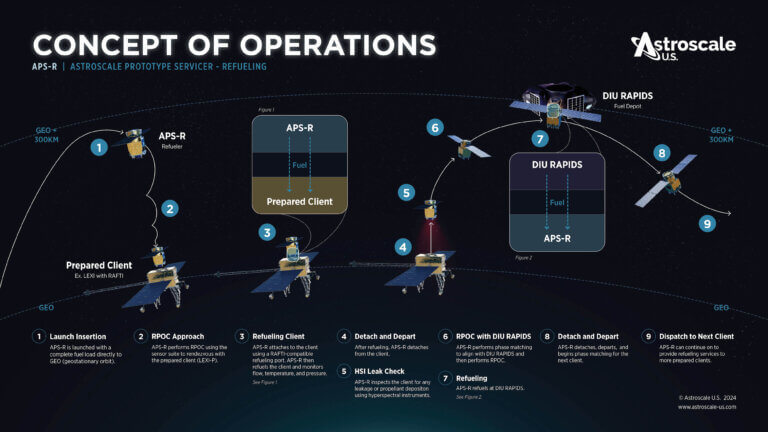
NASA Examines Technology Demonstration to Raise Swift Space Telescope Orbit

The telescope, which has been in space for over 20 years, could burn up in the atmosphere if its orbit is not raised. * Design studies are examining an orbit raise that could extend the Swift Space Telescope's operation and advance satellite servicing capabilities.
The train is being launched at the AVIO factory. Press photo

Launcher manufacturer Avio has undergone digital transformation with Dassault Systèmes

Avio, Dassault Systèmes, 3DEXPERIENCE, space technologies, space propulsion, satellite launchers, aerospace industry, digital transformation, innovation, sustainability