SEARCH
Space and astronomy
Astrophysics
astronomy
Solar System
space missions
man in space
environment and energy
Environmental Sciences – Climate crisis
Earth science
environmental issues
energy
transportation
Computing and technology
exact sciences
Computing and robotics
nano-tech
military technology
futurology
Biology and Medicine
Evolution and nature
medicine
Genetics
the brain
Society and history
Science and society
history
The skeptic
Science Fiction
Scientists
Science in Israel
Research and development in Israel
Biotechnology in Israel
Israel in space
the defense industries
Academy and education
Hayadan
>
Hot justice
Hot justice
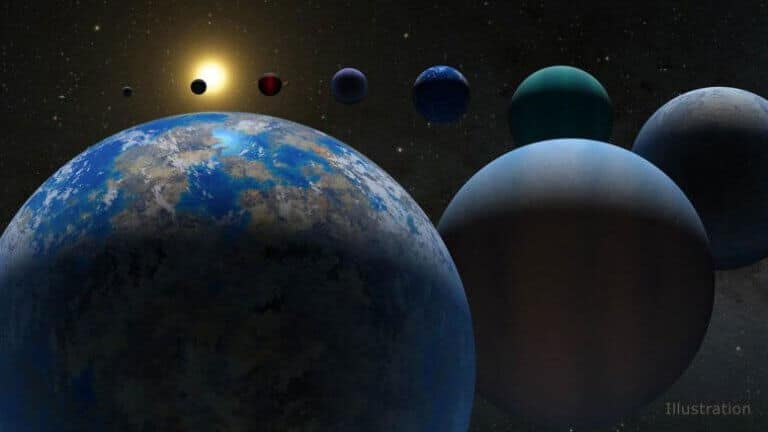
Milestone: NASA confirms 5,000 extrasolar planets
Avi Blizovsky
March 27, 2022
6 תגובות
Given the hundreds of billions of planets in the Milky Way alone, "it's inevitable that we'll find some form of life somewhere"
The Hubble Space Telescope has discovered a football-shaped planet spewing metals from its atmosphere
Avi Blizovsky
August 6, 2019
4 תגובות
"Hot Jupiter" with unusual winds
Avi Blizovsky
January 27, 2018
One response
A planet hotter than most stars has been discovered
Avi Blizovsky
June 6, 2017
12 תגובות
A planet was discovered in a system of three suns
Avi Blizovsky
April 10, 2016
3 תגובות
The Chandra Space Telescope has discovered planets that mislead scientists about the age of their Sun
Ido Moalem
September 18, 2014
No comments
Far from the Sun: Discovery of a Planet Challenges Scientific Conventions
Itai Nebo, editor of the Davidson Institute website
December 8, 2013
24 תגובות
The aurora borealis of extrasolar planets: an out-of-this-world sight
Avi Blizovsky
July 26, 2011
3 תגובות
Nature reveals why "hot Jupiters" move in reverse?
Avi Blizovsky
June 17, 2011
15 תגובות
The magnetosphere of an extrasolar planet has been observed
Universe Today
April 27, 2011
No comments
An astronomer from Qatar has discovered a planet outside the solar system
Avi Blizovsky
December 15, 2010
11 תגובות
A fourth planet for one solar system
Avi Blizovsky
December 12, 2010
4 תגובות
A planet with a comet's tail
Universe Today
July 27, 2010
6 תגובות
Hubble observed the sun "eating" the planet surrounding it
Universe Today
May 25, 2010
14 תגובות
The planet that wasn't supposed to exist
Yael Petar
September 2, 2009
53 תגובות
The Kepler space telescope discovered the atmosphere of a planet outside the solar system
Avi Blizovsky
August 6, 2009
17 תגובות
The atmospheres of planets outside the solar system have been detected from the ESA
Yael Petar
January 24, 2009
4 תגובות
Earth-like planets are easier to detect than previously thought
Yael Petar
October 22, 2008
24 תגובות
For the first time, a planet orbiting a sun similar to ours has been photographed
Avi Blizovsky
September 16, 2008
31 תגובות
Dozens of planets
Avi Blizovsky
July 31, 2008
One response
A new planet - a world of hot ice thirty light years away
Tel Aviv University
May 17, 2007
8 תגובות
12 new planets in a week
Avi Blizovsky
February 24, 2005
No comments
A planet with a tenth of the mass of Jupiter has been discovered
Avi Blizovsky
October 27, 2002
No comments
Scientists have discovered a system of planets - very similar to the solar system
Avi Blizovsky
August 15, 2001
No comments
Stars fall between the chairs
The science service
January 1, 2000
No comments
When one star is hungry
The science service
September 7, 1999
No comments
Akiva Bar-Nun: Looking for Earth-sized planets
Avi Blizovsky
April 17, 1999
No comments
Bigger, closer
Avi Blizovsky
July 21, 1998
No comments
Space and astronomy
environment and energy
Computing and technology
Biology and Medicine
Society and history
Science in Israel
Home
About
Contact Us
private policies
Terms of Use
SEARCH
SEARCH