Molecular biology

James Watson, discoverer of the structure of DNA. Illustration: depositphotos.com

James Watson, one of the pioneers in discovering the structure of DNA – and the controversial figure behind the “double helix” – has died

Nobel laureate James Watson has died at the age of 97; along with his seminal contribution to uncovering the structure of DNA with Francis Crick, new historical research highlights Rosalind Franklin’s central role – and
Discovered viruses that make DNA from an RNA template. David Baltimore | Photo: NIH, via Wikimedia Commons

The researcher who ran viruses backwards: David Baltimore (1938–2025)

Nobel Prize winner who identified reverse transcriptase, formulated the “Baltimore Classification” and laid the foundations for modern virology, PCR and antiviral drugs
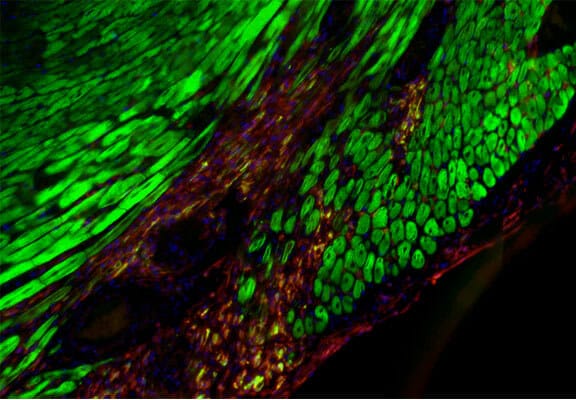
Activation of aldh1a2 may reactivate regeneration in mice. Credit: Wei Wang Lab at the National Institute of Biological Sciences, Beijing

Activating a silent gene revives tissue regeneration in mice

New research reveals that restoring the activity of an ancient gene allows mice to regenerate damaged ear tissue – a finding that could pave the way for breakthroughs in regenerative medicine
An illegible microscopy image with overlapping fluorescent labels of seven proteins (left) was translated with great precision using CombPlex into an image that allows the different proteins to be distinguished (right)

All embroidery colors

AI-based technology developed in Dr. Liat Keren's lab enables an unprecedented view of processes in body tissues
Jeffrey Dangle, Brian Stacekevich and Jonathan Jones. Photos: Wolf Prize Foundation

Wolf Prize in Agriculture 2025: Recognizing groundbreaking discoveries in the plant immune system

The prize is awarded jointly to Professors Jeffrey Dangle, Jonathan Jones and Brian Stacekevich.
A microscopic image of tissue stained in purple, red, and green to identify various cellular components.

Two ways to a broken heart, two ways to heal

Gene therapy. Illustration: depositphotos.com

Can we control genetic inheritance? New RNA research suggests it may be possible

Researchers at the University of Maryland have discovered new pathways for double-stranded dsRNA to enter cells, revealing how RNA influences gene regulation over many generations – insights that could improve RNA-based drugs
Anabina under the microscope. The blue bacteria inspired the research

Bacteria against mutants

Weizmann Institute of Science scientists made bacterial cells mimic processes characteristic of multicellular organisms, and discovered a possible defense mechanism against cancer
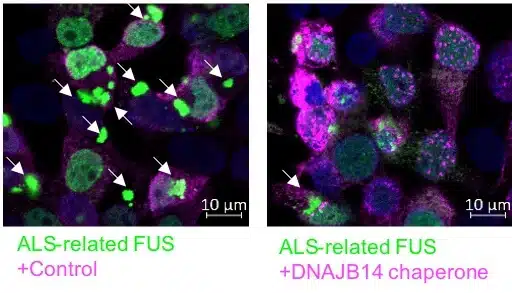
Left: cells with a mutant FUS protein that causes accumulations (in green) and leads to ALS disease. Right: the cells with the protein/chaferon (in pink) that manages to prevent the accumulations

fight degenerative diseases

The proteins and mechanisms required to fight the protein accumulations that lead to neurodegenerative diseases have been identified
Wheat and rice are the most common food plants in the world. Illustration: depositphotos.com

Researchers have succeeded in deciphering the movement mechanism of the plant hormone gibberellin, which is of great importance to humanity

According to the researchers, it is a hormone, a small signal molecule, which controls the growth of plants. The decoding may help a lot in expanding agricultural crops and dealing with the global food crisis
Winners of the Dan David Prize for the Future Dimension for 2021. Photo: Dan David Prize Foundation

Molecular medicine researchers, including the Israeli Prof. Zelig Ashchar, won the Dan David Prize for the Future Time Dimension

In the reasons for the award committee, it was stated that Prof. Ashhar, Dr. Steven Rosenberg and Dr. Carl John are dedicated to discovering molecular mechanisms of disease development, which can be used to develop new diagnostic, therapeutic and preventive tools
Myocardial infarction in the mouse. Marked in red - the cells of the immune system in the damaged area

Blue is good for the heart

Illustration: pixabay.

When the genetic messenger discovers independence

"Throughout evolution, the cells that knew how to produce proteins in the most 'cheap' way acquired a huge advantage. You can say that the one who was the most economical survived." Source: Weizmann Institute magazine.

A traffic light of bacteria

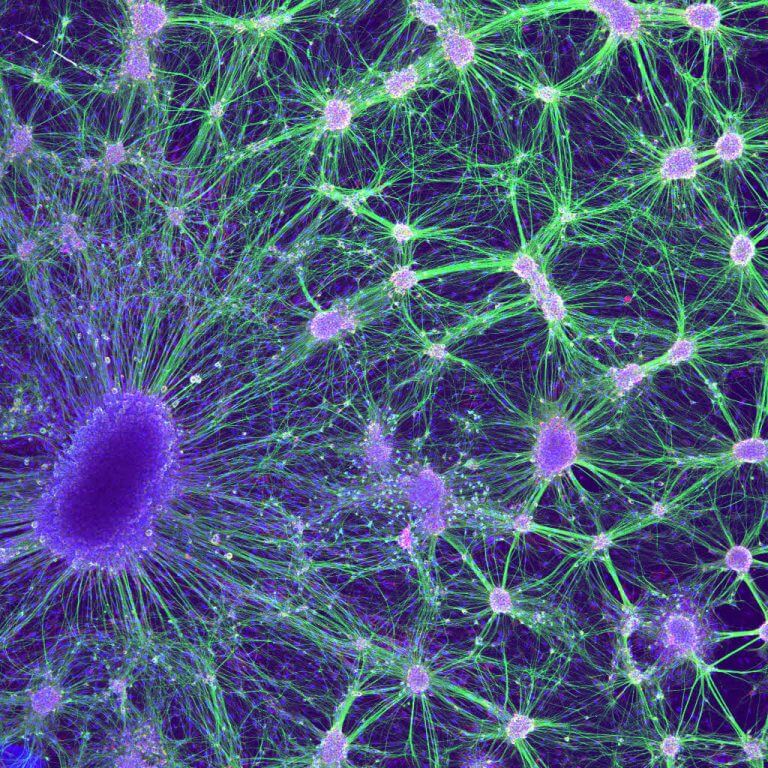
Neurons of a mouse embryo grown in a Petri dish. The axons, the extensions of the nerve cells, are the green extensions in the picture. Source: NIH.

A little less, a little more

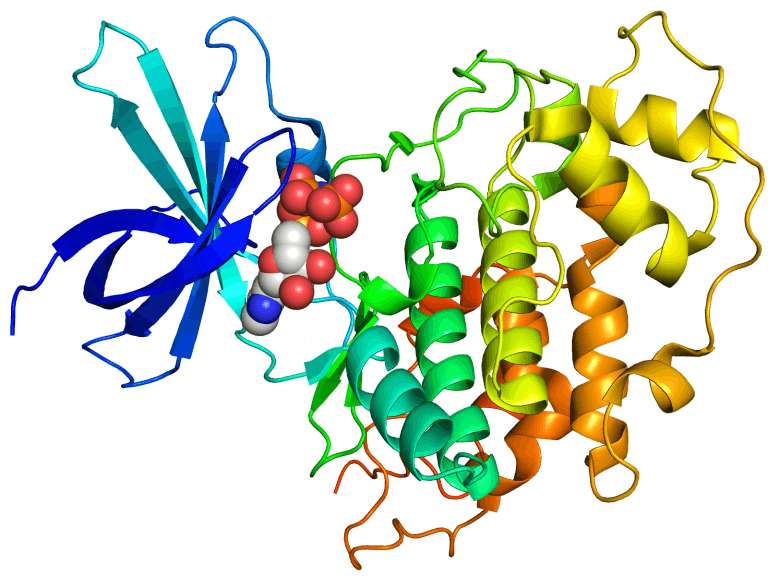
Diagram of 3-GSK enzyme. How do complex molecules like proteins work together? Source: Boghog, Wikimedia.

When proteins manage to surprise