Higgs boson

Does dark matter change the color of light? Illustration: depositphotos.com

According to a new theory, we've been looking for dark matter the wrong way.

But the York researchers say the light may change its color slightly depending on the type of dark matter it encounters. If this theory is confirmed, this effect could provide a new way to study the hidden component.
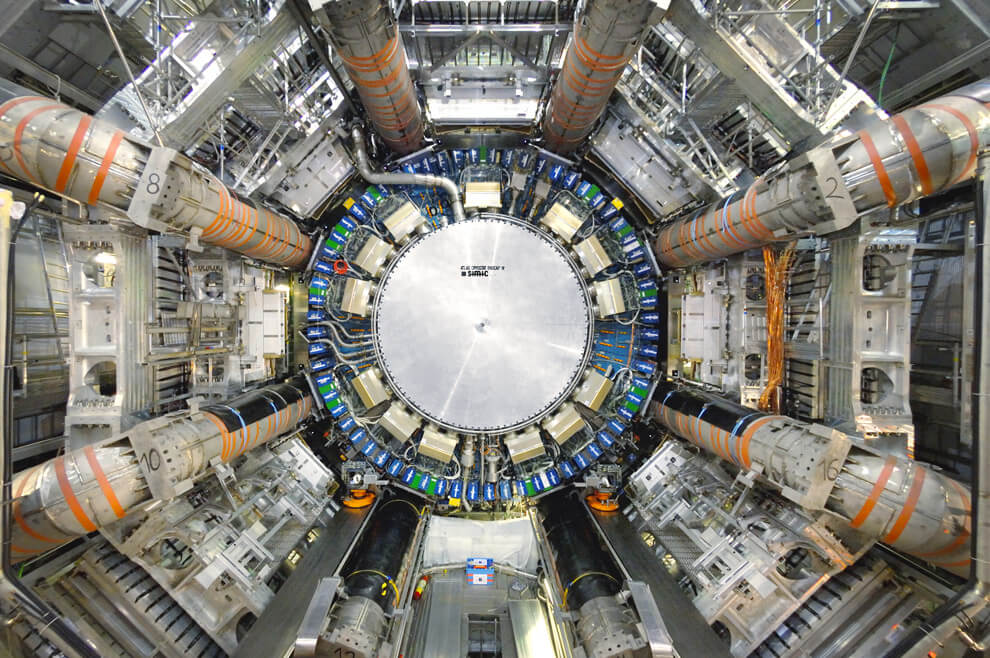
The exterior of the Atlas experiment at CERN. Illustration: depositphotos.com

The prestigious Breakthrough Prize was awarded this year to the Atlas experiment at the Ceren particle accelerator, which involves about a hundred Israeli researchers.

The ATLAS experiment involves four groups from Israel, consisting of approximately 100 researchers from Tel Aviv University, the Technion, the Weizmann Institute, and Ben-Gurion University.
Simulation of a collision event corresponding to the formation of a Higgs pair measured in 2017. Credit: ATLAS/CERN collaboration

Physicists combine several observations of Higgs boson pairs and discover clues about the stability of the universe

Remember how hard it was to find a single Higgs boson? Try to find two at the same place and time. This fascinating process, called Higgs pair production, can provide scientists with information about the self-interaction of
The Large Hadron Collider LHC is down for an upgrade. Photo: CERN

Why is the mass of the Higgs particle lighter than expected?

Researchers have built a model according to which the mass of the Higgs boson, which helps produce the mass of elementary particles, changed in the early universe, and is therefore much smaller than the standard model of particle physics describes
Celebrations at the CERN Control Center (CCC) to mark the start of the third run of the LHC (Photo: CERN)

The Large Hadron Collider in Sarn is back in operation

In the third run, the particles will be bombarded with an energy intensity of 13.6 TeV, which may help to better understand the properties of the Higgs boson and its interaction with matter, and perhaps also reveal clues about the matter
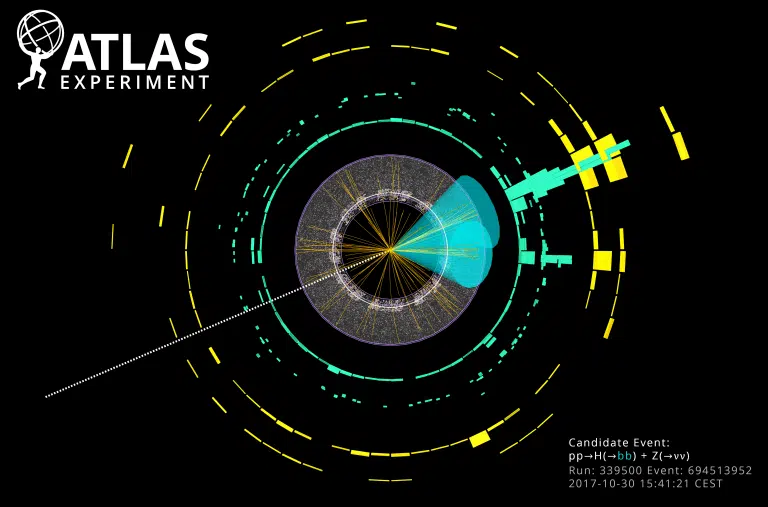
A visual illustration of one of the collisions observed in the Atlas detector, and is an example of the type of processes we are looking for, and the signature they leave in our detectors. In this case a Higgs boson is created, together with another massive boson called Z (the carrier of the weak force). The blue cones and the yellow rectangles adjacent to them represent the pair of quarks into which the Higgs decayed, in this case they are of the magic type. The Z decays into two particles called muons, which can be identified by the red lines in the image. From the CERN website

For the first time, the Higgs boson was characterized by its decay into a pair of "magic" quarks

Researchers from Tel Aviv University were able to describe for the first time a rare physical process that begins with the Higgs boson - the "divine particle" that was first observed about a decade ago - and eventually decays into a pair of rare elementary particles * Observations
Formation of a b quark pair as a result of the decay of the Higgs particle. The two green areas in the image are the signatures of two particle jets created by the quarks. Figure courtesy of ATLAS Collaboration/CERN

Another observational verification of the Higgs boson

Computer simulation of the proposed ILC particle accelerator. Source: the project website.

The particle accelerator that can save physics

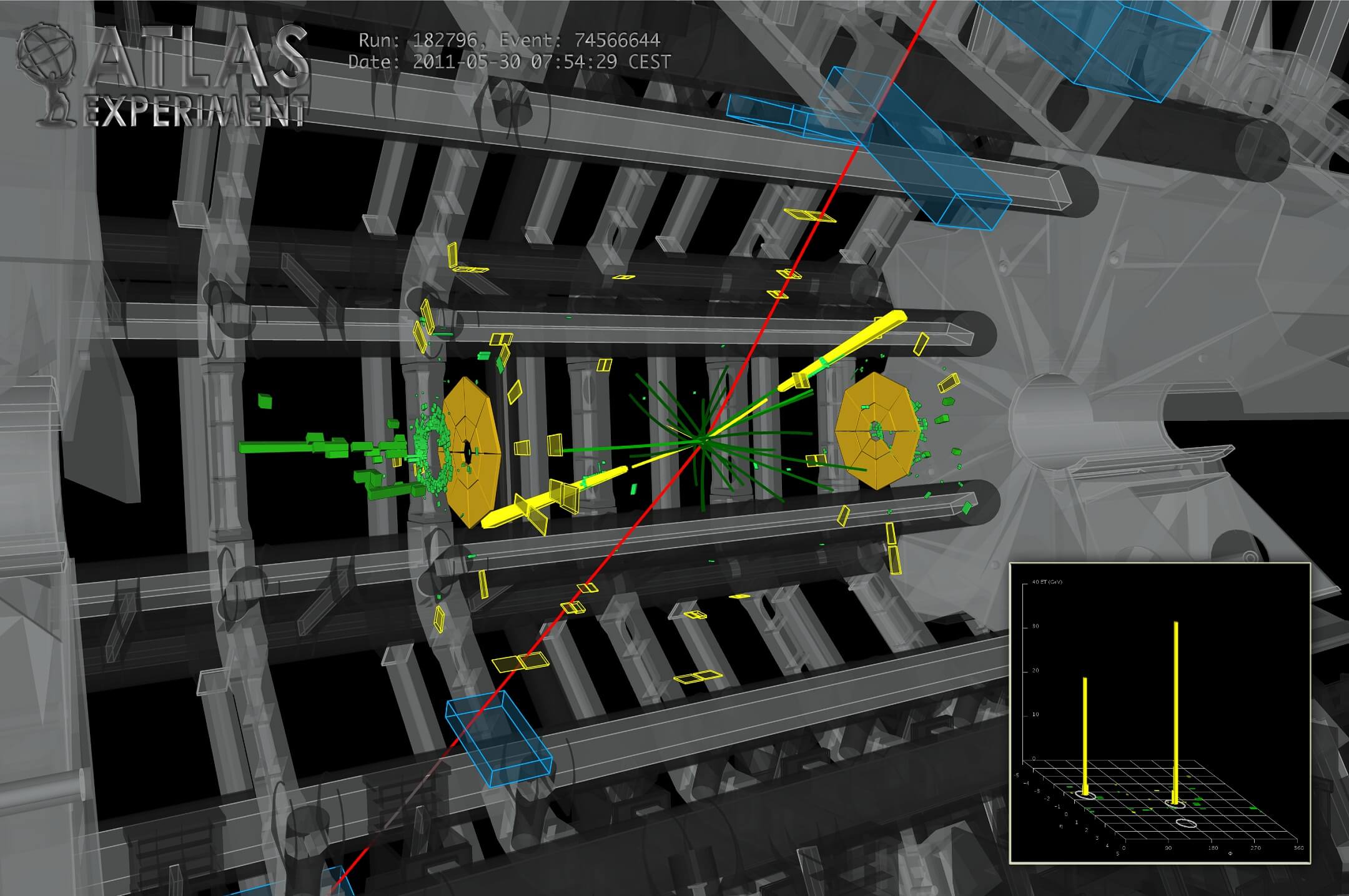
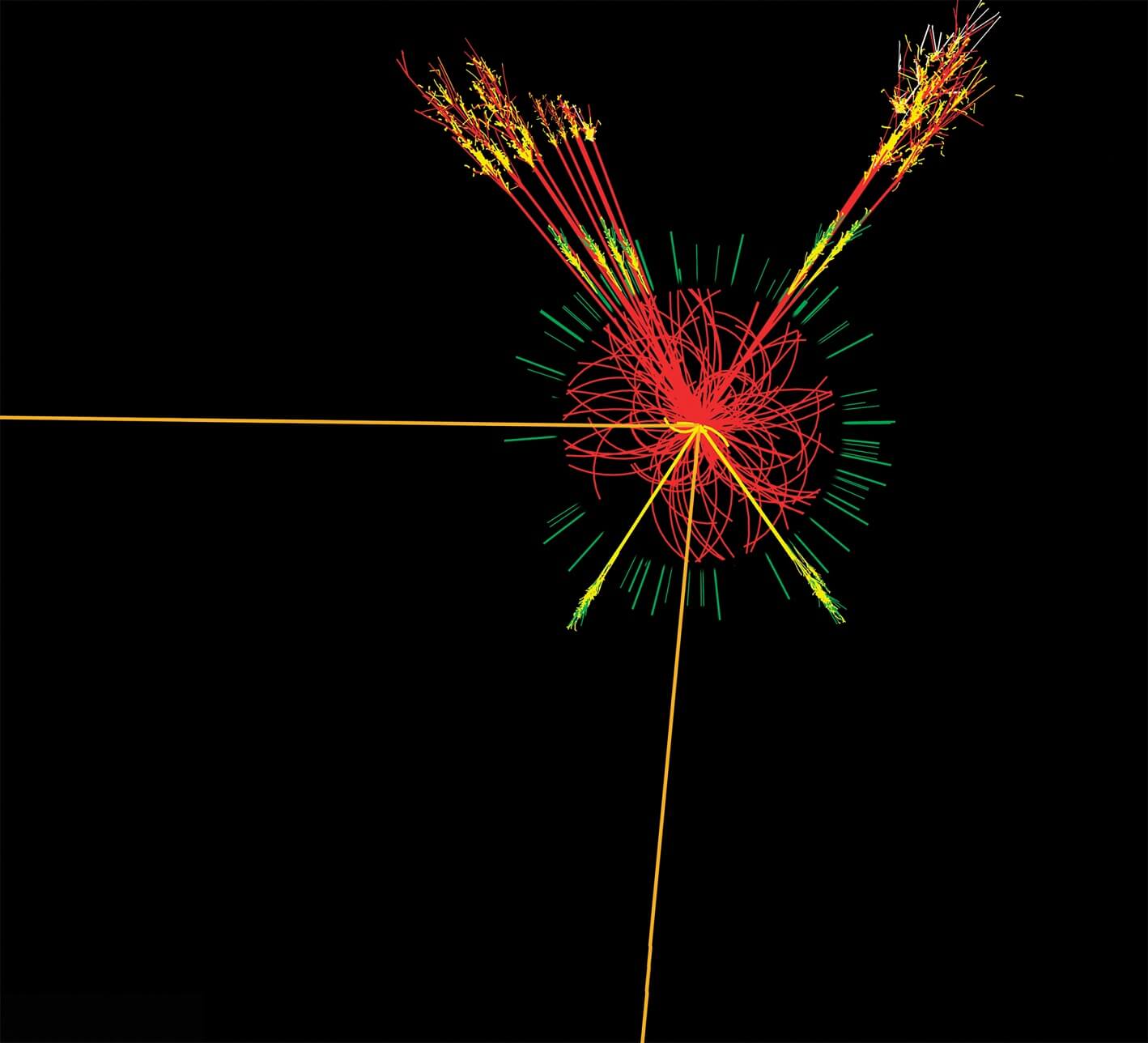
A collision product in the Atlas experiment that may be a Higgs particle. Figure: Atlas experiment at CERN; December 2012

2012 – a fascinating scientific year!

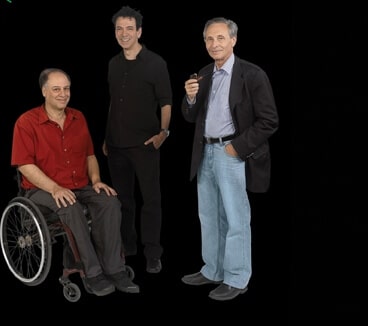
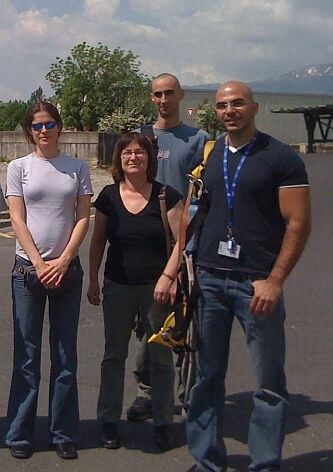
From the right: Prof. Giora Mickenberg, Prof. Elam Gross and Prof. Ehud Duchovani. Long Journey

The particle everyone was waiting for

A collision product in the Atlas experiment that may be a Higgs particle. Figure: Atlas experiment at CERN; December 2012

The existence of the Higgs particle

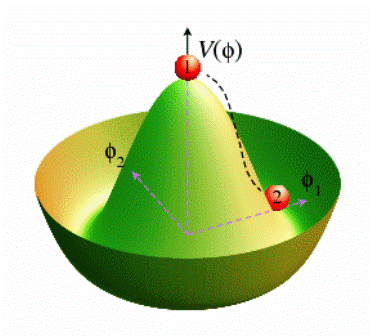
This graph, called the sombrero hat graph, describes the different energy states of the field, according to the Higgs mechanism. The higher you go (V axis in the graph), the higher the energy. The other axes indicate the values ​​that the field can have. In state 1 (up the hill) the field (and its particles) have a very high minimum energy, as it was immediately after the big bang. In state 2 there was any change and the field immediately dropped to a new minimum energy state, much lower than the previous state. Note that the field has infinitely many such new states of minimum energy, around the energy hill. All these states have the same low energy. But when the field goes down it randomly chooses one state out of all these possible states. This choice broke the symmetry of the minimum energy states into a single state that the field selected. Source: higgs_Gerard_t_Hooft__Scholarpedia

Higgs fields forever

Professor Shlomit Terem and her colleagues in Geneva

Technion researchers and the "divine particle"

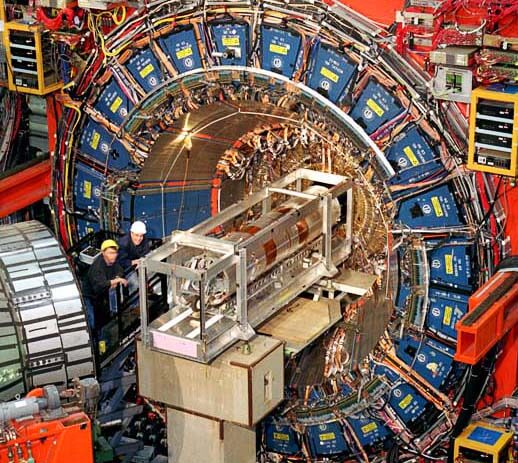
Atlas facility at the LHC particle accelerator at CERN. PR photo of CERN

The Higgs Boson: A Guide to Intellectual Living Room Conversations

Prof. David Gross, winner of the Nobel Prize in Physics in 2004. From Wikipedia

The divine particle arrives at the Hebrew University

From the exhibition "Universe of Particles" that opened at CERN on July 1, 2010

Apparently more than ten top quarks were discovered at the LHC

Cosmic scene with DNA, stars, solvents and atomic circles in oral flow.

The world's mass source may soon be found

Atlas facility at the LHC particle accelerator at CERN. PR photo of CERN

A glitch in the new magnet experiment in Sarn

Cosmic scene with DNA, stars, solvents and atomic circles in oral flow.

The Higgs boson gained weight

Cosmic scene with DNA, stars, solvents and atomic circles in oral flow.

Who will find the "God Particle" first?