Angle - a news agency for science and the environment

When huge areas of the Amazon are burned every year, it changes the entire balance of particles. Illustration: depositphotos.com

Black carbon from incinerators becomes a major factor in radiation scattering and heightens uncertainty in climate crisis models

New research in the Amazon reveals: Not only greenhouse gases affect global warming, but also particles in the air
Storm over Haifa. Illustration: depositphotos.com

Storm "Byron" in Israel: Another sign of the climate crisis and lack of preparedness

Prof. Shlomit Paz from the University of Haifa explains how warm seas and air increase the intensity of rainfall, why storms like "Byron" are becoming more common in the Mediterranean basin - and warns of the cost of flooding,
We all like to think we're doing something "environmental" when we go to a thrift store. Illustration: depositphotos.com

Second-hand is not always green

A new Israeli study reveals that purchasing second-hand clothing does not necessarily replace buying new clothes, and is sometimes even accompanied by increased consumption that negates the environmental benefit of sustainable fashion.
Bird hunting is legal in many countries, and in some areas there is also large-scale illegal hunting. Brown-throated Sparrow. Photo: Dr. Yoav Perlman

The Great Migration of Small Birds: Who Will Be More Threatening – the Climate Crisis or Humans?

Small migratory birds, weighing no more than a few grams, travel thousands of kilometers each year between their nesting sites in Europe and their breeding grounds in Africa. Dr. Yoav Perlman of the Israel Ornithology Center warns that food shortages, hunting
Logo of the UN Climate Conference COP30 held in Belem, Brazil, November 2025. Illustration: depositphotos.com

The COP30 climate conference in Brazil has ended – has anything changed?

Amid the slogan "Global Mutirao" and a growing rift between countries, the conference in Belem once again highlighted the gap between the urgency of the climate crisis and the lack of commitment to a phased cessation of fossil fuels, insufficient funding for countries
Predators and keep fish populations healthy. Female sandbar shark. Photo: Meron Segev, Sharks Association in Israel

The Hadera sand shark: A giant predator, a warming sea, and new questions about the Mediterranean Sea

Dozens of sandbar sharks gather every winter in the warm waters of the Hadera and Ashkelon power plants – Dr. Adi Barash reveals a species that is not considered Mediterranean at all, explains their role as apex predators, the threats from fishing
The municipal garbage incinerator behind the Mount of Olives in Jerusalem. Photo courtesy of the State Archives

Waste incineration is not a new solution in Israel

While the government is promoting the construction of waste-to-energy facilities, it is interesting to know that in Jerusalem, garbage was already burned more than a century ago, and we have something to learn from this. Opinion
Legionella bacteria. Illustration: depositphotos.com

Legionnaires' disease: How does the climate crisis and warming cities increase the risk of Legionella infections?

Heat waves, high humidity and increasing reliance on cooling towers and air conditioning create a breeding ground for Legionella bacteria, leading to recurrent outbreaks of Legionnaires' disease in New York, Ontario and other areas – a serious health threat
The ancient city of Yazd, Iran. Photo by Hasan Almasi, Unsplash

Live with the heat, not against it

An old-new design approach proposes reducing reliance on air-conditioning technologies through smart use of the environment. Is this what will lead the construction industry in an era of global warming?
Droughts lead to severe water shortages, reduced food supplies and even severe restrictions on electricity consumption. Illustration: depositphotos.com

Without water, there is no future: UN report warns of an era of severe droughts and a global water crisis

A new UN report maps the world's drought hotspots – from Africa and the Panama Canal to the Mediterranean basin – and warns of growing damage to water supplies, food security and economic stability, which is also
Capable of flying at speeds over 100 km/h. Kerkir. Photo: Dr. Yoav Perlman

Kerkir: The migratory duck "in full bloom" that first arrives in Israel – but it is still allowed to be hunted despite being endangered

The kraker, a small, swift duck that passes through Israel on its way from Europe and Asia to Africa and India, depends on humid habitats that are disappearing at an alarming rate and is in global decline – yet it is still on the species list.
Environmental injustice. Illustration: depositphotos.com

Those who pollute do not necessarily pay.

New study reveals the global injustice of the climate crisis: Countries that emit the least greenhouse gases suffer the most severe health damage
Black whale. Photo: NOAA Fisheries

Voices from the Deep: Can Israeli intelligence save a rare whale species from extinction?

What happens when economic interests and conservation interests conflict, and how can they be balanced? An Israeli organization is trying to help solve this problem, and aid in the conservation of a rare species of whale
Plastic pollution in the ocean. Illustration: depositphotos.com

The Mediterranean Sea floor off Israel is littered with plastic bags – some of the highest in the world

A new study reveals a worrying picture: Israel's maritime territory has one of the highest levels of plastic bags in the world. What is the solution?
Kind, small and cute, about a centimeter to a centimeter and a half in size. Blind scorpion. Photo: Shlomi Aharon

The Scorpion: Not a Scorpion, Not a Spider – Mom's Copy-Paste

He's neither a scorpion nor a spider. He's a carbon copy of his mother, and if you're from Jerusalem, you might have met him in the shower. What's so special about a scorpion? The hottest questions about the most interesting animals
The refineries and petrochemical plants in Haifa Bay. Illustration: depositphotos.com

Sick of Plastic: How does living near petrochemical plants affect health?

Many studies already indicate that our heavy use of plastic has impacts on our health. A new report highlights the risks of living near petrochemical facilities that produce raw materials for the industry.
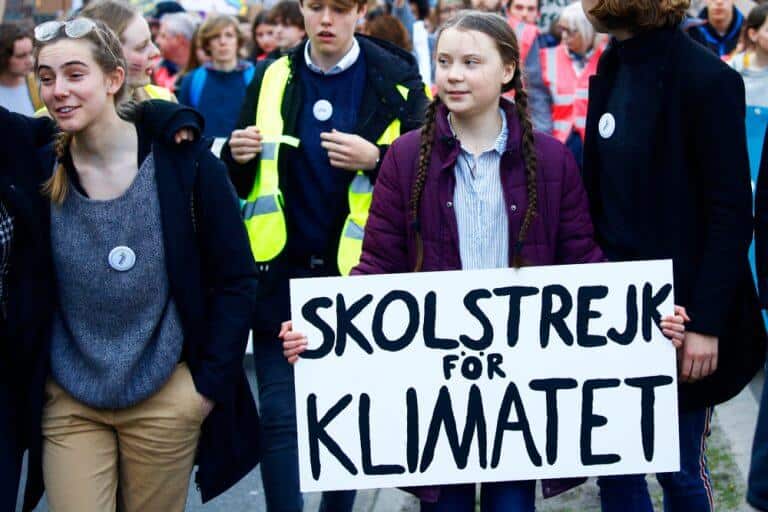
The climate crisis. Illustration: depositphotos.com

Israelis downplay the severity of the climate crisis – at the bottom of the international ranking

A survey in 25 countries found that only 42% of Israelis see the climate crisis as a serious threat – the lowest rate in the sample; terrorism (89%) and infectious diseases (55%) are higher in the order of priority. In Turkey, this increased to 70% compared to 47%
food waste Illustration: depositphotos.com

Prepared with love – and thrown away: How child involvement can reduce food waste

A new Israeli study finds that sandwiches and meals that children don't finish are a major cause of food waste – but a direct connection to the land and food production could change the picture.
Dr. Uzi Paz, late. Photo: Uri Rosenberg

Dr. Uzi Paz, a pioneer of nature conservation in Israel, passes away

Even before nature conservation was a familiar concept, Dr. Uzi Paz already saw reserves and streams as cultural assets that needed to be protected. He dedicated his life to nature and left behind a legacy and vision.
Climate issues are regulated through international agreements – this is climate diplomacy. Gideon Bachar. Photo: Yuval Yosef

Retiring Climate Ambassador Gideon Bachar: The Middle East will not survive without regional partnership – and Israel must lead

On the occasion of the end of his term as Envoy for Climate Change and Sustainability, Ambassador Gideon Bachar explains how climate diplomacy, regional resilience, and collaborations in the areas of water, food security, and Israeli innovation can determine whether the region will weather the crisis.
The sounds they make can be heard from hundreds of meters away. Photo: Prof. Amiel Ilani

Rock Rabbit – The Social Singer of the Desert and Construction Sites

He can sing, he's sociable, he lives in Israel and despite his size he's actually a relative of the elephant. Who are you, a rock rabbit? The hottest questions about the most interesting animals
The sands of the coastal plain are home to endemic animals and plants – that is, species that are not found anywhere else in the world. Photo: Amir Weinstein, insectour.com Insects – a small world in a big way

Dunes in Danger: Who Will Save the Sand Between the City and the Sea?

Open sandy areas on the coastal plain are shrinking at an alarming rate, and invasive vegetation is changing the landscape. The State of Nature report calls for stopping the change before it's too late
In power plants, especially those fueled by gas and coal, efficiency decreases as the air and water get warmer. The Orot Rabin power plant in Hadera. Illustration: depositphotos.com

When even the air conditioner gives up: Heat waves could overwhelm Israel's electrical infrastructure

The economy functions as if electricity is a given, but heat waves are breaking demand records, power lines are heating up, and solar power is disappearing at critical times. What appears to be a technical malfunction could turn into an economic and social crisis costing billions.
Snails and slugs, small mammals, other lizards, baby birds, snakes and occasionally eggs and fruit. The little one in the forest. Photo: Aviad Bar

Live the moment: The little one in the woods

Launch of the Red Book of Israeli Reptiles reveals sharp decline in the distribution of the wood lizard; experts call for increased protection of Mediterranean habitats and public awareness
Maintenance workers on the reef. Cocoon preparation. Credit: Renal Pickholz

Not just beautiful: the atolls—the reef engineers that produce sand and save coral

Parrotfish are herbivores that grind down algae and stone, contribute up to ~70% of the sand on tropical beaches, maintain reefs—and also exhibit unique behaviors such as a mucous “sleeping bag” and early storm prediction.
They will remain in the urban space. Wild boars in Haifa. Photo: Yahla Dor

Wild boars in Haifa: New study reveals a connection between residents' reports and socioeconomic status

While wild boars have become part of the urban fabric, research by Tel Aviv University and the Technion reveals that in well-off neighborhoods, more reports are registered with the municipal hotline – and therefore receive more treatment, while in disadvantaged neighborhoods
The first vocal repertoire described for a deer in the wild. Photo: Dr. Amir Arnon

The secret language of the Israeli deer: The first vocal repertoire revealed

New research reveals for the first time the courtship, threat and warning sounds of one of Israel's symbolic animals – and shows how deciphering the language could help save it from extinction
You were breathless with her extraordinary neck rotation ability. Photo: Rachel Aloni

Live the moment: The white-tailed deer – the silent predator that guards the fields

It has phenomenal hearing, a heart-shaped face, and the ability to "dive" through the air toward prey in complete silence. How did the snort become an unexpected ally of modern agriculture? The Hottest Questions About Animals
The Feast of Sacrifice, Lakia. Illustration: depositphotos.com

Circular Economy in Arab Localities in Israel: From Waste to Resource

New study reveals active reuse of by-products in businesses in Wadi Ara – but points to an urgent need for a platform, infrastructure and a change in mindset to expand the movement
How does the variation in flower colors occur, and why does the same species appear in different colors?. Anemones. Image courtesy of Prof. Yuval Sapir

Why are flowers colorful? Hint: It's not always natural selection

Evolutionary studies reveal: Sometimes flower colors result from precise ecological adaptations to pollinators and the environment, and sometimes it is a random variation that is preserved simply because it has no clear advantage.
Zin Zin and Rimba at the Ramat Gan Safari. Photo: Yam Seton

Zoos as an anchor for nature conservation and environmental education

After the tragic incident with the tiger in the biblical zoo, the question arises again why we even need zoos? International breeding research, scientific collaborations and a wildlife hospital – this is how they work
The unagi from the episode of the series "Friends" is a freshwater eel that is considered a sought-after delicacy in Japan. Photo: Pixabay

Cultured Ongi Eel: A Japanese delicacy becomes a global experiment for a new marine protein

New research led by Ben-Gurion University and sponsored by Forsea Foods shows that producing cultured seaweed could reduce greenhouse gas emissions and help combat the climate crisis.
"We study bats both in the field and in the laboratory. When possible, we prefer to work in the field." Prof. Yossi Yuval. Photo: Ofri Eitan

Living in the moment: Egyptian fruit bat reveals astonishing navigation and memory skills

Prof. Yossi Yuval explains how the fruit bat common in Israel combines night vision, sonar, and spatial memory – and also contributes to seed dispersal and tree pollination.
Seabed pollution. Illustration: depositphotos.com

The silent pollution of the deep: What sinks to the seabed doesn't disappear and it harms for years

A new Israeli study simulates oil spill scenarios and shows: In the deep sea, the damage to bottom creatures is more severe and the recovery time is longer – up to three to five years even at low pollutant concentrations. While the headlines focus on what
Dubai, before the mass planting of trees. Illustration: depositphotos.com

Dubai: A blooming desert or a green illusion?

Behind urban afforestation and sparkling green corners lie high water and energy consumption, pressures on desert systems, and difficult questions about sustainability. Is this ecological restoration – or urban greenwashing?
Plants growing under extreme desert conditions are able to absorb high levels of strontium. Desert plants in Namibia. Illustration: depositphotos.com

The radioactive secret of desert plants: How they help clean contaminated soils

Israeli research reveals that wild plants growing under extreme desert conditions absorb high levels of strontium – offering a natural solution for dealing with nuclear disasters and radioactive fallout
A variety of sponges in the Poleg Sea Reserve. Photographs: Tal Idan, Prof. Micha Ilan's laboratory, Tel Aviv University. The photo was taken using an underwater robot, robot operators: Oded Ezra, Itay Katzman, Assaf Giladi.

A Wonderful World in the Deep: Why Israel's Deep Sea Must Be Protected

Deep-sea research reveals unique habitats – from methane seeps and deep-sea corals to “sponge gardens” – but gas development, fishing and maritime traffic threaten them. The Society for the Protection of Nature presents a master plan for declaring marine reserves
Technological disruptions are also occurring in the energy sector today, turning the global energy market upside down. Illustration: depositphotos.com

Technological disruption in energy: The renewable energy revolution is changing the rules of the game

Common grebe. Photo courtesy of Prof. Sarig Gafni.

Common Digger: The Hidden Amphibian Struggling to Survive in Israel

The rare amphibian, which is neither a frog nor a toad, lives underground most of the year and only emerges on a few rainy nights. The common groundhog, which is at the edge of its global distribution in Israel, is facing a serious threat of extinction due to
Plastic is everywhere and there is no central supervision. Illustration: depositphotos.com

International study: Plastic contains more than 16 chemicals, thousands of which are hazardous to health and the environment

International study reveals: Plastic contains more than 16 different chemicals, including thousands of substances that may be harmful to health and the environment. There is something to be done
Global warming is causing stony corals, which already live at the edge of their suitable temperature range, to exceed their tolerance threshold. Corals in Eilat. Photo: Tom Schlesinger

Stony Corals: Reef Builders and Guardians of the Underwater World

Dr. Tom Schlesinger explains how tiny, fragile creatures create vast ecosystems, why they are sensitive to the climate crisis, and how childhood in Eilat led him to explore one of the great secrets of the sea.
Fish farm in Thailand. Illustration: depositphotos.com

Fish for Rosh Hashanah, without harming the sea

Artificial intelligence helps make fish farms more effective, environmentally friendly, and profitable – and also reduces dependence on destructive fishing
Insects are the most species-rich group of animals, and they also play a number of critical roles in ecosystems. Photo: Agricultural field with insect trap. Photo: Liraz Kabra-Leikin

Identify the insect: Artificial intelligence helps farmers maintain biodiversity

Rat, lives seven times longer than expected. Photo: Benny Vaknin

Animals of the moment: Rat

It lives a long life without aging, does not lose muscle mass, does not weaken, and does not get cancer. It is the animal whose genes we would all like to have, and no, it is not a mole, it is a rat. The questions
Mosquitoes. Illustration: depositphotos.com

More mosquitoes, more disease – the impacts of the climate crisis on public health

The climate crisis is causing a significant increase in the spread of mosquitoes, especially the Asian tiger mosquito – which raises the risk of early outbreaks of tropical diseases such as dengue fever and chikungunya in Israel as well.
A drone installs a marking on a power line. Photo: Dr. Eshel Ofir

High Voltage: How can we reduce bird collisions with power lines?

Israel is a major migratory route for birds, but many of them are injured here by collisions with high-voltage power lines. A new study examines what can be done to reduce the number of these injuries.
Poisoning from pesticides is the main threat to the biblical eagle in Israel today. Photo: Tuvala Salomon

Live the moment: The biblical eagle – the king of birds fighting for its survival in Israel

With a population of only about 200 individuals, the biblical eagle is critically endangered in Israel. Despite conservation efforts, poisoning, electrocution, and climate change threaten it, while it plays a critical role in the ecosystem as a cleaner.
Climate engineering is human intervention with the aim of reducing the effects of climate change and even reversing the trajectory of global temperature rise. Illustration: depositphotos.com

Climate engineering: A lifeline in the face of the climate crisis – or a risky step with unpredictable results?

In a world where global warming has already reached its peak, radical methods such as managing solar radiation by injecting aerosols into the atmosphere are being explored. Is this a temporary solution that could delay the crisis – or an intervention that could
The laws of physics are changing, and with them the familiar rules of flight. The breeding of tiny flying insects. Photo: Amir Sarig

Israeli study reveals: This is how tiny insects fly against the wind

They weigh less than a speck of dust and seem hopeless against the wind. New research reveals the flight secrets of some of nature's tiniest flying creatures, which could improve their effectiveness as pest control agents.
High temperatures that could cause damage to runways. Illustration: depositphotos.com

When Wizz Air melted from the heat

Extreme heat waves force airlines to cancel flights, change schedules and face heavy costs. This was one of the reasons why Wizz Air stopped operating in Abu Dhabi. Will there be future