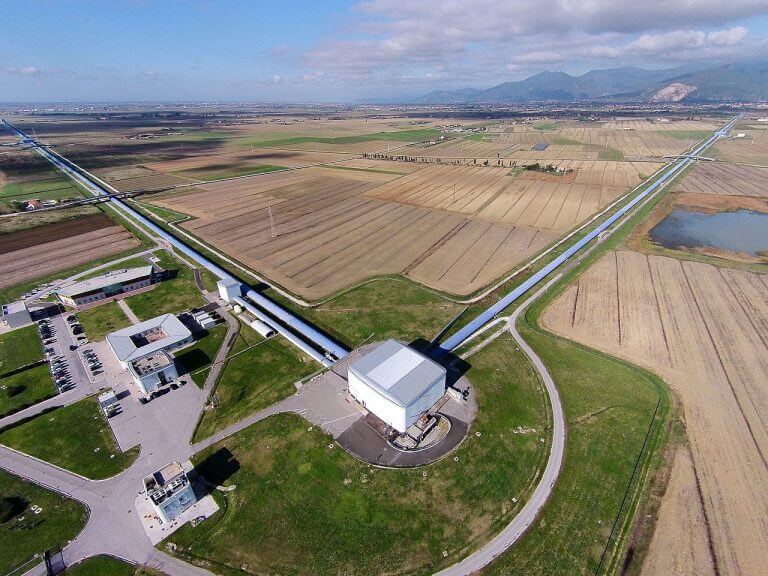
Virgo

New method deciphers the faint "ringing" of merging black holes

New method deciphers the faint "ringing" of merging black holes

Researchers at the University of Cambridge have developed a Bayesian analysis method that detects weak, complex oscillations in post-merger gravitational waves – potentially enabling more precise tests of general relativity
Artist's impression of an eccentric binary system of a neutron star and a black hole. The orbit of the neutron star is shown in blue and the motion of the black hole in orange as the two bodies orbit each other. The eccentricity shown here is exaggerated relative to the real system, GW200105, to make the effect on orbital motion more apparent. Credit: Geraint Pratten, Royal Society University Research Fellow, University of Birmingham

Scientists have detected the merger of a black hole and a neutron star in an elliptical orbit for the first time

A new analysis of the gravitational wave event GW200105 has found that a black hole and a neutron star collided in an eccentric orbit, rather than in a nearly perfectly circular orbit as previously thought, a finding that undermines conventional models.
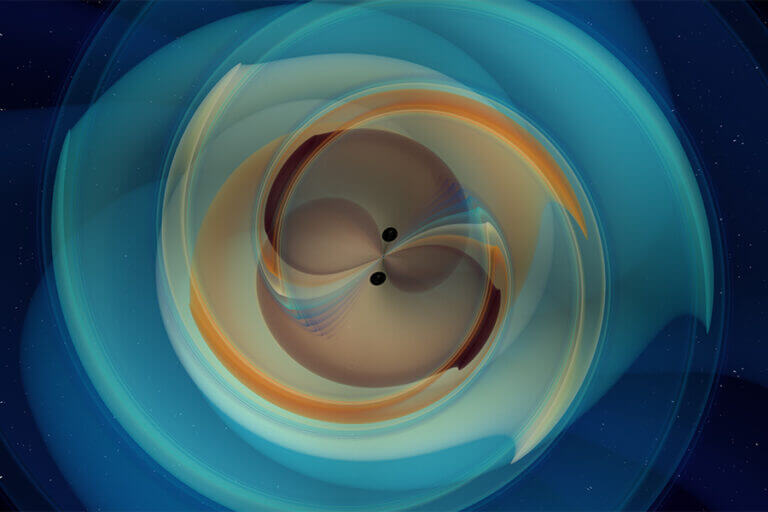
When two black holes collide, they release gravitational waves that allow scientists to determine their mass and spin. In January 2025, LIGO detected GW250114, the clearest signal yet of a black hole merger, providing new insights into these mysterious cosmic giants. Credit: Maggie Chiang for Simons Foundation

Hawking was right: New data confirms black holes never shrink

The sharpest and brightest gravitational signal ever measured, GW250114, allows the LIGO–Virgo–KAGRA collaboration to test Hawking's surface theorem and Einstein's prediction with unprecedented precision. Black holes "ring" after
Two massive black holes have collided in deep space, creating a final monster that defies current theories. Scientists say it's the most massive, fastest-spinning merger ever discovered.

LIGO Detects Gravitational Waves from Extreme Black Hole Merger *Pushing the Limits of Einstein's Theory of Relativity

A collision between two massive black holes creates a body that rotates at dizzying speeds and contradicts standard models – possibly resulting from previous mergers
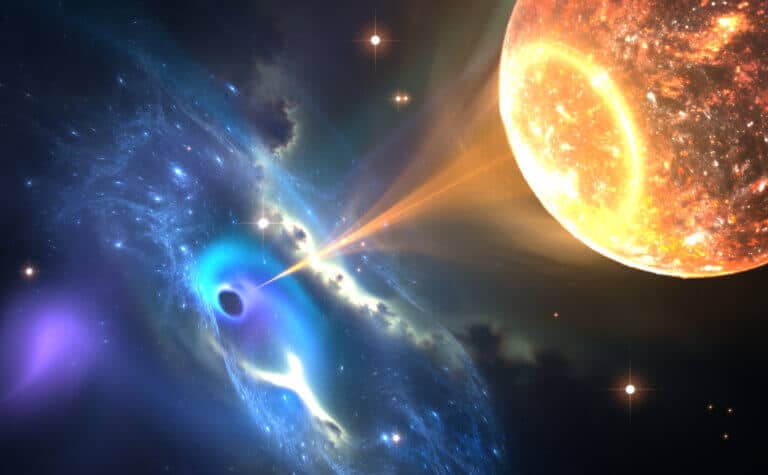
A black hole swallows its companion star. Illustration: shutterstock

Two gravitational wave events within 10 days: black holes have been discovered that eat neutron stars - "like Pac-Man"

The Laser Interferometer Gravitational Wave Observatory (LIGO) in the US and the Virago Gravitational Wave Observatory in Italy captured the gravitational waves from the death spiral and merger of a neutron star with a black hole, and not once but
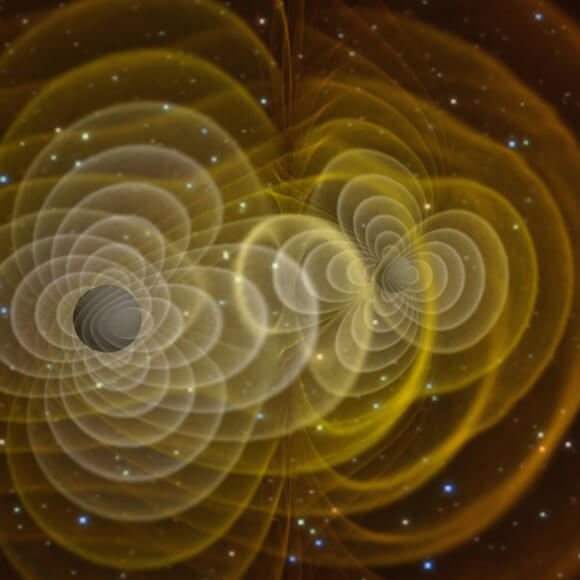
Simulation of a gravitational wave event. Illustration: MIT-LIGO

The most massive gravitational waves ever

A binary black hole merger probably created gravitational waves equal to the energy of eight suns * "Bang" in the Ligo and Virgo detectors is a signal for the source of the most massive gravitational waves ever
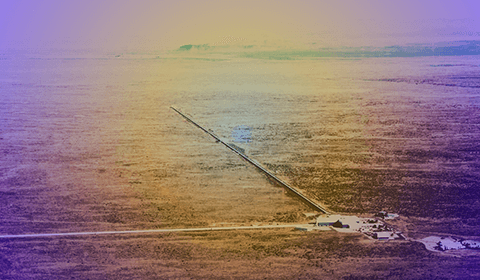
The Wirgo gravitational wave detector near Pisa in Italy is supposed to return to operation in the spring of 2017, and thus it is possible that three detectors of this type will operate together, in three different places in the world, for at least a month. Source: The Virgo collaboration.

A new detector will determine the origin of gravitational waves