NSF

Europe warns: Trump's grant rules could isolate American science

Europe warns: Trump's grant rules could isolate American science

OMB proposal gives political appointees more power in funding decisions, limits collaborations with countries designated as adversaries, and makes it harder to publish articles and attend conferences. European research organizations fear long-term harm to collaboration
A researcher examines culture bottles as part of the research and production of penicillin during World War II.

America in Test Tube – Chapter Three The War That Built the American Science Funding System

Until World War II, the U.S. government invested relatively little in research conducted by universities and companies. The emergency gave rise to research contracts, expert evaluations, overhead funding, and rules for distributing patent rights—mechanisms that continue
Illustration depicting the shift of the science center from Europe to the United States and the new scientific competition with China and the European Union

250 years of the United States: This is how the world's greatest scientific power was built — and how it endangers its future

Germany, Britain, and France dominated science in the early 20th century, but the United States overtook them through the absorption of researchers, long-term public investment, strong universities, and scientific freedom. On the 250th anniversary of the Declaration of Independence, a cut
NSF logo - the US National Science Foundation. Illustration: depositphotos.com

Trump fired all members of the NSF oversight board just before they were about to warn about the loss of scientific primacy to China

All 22 serving members of the National Science Board have been removed without public explanation, in a move that raises concerns about the damage to the independence of American and global science.
The Trump administration is harming higher education institutions from many directions. Illustration via ideogram.ai

The upheaval in American science: What will remain of Trump's policies and how uncertainty is harming the next generation of researchers

Two Science reports in January 2026 describe “noisy” moves that sometimes stall in the face of structural changes that could weaken the training pipeline — from budgets to immigration and DEI
The entrance to the National Science Foundation building. Employees received a sudden evacuation order. Illustration: depositphotos.com

US science agencies under attack: grants are being cut, journal subscriptions are being canceled, and NSF headquarters is being closed

Science magazine reports on a series of decisions by the Trump administration that are harming American science – favoring artificial intelligence and quantum computing, excluding life sciences, and cutting support for groundbreaking research are sparking a wave of protest in the community.
Sharp cuts in funding for scientific research, especially in NIH and NSF budgets. Image prepared using DALEE

Researchers under threat: Trump administration's NIH budget cuts disrupt critical research worldwide

From the University of Michigan to South Africa: Researchers Describe How Trump Administration Budget Cuts Are Disrupting Research Programs
Layoffs in US scientific agencies. Image prepared using DALEE

Bad week for science: sudden cuts to the National Science Foundation, the Gene Bank, and climate

Science reports another disastrous week for Trump and his demolition contractor Elon Musk. US cuts funding for IPCC climate impact report
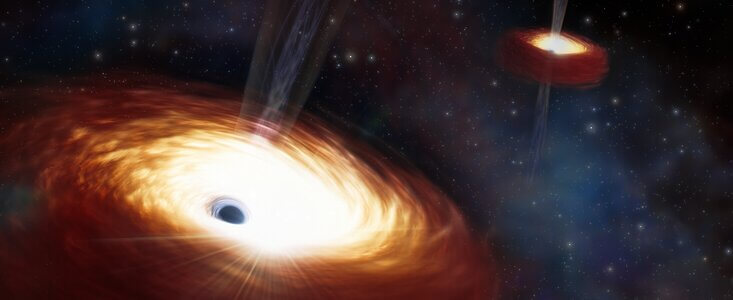
Artist's impression of the heaviest pair of supermassive black holes: Using archival data from the Gemini North telescope, a team of astronomers has measured the heaviest pair of supermassive black holes ever found. The merger of two supermassive black holes is a phenomenon that has long been predicted, but never observed. This pair provides insight into why such an event seems so unlikely in the universe. Credit: NOIR LAB

Astronomers have measured the heaviest pair of black holes ever found

Data from the Gemini North Telescope provide a possible explanation for the halting of the merger of a pair of supermassive black holes at the center of a galaxy
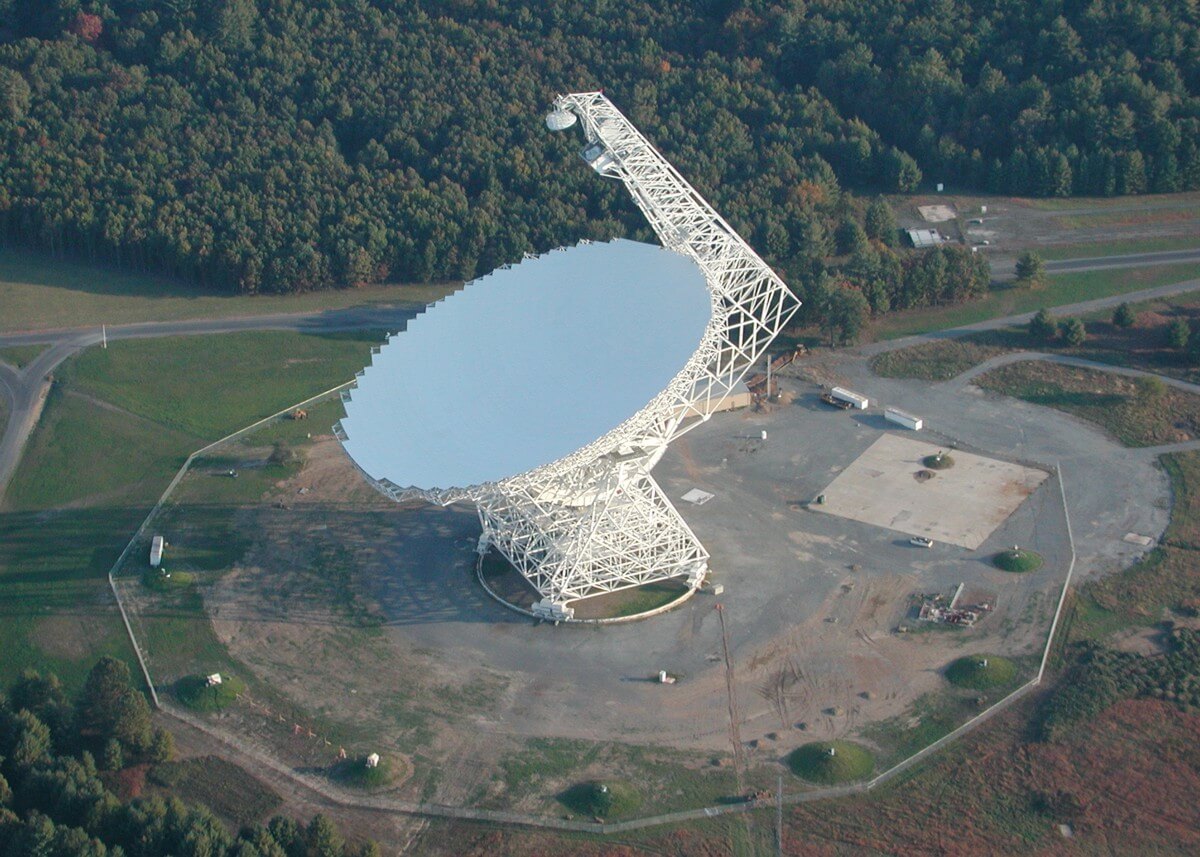
The radio telescope at Green Bank is facing cuts. Photo: Universe Today

Budget cuts for US ground telescopes. Facilities will close

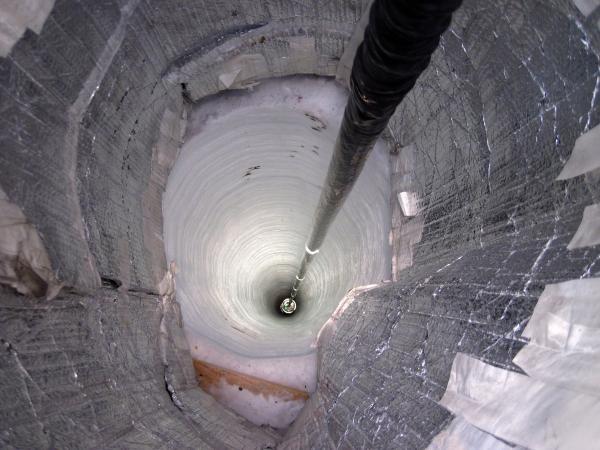
Drilling the last hole to place the sensors of the ICE CUBE project in the South Pole. Photo: NSF

Construction of the IceCube Antarctic neutrino telescope has been completed

The "telescope" or rather the neutrino particle detector consists of a series of sensors scattered within a cubic kilometer of ice at the station located at the geographic South Pole