polymers

Combined structures of fatty acids and oligomers that may form cell-like compartments

Cooperation between simple molecules may explain how the first cells formed

Researchers at the Hebrew University of Jerusalem have linked fatty acids to hydroxy acids, resulting in membrane-like structures that assemble easily and survive longer in water. The findings suggest a possible mechanism for the transition from dormant chemistry to pre-living systems.
Order from movement. Photos: Tel Aviv University.

Life from motion: New discovery reveals how order is born from rotation

Tel Aviv University researchers have discovered that particles spinning in opposite directions in a liquid self-organize into polymer-like “active” chains that move, rotate, and exchange “partners” — a phenomenon that may shed light on self-organization processes in nature and lead to
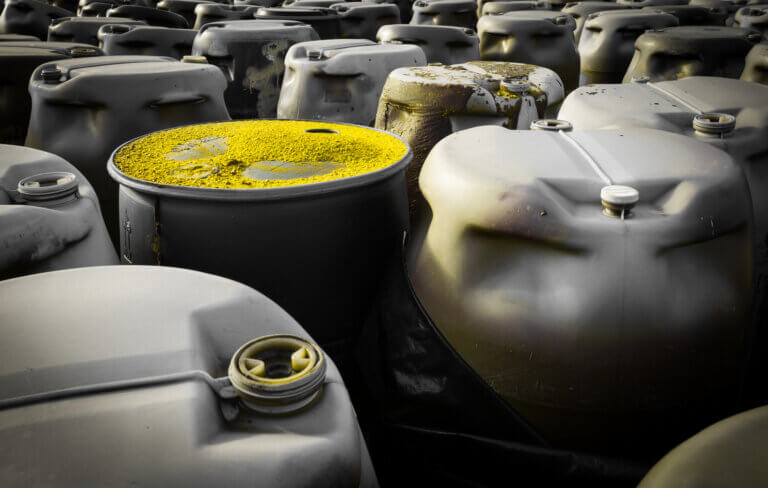
Storage of hazardous materials. Illustration: depositphotos.com

A common detergent is linked to a significant increase in the incidence of Parkinson's disease

For the past hundred years, the chemical trichloroethylene [TCE] has been used in decaffeinated coffee, metal cleaners, and dry-cleaned clothes. The substance itself is known to be a carcinogen, it is associated with abortions, congenital heart disease
Left: a bluish, semi-transparent band of the PEDOT polymer before the final processing step; Right: the flexible and transparent PEDOT(OH) polymer after the final step. [Courtesy: James Ponder]

Transparent, conductive and printable plastic

A team of chemists and engineers from the Georgia Institute of Technology succeeded in developing a polymer capable of conducting electricity with high efficiency while being flexible, transparent and easy to use on an industrial scale
Pile of used tires. Photo: Image by Pexels from Pixabay

Chemists have found a method to recycle used tires

After being exposed to sunlight for ten minutes, the solid polymer (left) breaks down and disappears (right) [Courtesy: Paul Kohl]

A polymer that self-decomposes when exposed to the sun

Air pollution in Beijing. Photo: 大杨.

New window screens will filter air pollutants

Researchers have developed a new method to treat atherosclerosis

plastic. Illustration: shutterstock

Extremely strong and recyclable plastic

A polymeric nicotine trap consists of a porphyrin derivative (black) in which two amide groups (green) are attached to a zinc atom (purple) located in the center of a ring (blue). The nicotine molecule is colored red. The bottom image is a XNUMXD rendering of the polymer.

Nicotine capture polymers

Image representing the receipt of elastin from tropoelastin

Deciphering the structure of the protein elastin

Javid Rzayev

Nanomembranes for filtering drinking water from bacteria

Rigoberto Advincula

Sensors for detecting explosives and monitoring food products

A self-woven nanometer rope as seen through the lens of an atomic force microscope

Nanoscale rope and complex self-organizing nanomaterials

A light-sensitive structure made of graphene and polymers

Light is able to control the electronic properties of graphene

Polymers with structural memory. Photo: Syracuse University

Polymers with structural memory

Shaul and Rene Gessner

Plastic

Nylon stockings on flesh and blood legs

Ma'am, it's mine! About the nylon riots

Cancer cells that have been treated with anti-cancer agents. Yale University

An innovative method for examining cancer proteins

Papilloma virus - HPV

Carbon nanotube sensors for protein detection

David Reeder with a plastic solar cell

Extending the lifetime of plastic-based solar cells

Developers of the canvases - Ron Zuckerman and Ki Nam Tai. Photo: Roy Kaltschmidt from Berkeley Lab PR

A molecular paper was prepared - a two-dimensional polymer crystal

Professor Lin Lu. Photo: Robin Block of the Chemical Engineering Department at Princeton

Plastic solar panels

Pulling a thin thread of material (above) out of the solution (below), the polymer filaments, becoming a tangled mass, align. Illustration courtesy of Gang Chen

Polymers that turn from insulators to conductors

Rare supporting cells in the inner ear of mice began to transform into sensory hair cells

New gel against AIDS for women

Rare supporting cells in the inner ear of mice began to transform into sensory hair cells

A new polymer extends the shelf life of food and pharmaceutical products