Juno

Passing “behind” Jupiter: Blocking and bending the radio signal allows for a more precise measurement of the planet’s shape.

New measurements shrink Jupiter: The giant planet is smaller and flatter than we thought

Analysis of 26 radio measurements from the Juno mission, when the spacecraft passed behind Jupiter, found that the planet is about 8 km narrow at the equator and about 24 km flat at the poles – a change that refines models of the internal structure and winds.
This illustration shows charged particles from Jupiter hitting the face of Europa, separating icy water molecules into hydrogen and oxygen molecules. The scientists believe that some of these newly formed oxygen gases can move into the moon's subsurface ocean, as the circled figure shows. Credit: NASA/JPL-Caltech/SWRI/PU

Will the moon Europa return? The Juno spacecraft discovered oxygen on Jupiter's moon

NASA's Juno spacecraft directly measured charged molecules of oxygen and hydrogen from the atmosphere of Europa, one of Jupiter's largest moons. According to new research by scientists at SwRI and Princeton, these observations provided
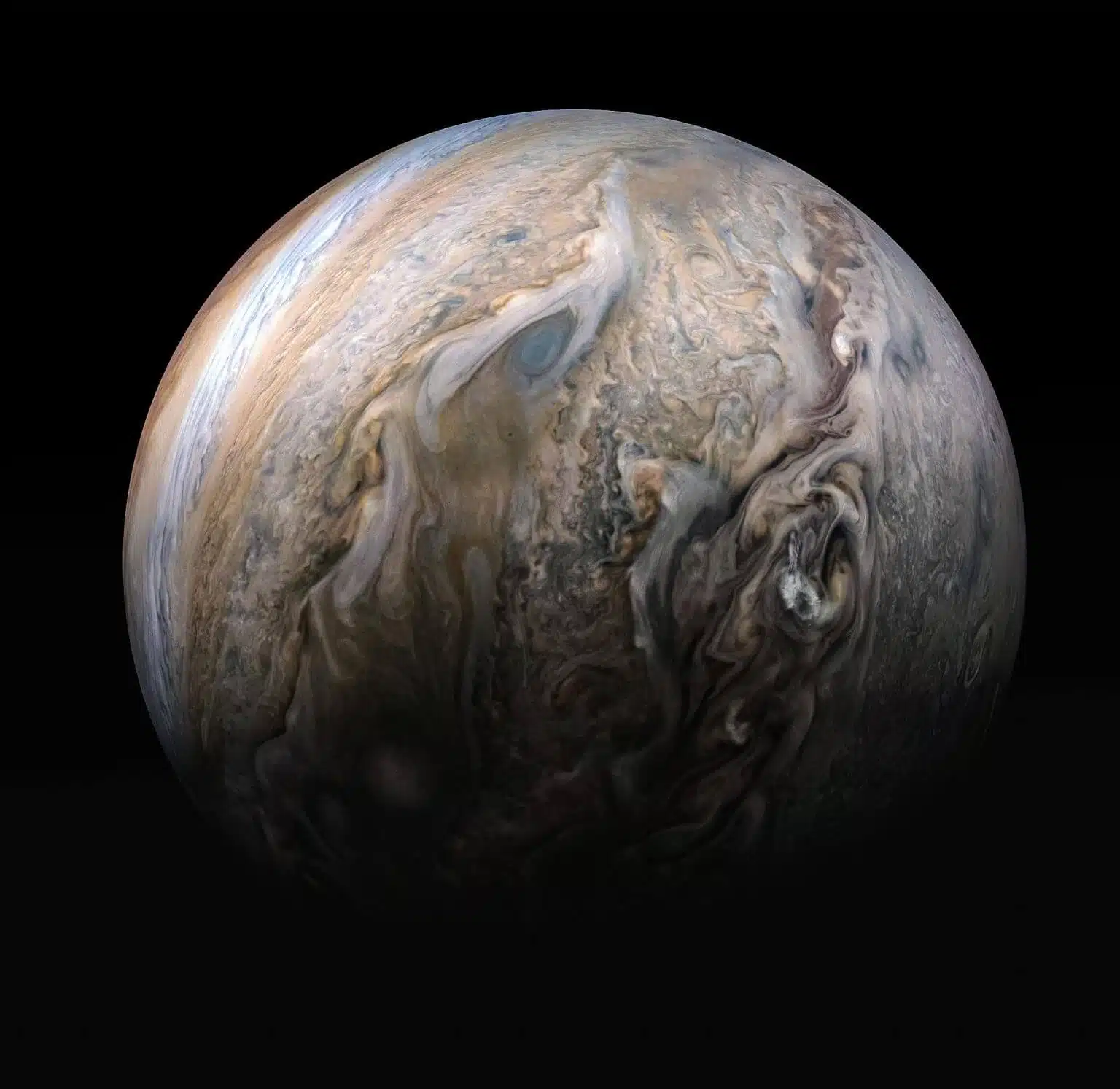
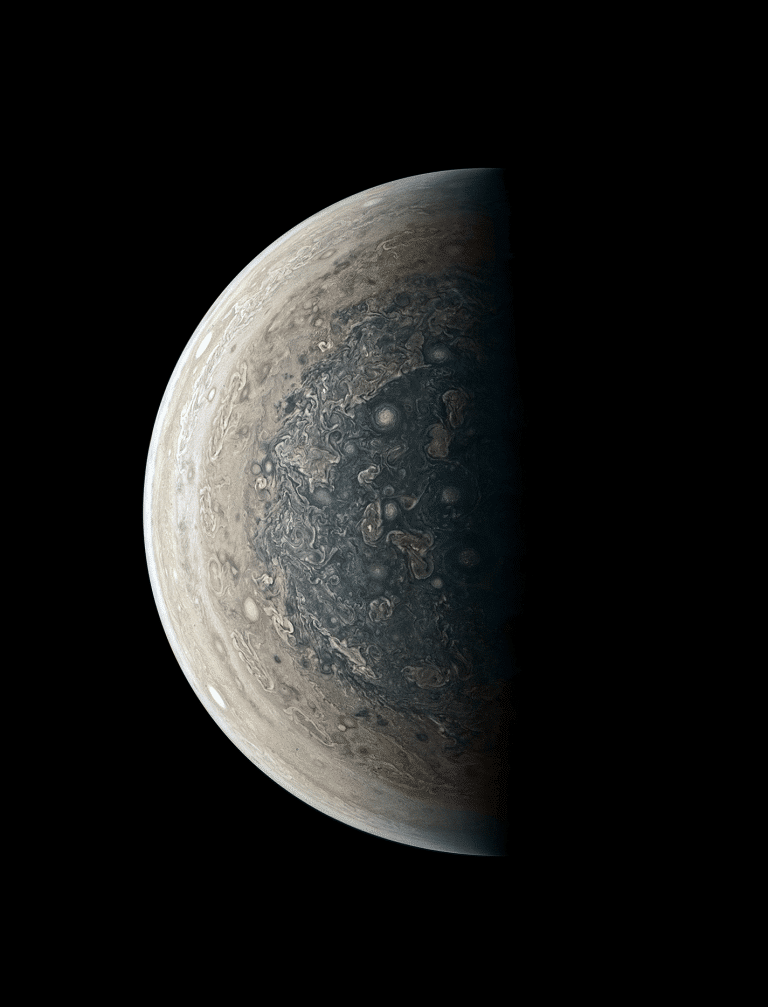
Image of Jupiter taken by Juno in 2019, showing stormy areas in the northern hemisphere. Credit: Enhanced image by Kevin M. Gill (CC-BY) based on images provided courtesy of NASA/JPL-Caltech/SwRI/MSSS

Extrasolar Planet Hunter Targets Jupiter: A New Twist in the Space Exploration Plot

For the first time, NASA activated a tool designed to discover planets many light years away on an object in the solar system, in a study of the winds of Jupiter
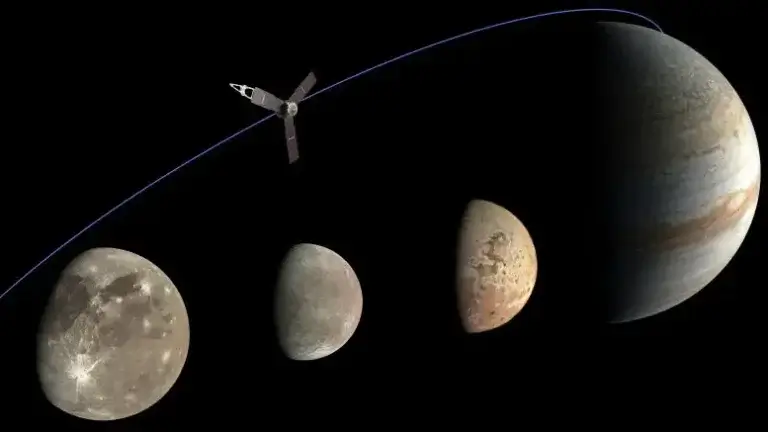
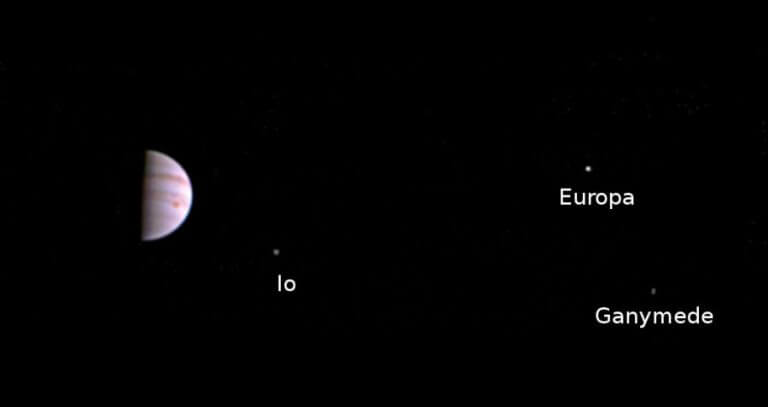
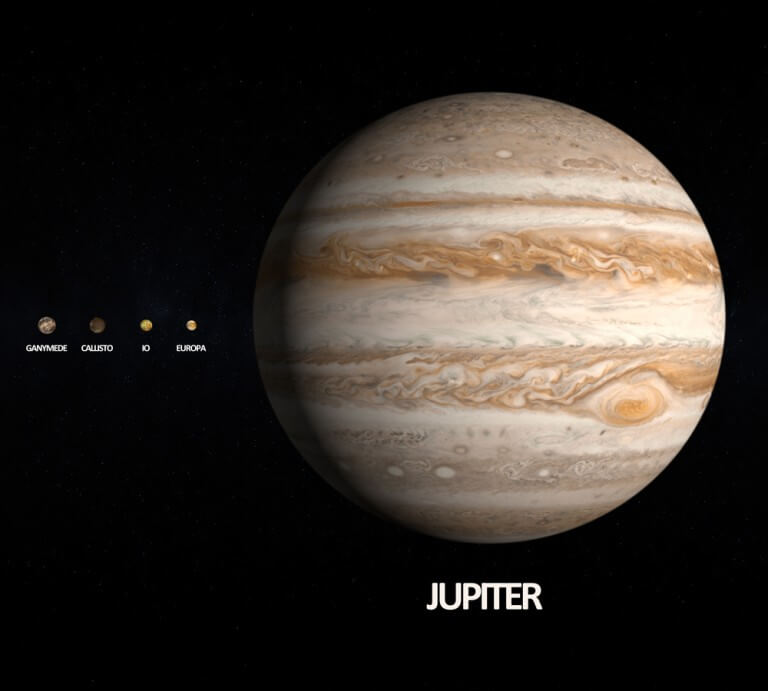
At left, Ganymede, Europa and Io—the three Jovian moons passed by NASA's Juno probe—as well as Jupiter itself, as shown in an image illustration created from data collected by the probe's JunoCam camera. Credit: Image data: NASA /JPL-Caltech/SwRI/MSSS. Photo processing: Kevin M. Age (CC BY); Thomas Thompoulos (CC BY)

Juno passes by Io tomorrow (30/7).

Io is a raging volcanic world. NASA researchers are specifically looking at a "hot spot" observed by several spacecraft orbiting Jupiter that has grown from snapshot to snapshot
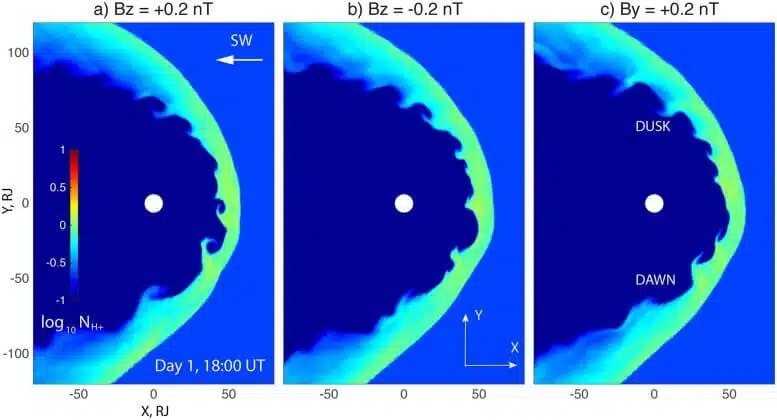
A team led by SwRI discovered intermittent evidence of Kelvin-Helmholtz instabilities, giant swirling waves, at the boundary between Jupiter's magnetosphere and the solar wind that fills interplanetary space. The model here is from scientists at the University Corporation for Atmospheric Research in a 2017 GRL paper. Credit: UCAR/Zhang, et.al

The Juno spacecraft encounters giant swirling waves at the edge of Jupiter's magnetosphere

Researchers have discovered that the Juno spacecraft often encounters giant swirling waves at the boundary between the solar wind and Jupiter's magnetosphere
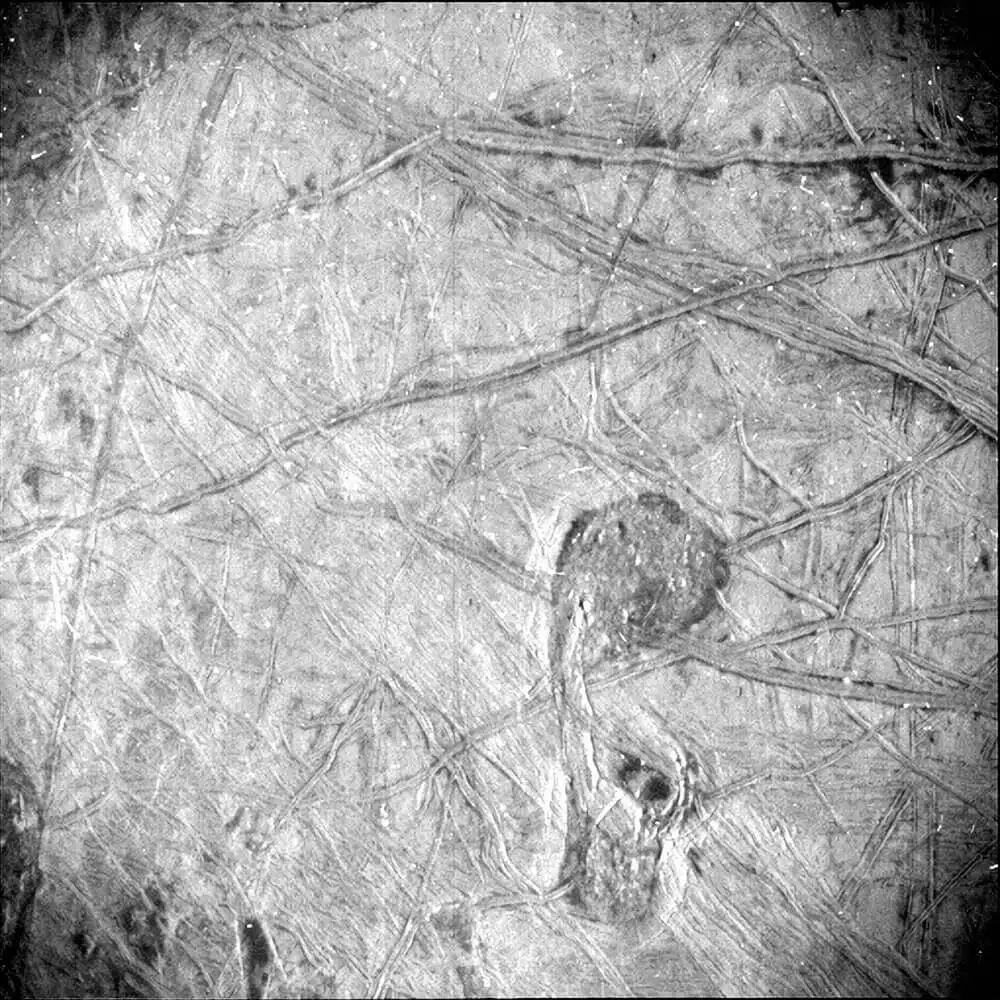
The terrain features of Europa, Jupiter's icy moon, are revealed in an image from Juno's Stellar Reference Unit (SRU) taken during the spacecraft's flyby on September 29, 2022. Credit: NASA/JPL-Caltech/SwRI

The Juno spacecraft captured the highest resolution image of an enigmatic region on Europa's moon

Observations from the Juno spacecraft's flyby of the fair moon have provided the first close-up in more than two decades of this ocean world, resulting in stunning images and unique science
Six cyclones at Jupiter's south pole, as captured by the Juno probe's infrared lens in February 2017. Beautifully arranged and shaped like a rose cake. Source: NASA

The mystery of Jupiter's cyclones

They are powerful, they are the size of Australia and no one imagined them until a few years ago - what is the secret of the storms at the poles of the largest planet in the solar system?
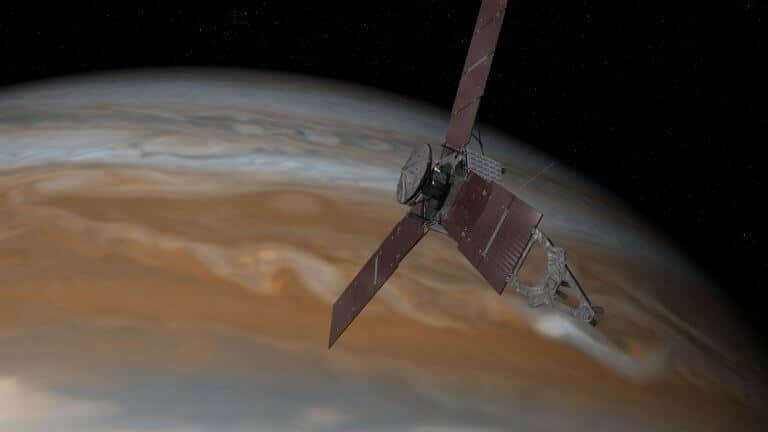
Image of the Juno spacecraft over Jupiter's Great Red Spot (visible in the lower left of the image). Source: NASA/JPL-Caltech.

The Juno spacecraft has a new program - the Galilean moons

For the past five years it has been circling Tzedek and transmitting to Israel a huge amount of photographs and information related to Tzedek. Since she has a large stock of fuel left, there are those who are thinking of extending her stay around
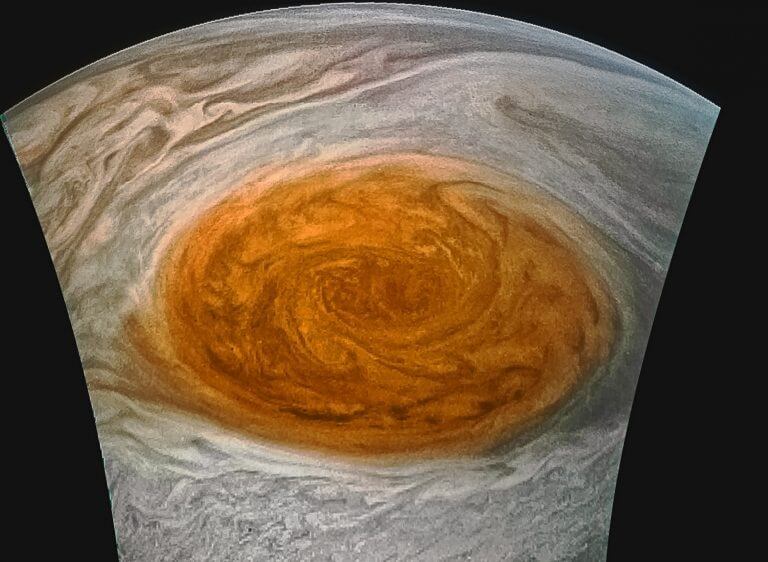
Jupiter's Great Red Spot, as photographed by the Juno spacecraft's JunoCam on July 10, 2017. Source: NASA/JPL-Caltech/SwRI/MSSS/Gerald Eichstadt/Justin Cowart.

Juno reveals the depths of Jupiter's Great Red Spot

The Great Red Spot, in a processed image from Juno. Source: NASA / SwRI / MSSS / Jason Major.

Juno passed over Jupiter's Great Red Spot for the first time

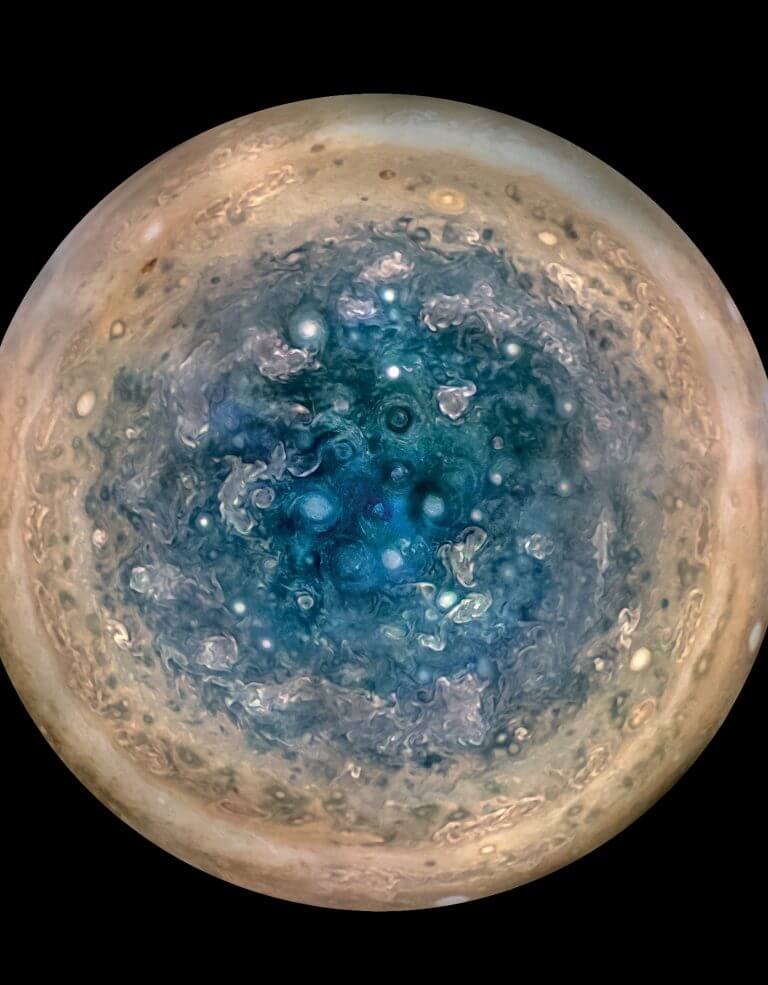
Jupiter's south pole, in a color-processed image taken by Juno on February 2, 2017. The image was taken from a distance of 102,100 km. Source: NASA.

Juno successfully completed its fourth flyby of Jupiter

The first image transmitted by the Juno spacecraft from the Jupiter system, photo: NASA

The first image of Juno from the Jupiter system

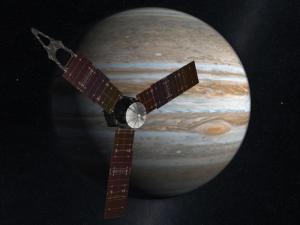
An image of Juno near Jupiter. The probe's huge solar panels are clearly visible. Image: NASA

Success in the first stage - Juno in orbit around Jupiter

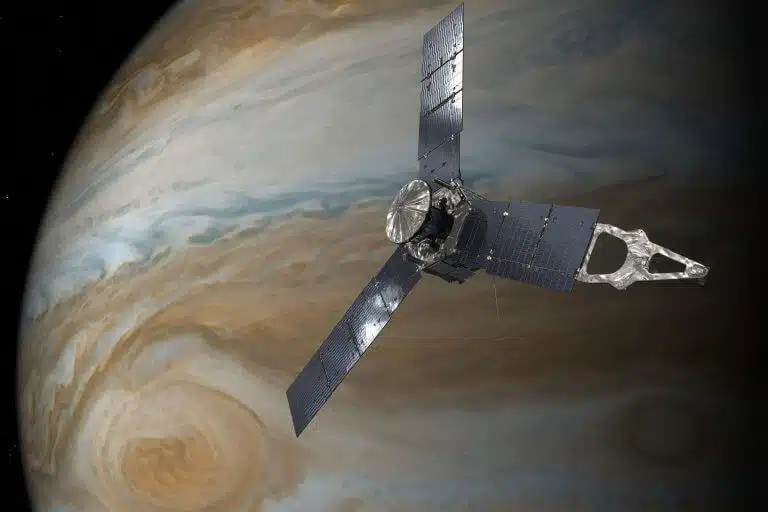
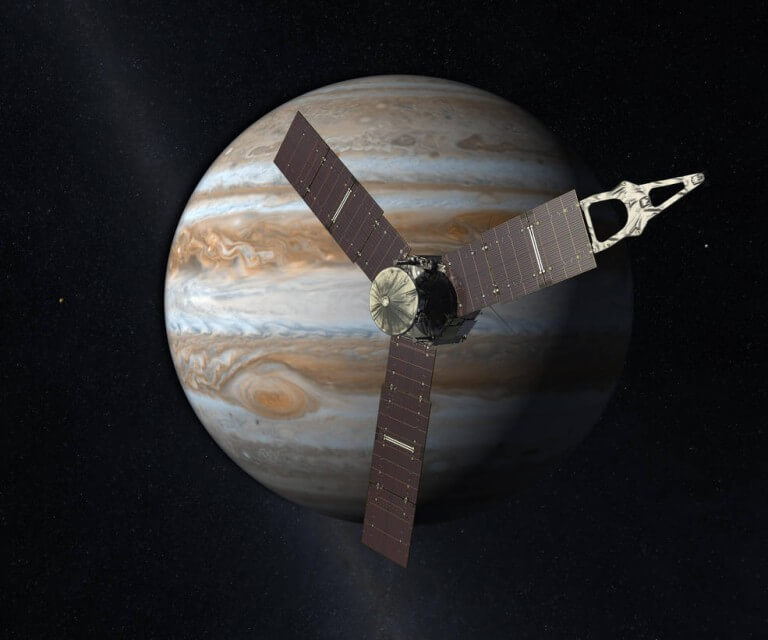
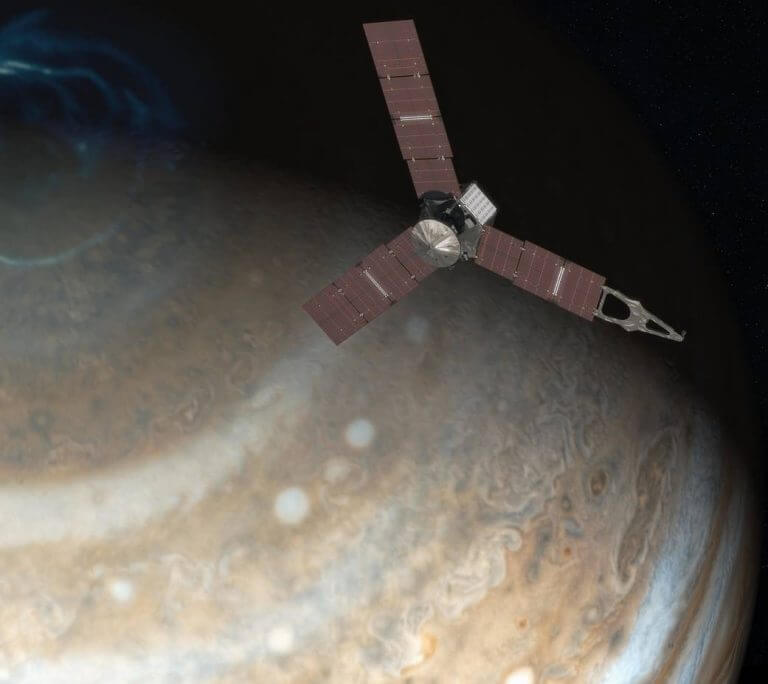
The Juno spacecraft hovers over Jupiter. Illustration: NASA

Juno comes to Jupiter this week

An Atlas 5 rocket carrying the Juno spacecraft launched from Launch Complex 41 at Cape Canaveral Air Force Station in Florida, August 5, 2011. Photo by NASA/Bill Ingalls

The Juno spacecraft was launched towards Jupiter

Artist's illustration of the Juno spacecraft near Jupiter. Illustration: NASA

The Juno spacecraft is fueled

Artist's illustration of the Juno spacecraft near Jupiter. Illustration: NASA

NASA is preparing for the Juno mission to Jupiter

As the sun weakens, cosmic radiation at flight altitude strengthens

Airship to justice

As the sun weakens, cosmic radiation at flight altitude strengthens

Hubble and JIMO – victims of NASA budget cuts

As the sun weakens, cosmic radiation at flight altitude strengthens

NASA assigns Jupiter a mission to its icy moons

As the sun weakens, cosmic radiation at flight altitude strengthens

Acid Europe may not explain life

As the sun weakens, cosmic radiation at flight altitude strengthens

Return to justice - maybe only in 2018