clarity

Clusters of satellites, such as the BlueWalker 3 prototype, are causing concern among astronomers due to possible interference with night sky observations and radio astronomy. Balancing the global needs for communication and maintaining astronomical research is critical. Credit: AST SpaceMobile

A prototype of a large low-orbit communications satellite is troubling astronomers

The BlueWalker 3 satellite whose antenna area is 64 square meters has become one of the brightest objects in the night sky, the fear is that when there are a hundred satellites in this constellation and hundreds in other constellations it will be impossible to watch the sky
Betelgeuse dims over time, with an interstellar cloud seen in the last panel. NASA, ESA and E. Wheatley (STScI)

Beetlejuice: The star continues to behave mysteriously - here's what will happen if it explodes

At the end of 2019, the light of the star dimmed and went from the brightest in the Orion group to the third brightest. Since then it has returned and become even brighter than before
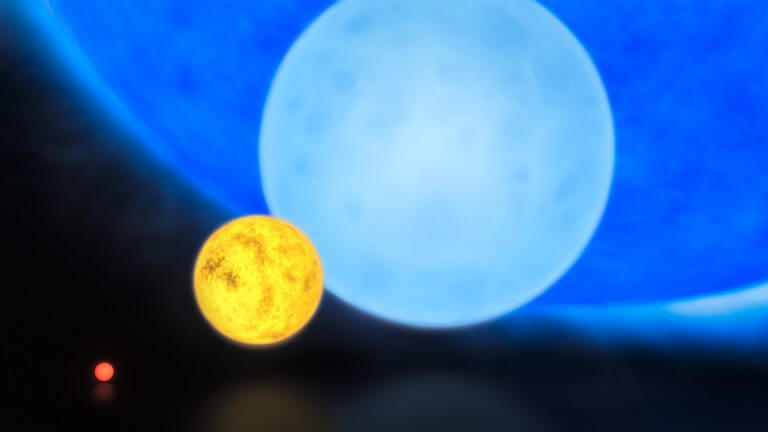
Comparison of sizes of different types of stars. From left to right: a red dwarf, with a mass of about 0.1 that of the Sun; "yellow dwarf", like our sun; A "blue dwarf" of about 8 solar masses; and the giant star R136a1, which has about 300 solar masses. Source: ESO/M. Kornmesser.

Brighter than the sun, hotter than the summer in Israel