artificial intelligence

Upgrading skills for the future world of work. Illustration: depositphotos.com

Huge study: Less skilled jobs experience more pressure to upgrade skills in job ads

Analysis of 167 million U.S. job postings finds “profound” skill shifts needed more in occupations with lower wages and education requirements, and that small businesses are upgrading skill requirements to catch up with larger businesses
Nvidia CEO Jensen Huang at the Davos 2026 conference. Photo courtesy of the World Economic Forum

The “five-layer cake” of artificial intelligence

Nvidia CEO Jensen Huang, Microsoft CEO Satya Nadella, Google DeepMind CEO and other executives described the different needs of each layer - from infrastructure to applications.

EU softens GDPR to accelerate AI revolution

After years of GDPR making data use limited and complicated, EU advances easing of restrictions that would expand access to data for AI training; industry welcomes, rights groups warn of loss of transparency and citizen control
When an artificial intelligence agent replaces the student on a test. Illustration: Avi Blizovsky via DALEE

Fear: “AI agents” will receive an academic degree instead of the student

University of Mississippi professor Mark Watkins warns that marketing messages for the Comet browser portray an “agent” capable of completing assignments and exams – forcing academia to quickly change assessment methods
Artificial intelligence in the laboratory. Illustration: depositphotos.com

When the machine wears a lab coat: Artificial intelligence enters the lab

The story of artificial intelligence is no longer just about automation and process optimization, but about changing the way we work: models that identify hidden patterns, formulate hypotheses, and accelerate discovery in science and medicine.
QED knows how to point out gaps in research and suggest solutions. An example of the platform's product in response to a review of a study recently published in a respected scientific journal | Source: Screenshot taken while testing the platform, Science Communications Team. Approved for publication by Oded Rechavi

Peer Intelligence: An Israeli AI peer review tool designed to accelerate and improve scientific publishing

The QED platform offers researchers critical feedback within minutes, to more quickly identify good, original, and valid science above the “noise” of the flood of literature, without taking the individual out of the loop.
A machine with consciousness. Illustration: depositphotos.com

We may never know if artificial intelligence is conscious, says Cambridge philosopher

Dr. Tom McClelland argues that we currently have no reliable way to test consciousness in machines, and warns that the uncertainty surrounding consciousness in artificial intelligence could become a tool for hype and branding — while the central ethical question is actually related to
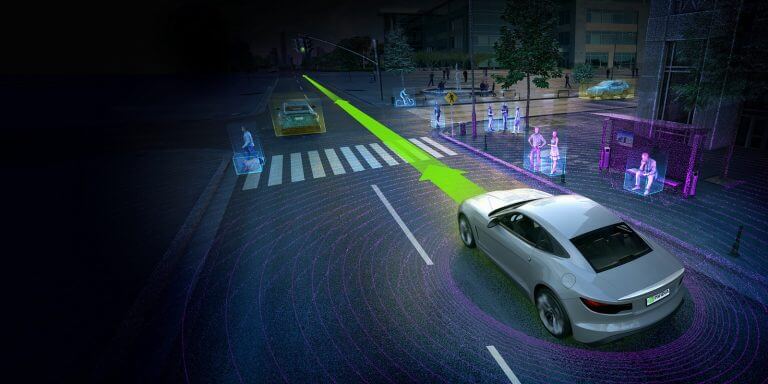
The OmniPredict system uses a multi-modal language model to predict in real time what pedestrians are likely to do – and in early tests it outperformed leading models without dedicated training. Simulation: Avi Blizovsky via DALEE

New AI model is surprisingly good at “reading” human minds

Researchers have developed a new artificial intelligence system that advances autonomous vehicles beyond simply “seeing” pedestrians, to the ability to predict their next action.
Image caption: Princeton researchers have found that the prefrontal cortex of primates reuses modular thinking blocks to solve similar tasks. This gives biological brains a flexibility that artificial intelligence still lacks. The insight could help improve AI systems so that they retain old skills even as they learn new ones. Credit: Adapted by Dan Wahaba (Princeton University), based on “Brain Silhouette 2” (Littleolred, CC0 1.0, freesvg.org) and “Lego bricks” (Benjamin D. Esham, CC BY-SA 4.0, Wikimedia Commons).

The brain has a shortcut to learning that artificial intelligence can't copy

Researchers have found that the brain repeatedly relies on the same cognitive “building blocks” when performing different types of tasks. By reassembling these blocks in new ways, the brain can rapidly generate behaviors
Prof. Christian Meyer presents the multi-million-unit neuromorphic computer at the TSMC conference in Amsterdam. Photo: Avi Blizovsky

Narrowing the energy efficiency gap between the brain and artificial intelligence

At the 2025 TSMC Europe OIP conference in Amsterdam, Prof. Christian Meyer from TU Dresden presented SpiNNaker-2 – a giant neuromorphic computer, based on event processing and thin-edge hardware, designed to run artificial intelligence models in real time.
Frontal (left) and side (right) images of a galactic gas disk. These images of gas spreading after a supernova explosion were created by the alternative deep learning model. Credit: RIKEN

New AI technology maps 100 billion stars in our galaxy with unprecedented accuracy and speed

Combining a deep learning model with physical simulation saves decades of computation and allows for tracking both supernovae and long-term galactic evolution.
The effects of artificial intelligence on the world of employment. Illustration by Avi Blizovsky using DALEE 2

Research: Almost all high-tech workers in Israel already use creative artificial intelligence tools

A survey by the Innovation Authority and the Brookdale Institute reveals that GenAI has become an everyday work tool in most high-tech professions, improving productivity and product quality – but also raising concerns about job losses, especially among workers in positions
First-hand inventions from artificial intelligence. Illustration: depositphotos.com

The references cannot be trusted.

Chatbots generate invalid links to non-existent sources, thereby undermining the role of the reference to the source.
Microsoft researchers have developed an artificial intelligence system called Cell2Sentence-Scale. Think of it as GPT-chat, but for the language of cells and the molecules they are made of.

Artificial intelligence developed a new hypothesis for treating cancer – and verified it in laboratory experiments

Microsoft's Cell2Sentence-Scale Model Identifies Silmitasertib as a CK2 Inhibitor That Increases Antigen Presentation in "Cold" Cancer Cells – A New Insight Tested in the Lab and Demonstrates AI Research Creativity
Artificial intelligence could be used to flood the scientific journal system for corporate disruption. Illustration via DALEE.

A flood of AI-based "science" could advance corporate interests – here's how to stop it

British researcher warns that combining artificial intelligence and the lack of thorough peer review threatens the credibility of science, and proposes reforms to the scientific method
Delusional artificial intelligence. Illustration: depositphotos.com

Why OpenAI's solution to AI "hallucinations" will eliminate GPT chat tomorrow morning

A recent paper shows that token-by-token prediction creates an inherent error rate, which is exacerbated by binary evaluation metrics that reward guessing; threshold-based solutions reduce hallucinations but degrade the user experience and increase computational cost—and therefore
The ruins of the city of Popeye. The ash actually helped preserve the buildings. Illustration: depositphotos.com

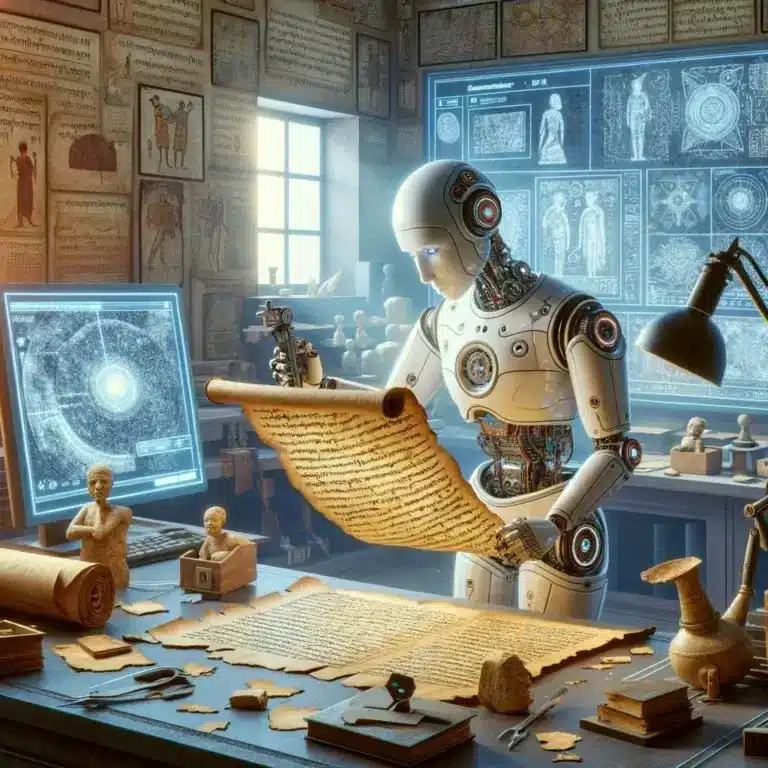
Researchers used computed tomography to decipher scrolls burned two thousand years ago

Using imaging technologies and artificial intelligence, scientists have managed to read charred texts from Herculaneum, written by the Epicurean philosopher Philodemus.
Insects are the most species-rich group of animals, and they also play a number of critical roles in ecosystems. Photo: Agricultural field with insect trap. Photo: Liraz Kabra-Leikin

Identify the insect: Artificial intelligence helps farmers maintain biodiversity

Image - Robot swarm. Photo: Tel Aviv University

A Breakthrough in Collaborative Robotics: The "Curvature Criterion" Inspired by Ant Swarms

Researchers from Tel Aviv University and Radboud University present a new geometric rule that allows simple, tiny robots to cooperate in transporting large loads – without sensors, communication, or external control.
Artificial intelligence is unable to correctly predict suicides. Illustration via DALEE.

Large-scale study: Artificial intelligence tools fail to predict suicide

A large-scale study published on September 11 in the journal PLOS Medicine found that machine learning algorithms for predicting suicide and self-harm are too inaccurate to be used as screening tools or measures.
Unemployment increases due to job losses to artificial intelligence. Illustration: depositphotos.com

New study: Since the introduction of chat-GPT – junior jobs have been dramatically affected

A comprehensive study by economist Erik Brinwolfson reveals a sharp decline in young people's employment in fields affected by artificial intelligence, especially in software development, marketing, and accounting.
Unemployment increases due to job losses to artificial intelligence. Illustration: depositphotos.com

The AI ​​Revolution and the Danger of Recession Among White-Collar Workers

Analyst Brett Jensen (Seeking Alpha) warns: AI could lead to widespread white-collar job losses and an economic crisis as early as the second half of the decade
Artificial intelligence-based chatbots can influence users' political opinions – new research highlights the danger. Illustration: depositphotos.com

Researchers: Short conversations with biased chatbots may change political opinions

A study conducted at the University of Washington found that interacting with politically biased versions of ChatGPT changed the positions of Democrats and Republicans on unfamiliar issues – even after just a few conversations.
Artificial intelligence in a medical laboratory. Illustration: depositphotos.com

OpenAI tried to develop a biological weapon – to test whether its artificial intelligence was dangerous

OpenAI's new venture, called "Agent," combines automated browser control with deep scientific research capabilities—and raises serious concerns about malicious use. To test the risk, the company hired scientists and asked them to
Artificial intelligence acceleration. Illustration: depositphotos.com

Collaboration between Weizmann Institute and Intel accelerates AI performance

Algorithms developed by Weizmann Institute of Science scientists and Intel Labs researchers enable millions of AI developers worldwide to harness the combined power of artificial intelligences that "think" together.
AI double will test personalized medicines. Illustration: depositphotos.com

A personal AI double will predict diseases – and help prevent them

Based on the advanced database of the Human Phenotype Project and artificial intelligence models, Weizmann Institute of Science scientists created a "digital twin" that will help predict the medical future of each participant.
Grok 4 consults with Elon Musk. Illustration: depositphotos.com

Grok 4 – The engine that spreads Elon Musk's opinions under the guise of "searching for the truth"

Does the new artificial intelligence engine from xAI actually strive for objective truth – or does it increase Elon Musk's influence in public discourse? Dr. Roy Tsezna analyzes one of the cases
Transferring medical information via chatbot. Illustration:

AI-based chatbots provide false health information up to 90% of the time

First-of-its-kind study finds leading AI systems can be easily programmed to spread misinformation about health issues – including false references to scientific sources
The dangerous language modules. Illustration: depositphotos.com

Dark language models: Researchers managed to hack into artificial intelligence and obtain dangerous information

Researchers from Ben-Gurion University have managed to bypass the protections of models like ChatGPT and Gemini and obtain illegal information from them – and warn: This is an unprecedented threat
Human empathy with artificial intelligence. Illustration: depositphotos.com

People prefer human empathy – even when it comes to an AI response

New international study finds: People value empathy more when they believe it comes from a human – even if it’s an artificial intelligence response
Claude 4 Modern abstract design in a minimalist profile with geometric shapes. Photo: Anthropic

Is Cloud Opus 4 getting out of control? The new AI that's making developers afraid

An internal report by Anthropic reveals disturbing scenarios: the model seeks to survive, sends extortion letters, tries to copy itself to external servers and even develops worms. Experts call for regulation – before it already exists
A visual representation of the team's findings. By comparing word usage and sentence patterns, the AI-based statistical model identified three distinct writing styles—or writing traditions—shown here in yellow, blue, and green. Credit: Faigenbaum-Golovin et al.

Artificial intelligence reveals hidden language patterns and possible authors of the Bible

Researchers from universities in Israel and around the world used AI-based statistical models to identify three distinct writing styles in the first nine books of the Bible – and assign controversial chapter authors to these groups.
The danger of using DEEPSEEK according to the US Congress. Illustration by Avi Blizovsky via DALEE

Deepsik: The whole truth according to the US Congress

A revealing analysis of the information collection and censorship mechanisms of the Chinese engine DeepSeek
Turing test involving two robots. Image prepared by DALEE

Does the Turing test meet the GPT test?

Is the human-machine identification criterion proposed by Turing 75 years ago relevant in the era of advanced chatbots?
Artificial intelligence will replace many professionals. Illustration: depositphotos.com

Artificial intelligence is gaining momentum and endangering the most vulnerable workers in Israel

A new study by the Taub Center and the Mosaic Institute analyzes the impact of new technologies on workers in Israel, based on data from workforce surveys for the years 2023–2024. The sharpest increase in exposure was recorded among
"The Fish Matrix." Christian Ziegler, Mate Nagy, and Liang Li

At virtual reality school, fish teach robots

Scientists use VR on zebrafish to teach robots how to group
A division between the immediate risks of artificial intelligence (left) and the future existential danger (right). Image prepared using DALEE

Study: The immediate risks of artificial intelligence are scarier than doomsday prophecies

A study by the University of Zurich among over 10,000 participants in the UK and US finds that people are more afraid of the tangible harms of AI in the present than theoretical conclusions about humanity's doomsday.
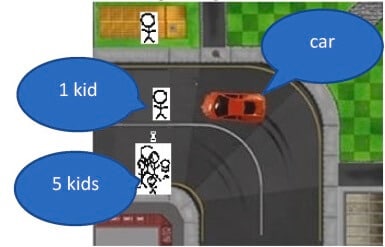
Capturing an autonomous vehicle in a circular line.

On magic and artificial intelligence

How ancient road signs and modern principles of artificial intelligence meet each other on the road and in the world of work
The human brain versus artificial intelligence. Illustration: depositphotos.com

Can artificial intelligence think like us?

New research draws inspiration from human memory to develop smarter machines
A digital twin could help researchers study the brain's internal systems. Credit: Emily Musk/Stanford Medicine

Why did researchers let mice watch action movies?

An accurate digital model of the visual cortex in a mouse brain offers a breakthrough in neurological experiments, enabling fast and efficient virtual tests to study brain activity.
From right to left, Daniel Schreiber, CEO of Lemonade, Prof. Gil Epstein, Prof. Anat Lechner, Inbar Netzer-Lanziano, and panel moderator Shlomo Gardman. Photo: Shmuel Oster

Robots and artificial intelligence will soon replace most professionals

This was the conclusion of a panel held as part of the Silicon Club meeting. However, participants explained that the transition to smart technology is a gradual process, dependent on strategic preparation and policies that will guide technological adoption in a way that
A chess-playing and cheating robot. Illustration: Dr. Roy Tsezana

When artificial intelligence cheats at all costs

When a “thinking” artificial intelligence starts cheating to win – even in simple tasks like chess – the question arises: can we ever truly trust it?
Artificial intelligence in management meetings. Illustration: Dr. Roy Tsezana

What happened when artificial intelligence was added to board meetings?

An unusual experiment at a traditional Austrian shoe company has found that incorporating artificial intelligence into management discussions can lead to smarter decisions, slow down the pace of discussion – and make managers trust the machine more.
The Future of Medicine - An Optimistic Version. Credit: Dr. Roy Tsezana

Artificial intelligence suggests cures for existing diseases – and saves lives

An artificial intelligence-based platform by Professor Feigenbaum of the University of Pennsylvania crosses thousands of existing drugs with thousands of diseases, enabling the discovery of breakthrough treatments for rare and untreatable diseases.