
Hayadan > Computing and technology > Computing and robotics > Biological computing
Biological computing

- Avi Blizovsky
- No comments
A new DNA computer performs calculations as molecules arrange themselves into an equilibrium state. The system is reusable, but it is not a computer without an energy cost.

- The Technion
- 2 comments
The information density in DNA is about a hundred million times greater than that of digital storage. This means that, potentially, for every unit of volume that currently holds 1 megabyte, we could store up to 100

- Avi Blizovsky
- No comments
The field of DNA-based computing is considered one of the most promising directions in the world of information today, since a single gram of DNA may store enormous information within it, it will be possible to save a lot of energy and store much more volume

- Science site The Conversation
- 11 comments
While silicon computers have changed the face of society, they are still dwarfed by the brains of most animals. For example, a cat's brain stores and can use 1,000 times more data than an average iPad

- Avi Blizovsky
- No comments
The program will focus on building infrastructure and developing capabilities in areas such as bioengineering devices, bioprinting, tissue engineering, environmental microbiome, synthetic biology and more...

- Ben-Gurion University
- No comments
Scientists from Ben-Gurion University have developed an algorithm that locates sequences in DNA, with the help of which the hereditary material can be replicated in the cell. This multidisciplinary method will enable the design of personalized innovative drugs in the future
- Dr. Moshe Nahamani
- One response
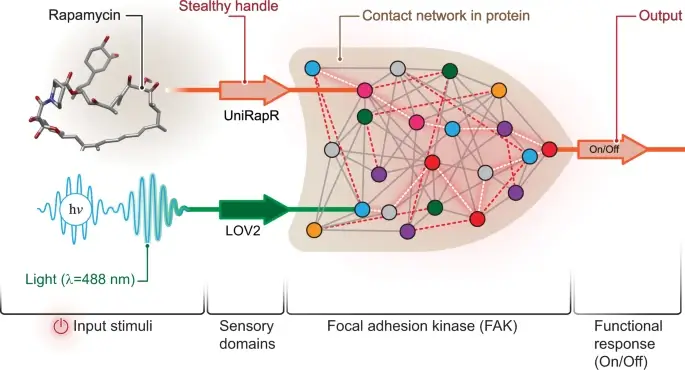
The development of nanocomputers that will be used in precision health applications has been the dream of many scientists. Now, for the first time ever, Penn University researchers have succeeded in developing a type of nanocomputer capable of controlling the activity of a protein

- The Technion
- One response
Technion researchers have developed a synthetic biological system for pattern recognition based on bacterial communities according to the design rules of artificial neural networks

- The Hebrew University
- No comments
A study published in Nature Nanotechnology led by Prof. Dani Porat of the Hebrew University demonstrated for the first time the conduction of a significant electric current over a long distance in DNA molecules. The discovery is currently used as a basis for the development of a detector that can detect

- Dr. Moshe Nahamani
- No comments

- The Technion
- No comments

- Avi Blizovsky
- 6 comments

- Dr. Moshe Nahamani
- No comments

- Dr. Moshe Nahamani
- 2 comments

- Dr. Moshe Nahamani
- No comments
- Dr. Moshe Nahamani
- No comments

- Dr. Moshe Nahamani
- 10 comments

- Galileo - The Science Magazine
- 4 comments

- The Technion
- 6 comments

- Weizmann Institute
- 6 comments

- Avi Blizovsky
- 3 comments

- Scientific American Israel
- 7 comments
- Dr. Moshe Nahamani
- 2 comments


- The Technion
- 3 comments
- Dr. Moshe Nahamani
- No comments
- Dr.Roey Tsezana
- 11 comments
- Hayadan Service
- No comments
- Dr. Moshe Nahamani
- 7 comments
- Weizmann Institute
- 38 comments
- Weizmann Institute
- 8 comments
- Dr. Moshe Nahamani
- 3 comments
- Weizmann Institute
- One response
- Tel Aviv University
- 11 comments
- Einav Wirzer
- 8 comments
- Weizmann Institute
- 5 comments
- Anat Amivar
- 5 comments
- Weizmann Institute
- 4 comments
- The Technion
- One response
- Weizmann Institute
- No comments
- Weizmann Institute
- No comments
- Avi Blizovsky
- No comments
- Weizmann Institute
- No comments
- Avi Blizovsky
- No comments
- Avi Blizovsky
- No comments
- Weizmann Institute
- No comments
- Avi Blizovsky
- No comments