red giants

Beetlejuice, Red Superstar. Infographic: depositphotos.com: depositphotos.com

New evidence that the nearby red giant Betelgeuse has a hidden companion

Another study revealed that for most of the last two thousand years the color of the star was yellow and not red, which shows that its transformation into a red giant is a new development, and therefore they distance the prediction of its transformation
Two nearly symmetrical swirling loops of gas and dust mark the dying flickers of an ancient red giant star. Credit: International Gemini Observatory/NOIRLab/NSF/AURA, TA Rector (University of Alaska Anchorage/NSF's NOIRLab), J. Miller (Gemini Observatory/NSF's NOIRLab), M. Rodriguez (Gemini Observatory/NSF's NOIRLab), M. Zamani ( NSF's NOIRLab)

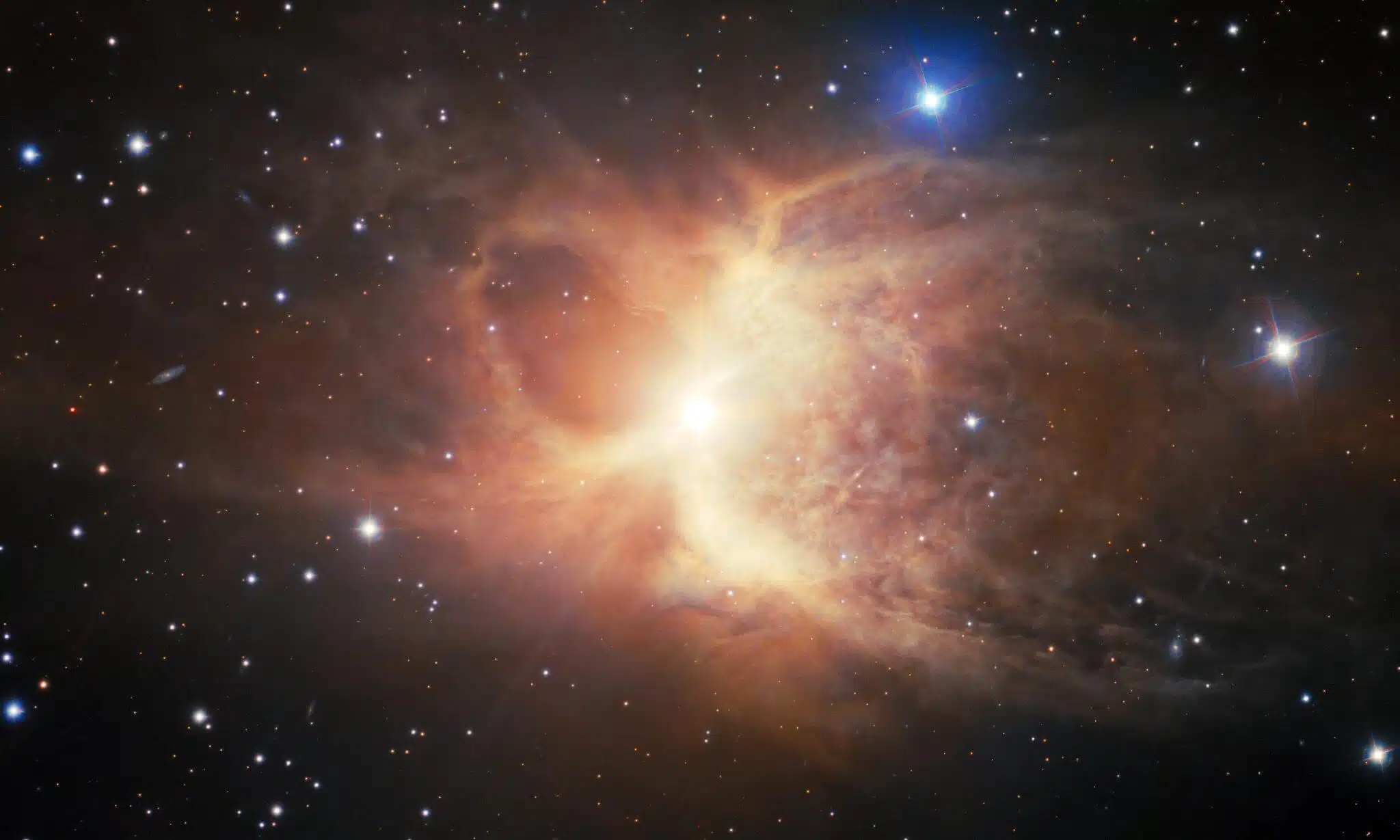
An overflowing cosmic "urn" - a telescope captures the spectacular end-of-life display of a red giant

This end-of-life phase of red giant stars is relatively short, and the celestial structures that form around them are rare, so the Tobi Pitcher Nebula is an excellent example of a case study in the evolution of a star
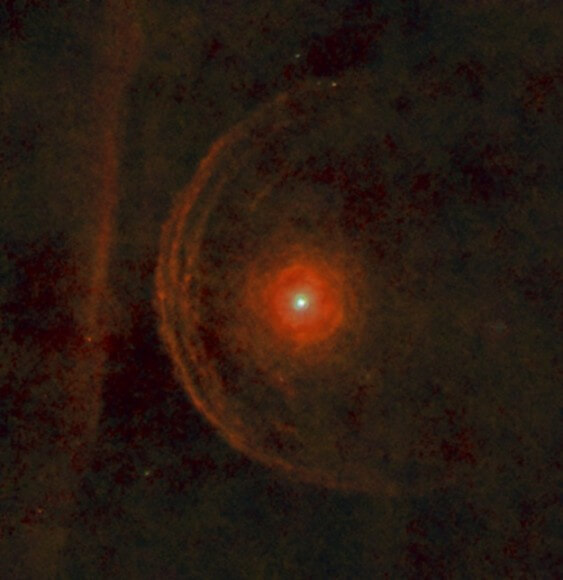
Betelgeuse dims over time, with an interstellar cloud seen in the last panel. NASA, ESA and E. Wheatley (STScI)

Beetlejuice: The star continues to behave mysteriously - here's what will happen if it explodes

At the end of 2019, the light of the star dimmed and went from the brightest in the Orion group to the third brightest. Since then it has returned and become even brighter than before
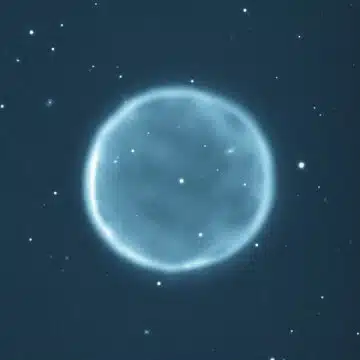
Abell 39, object number 39 in the catalog of large nebulae discovered by George Abell in 1966 is of a large nebula discovered by George Abell in 1966, is a fine example of a planetary nebula. This photograph was taken in 1997 from the Kite Peak National Observatory in Arizona through a blue-green filter that isolates the light emitted by the oxygen atoms in the nebula at a wavelength of 500.7 nm. The diameter of the nebula is about five light years, and the thickness of the spherical shell is about a third of a light year. The nebula itself is about 7,000 light-years from Earth in the constellation Hercules. Credit: TARector (NRAO/AUI/NSF and NOAO/AURA/NSF) and BAWolpa (NOAO/AURA/NSF) WIYN

What will happen when our sun dies?

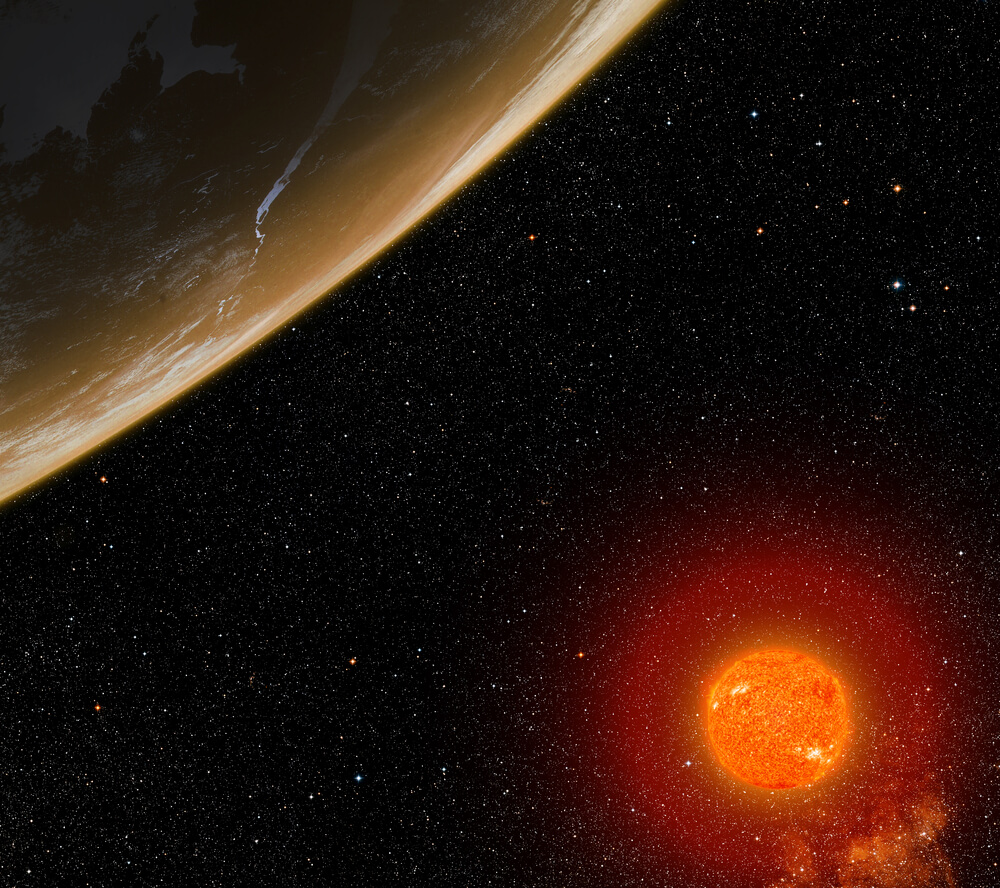
A red giant (and a planet next to it). Illustration: shutterstock

A hybrid star - a neutron star inside a red supergiant

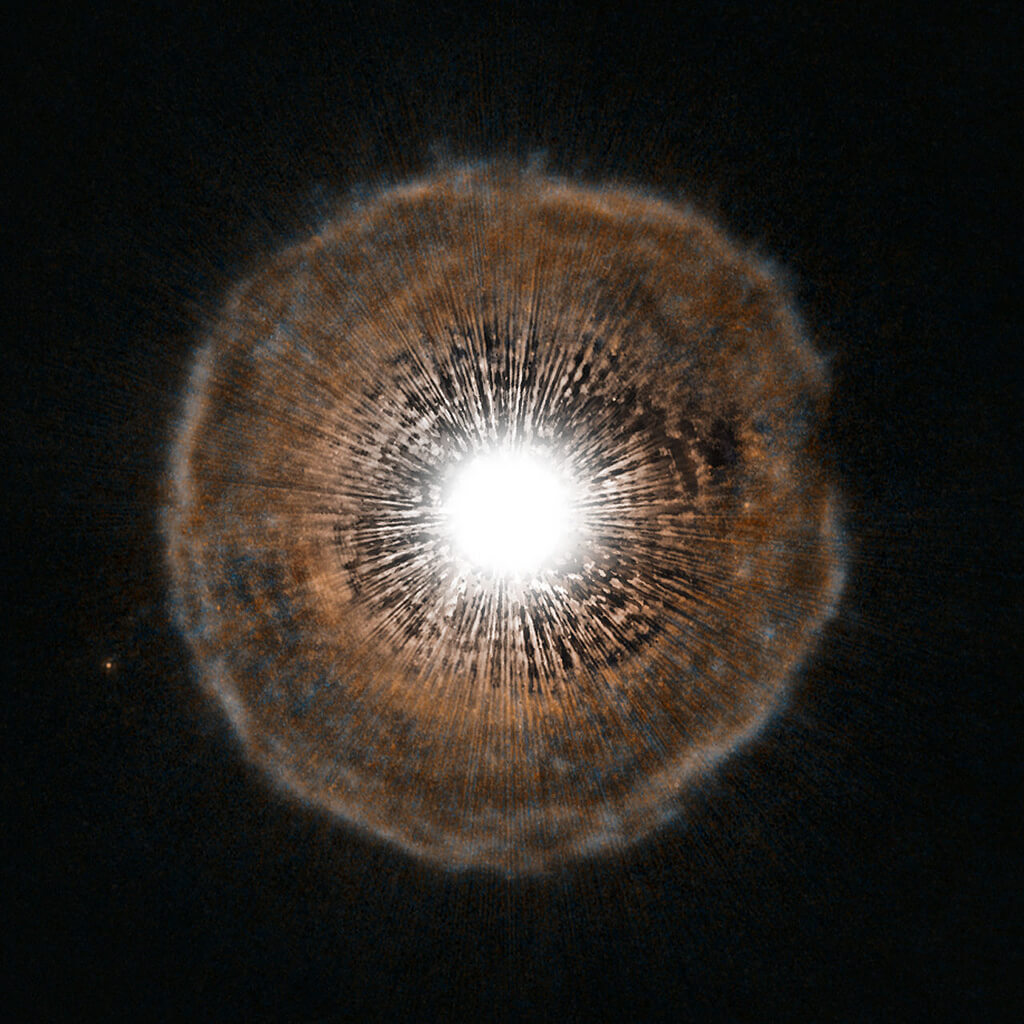
U Cam - an exploding star in the Giraffe group (not far from the North Star from our perspective on Earth). Photo: Hubble Space Telescope

The last outburst of a dying star was captured by Hubble

Dr. Avishai Gal-Yam and research student Yair Harkavi. Weizmann Institute

White dwarfs, heavy elements

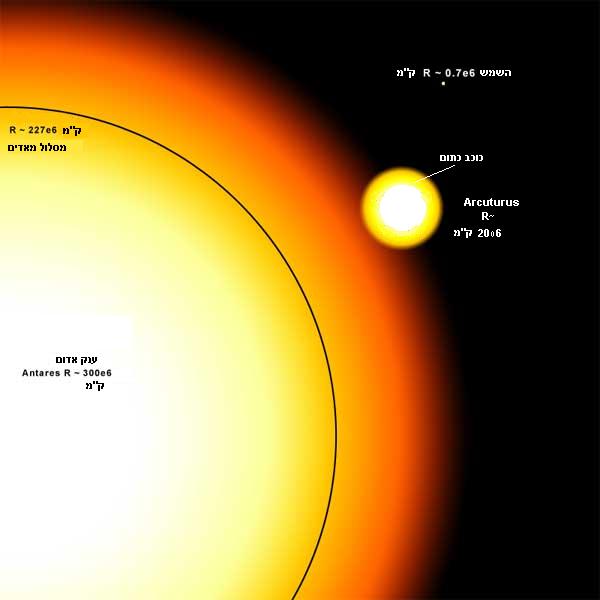
Comparison between the sun and a red giant. Illustration: User Aviad, Hebrew Wikipedia

Why some red giant atmospheres have more carbon than oxygen

Cosmic scene with DNA, stars, solvents and atomic circles in oral flow.

A giant star or the water world?