
Extreme heat waves are forcing airlines to cancel flights, change schedules and face heavy costs. This was one of the reasons why Wizz Air stopped operating in Abu Dhabi. Will there be areas of the world in the future where it will be impossible to fly in the summer?
Amnon Director, Zveta - Science and Environment News Agency

In recent years, extreme heat waves, Huge fires And thick clouds of smoke have become common at airports around the world, from Europe to the United States, from Australia to the Middle East. In an era of climate change and accelerating global warming, new questions are being raised about the future of aviation: Will there be areas of the world that will become inaccessible during certain seasons? Will planes have difficulty taking off on particularly hot days? And will the path to the destination look completely different in the not-too-distant future?
Mid-July Has announced Hungarian airline Wizz Air has announced that it will cease operations at Abu Dhabi airport starting this September. On the surface, this is a relatively routine announcement in the aviation world; airlines sometimes stop or change flight routes for economic or strategic reasons. However, in this case, the company stated that one of the reasons for the cessation of operations was the extreme heat in the area that affected the functioning of the aircraft engines. The company's CEO, Joseph Varady, said That Wizz Air has undergone "an extraordinary journey in the Middle East," but added that "the operating environment has changed significantly."
Excess weight in the suitcase
Wizz Air's decision highlights what climate and air transport experts warn It has been a concern for years: Modern aviation infrastructure is not prepared to deal with the new climate reality. High temperatures that could damage runways and safety restrictions that prevent takeoffs in extremely high temperatures are not future scenarios. They Already here. Predictions In the coming years, there is talk of an increase in the frequency and intensity of extreme events, which could change the global aviation map: affecting schedules, aircraft operations, costs, and perhaps even the very possibility of flying during the summer months in certain regions of the world.
"Wizz Air's announcement is not at all surprising," says Dr. Uzi Freund-Feinstein, an expert in air transportation and tourism from the Kinneret Academic College. "Aircraft operation is directly affected by weather conditions. This is a problem built into technology that stems from clear physical characteristics. In order for an airplane to function optimally, it needs very specific conditions: a route as close as possible to sea level, low humidity and low temperature. Each of these parameters affects the operation of the engines and the aeronautical performance of the airplane," he explains. "We are moving toward a warmer world, and the evidence of this is already evident in many places. Conditions are becoming more extreme. In areas like Dubai or the Persian Gulf countries, this is already happening before our eyes. In such a reality, airlines may decide that flights from certain airports are simply no longer profitable," he says.
In recent years, there has been an increase in studies examining the impact of global warming on the aviation industry. For example, study Using climate model simulations, the study examined the expected impact of climate change between 2050 and 2070 on flights from four major airports in the United States. The study's findings predict a sharp increase in the rate of flight cancellations during the summer season, between May and September. The intense heat limits the takeoff capacity of aircraft, and it is estimated that for Boeing 4-737 aircraft there will be a 800–50 percent increase in the number of days per year when restrictions are imposed on the maximum weight that aircraft can carry. In practice, this means that many aircraft will not be able to take off with a full load, both in terms of the number of passengers and the amount of luggage.
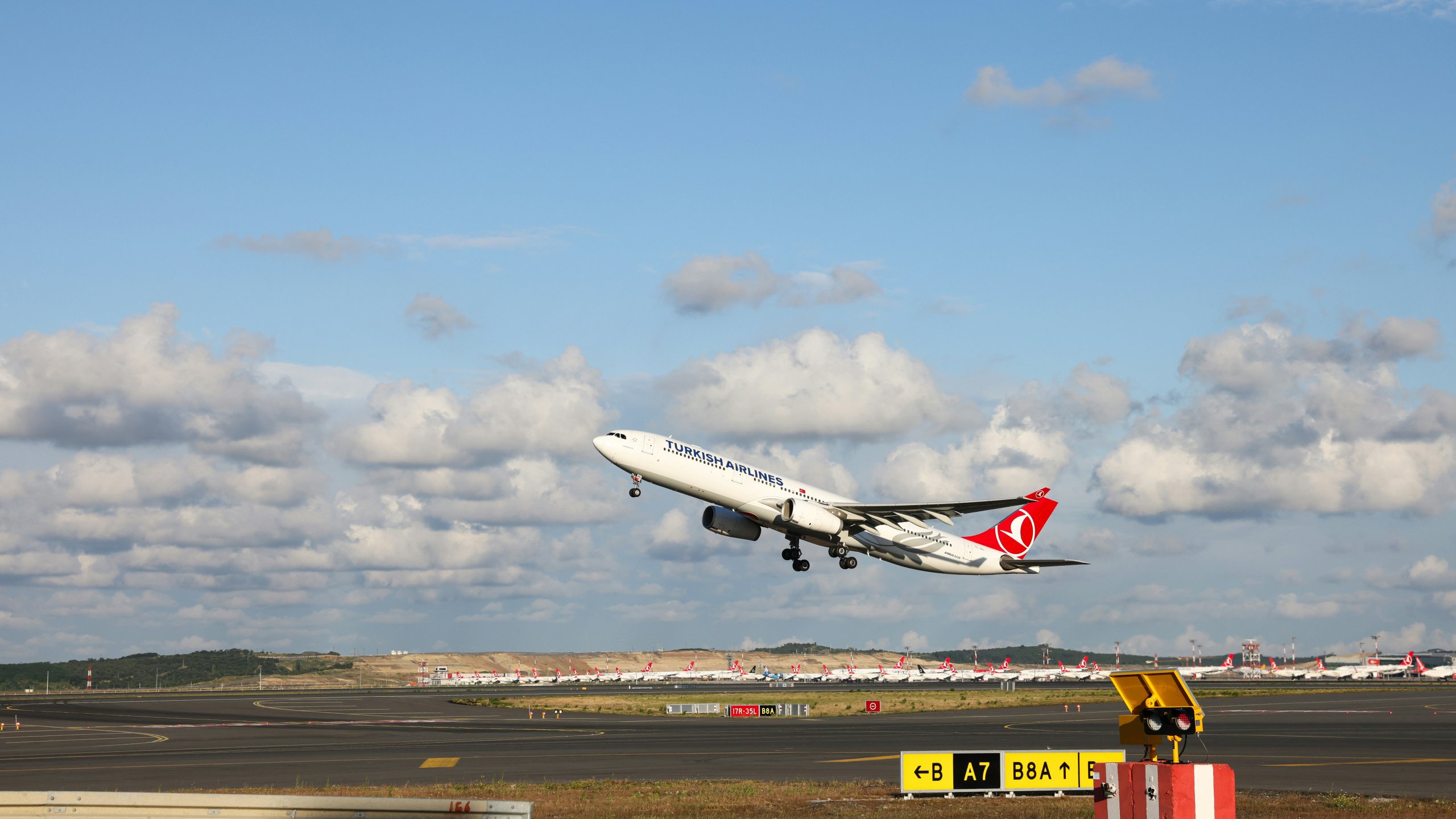
Everything surrounding the aircraft – preparation, maintenance, and service – becomes much more complex in hot weather. Photo: unsplash
Hot asphalt
Beyond the aviation challenges themselves, Freund-Feinstein points to another problem: operating the planes on the ground in extreme heat conditions. "Everything surrounding the plane – preparation, maintenance and service – becomes much more complex in hot weather," he explains, adding: "As someone who previously worked in flight operations at Ben Gurion Airport, I can attest that it is very difficult work when it is 35 degrees outside. The ground crews work In a scorching heat "All asphalt and not a drop of shade. In situations like this, and especially at airports in particularly hot countries, airlines may decide that it simply doesn't pay for them to operate there."
Another impact of global warming is in the economic sphere. "Clearly, global warming also brings with it financial consequences. As temperatures rise, airplane engines become less efficient, which requires takeoff at full power with higher fuel consumption. Furthermore, airports may be forced to extend runways, operating costs will increase, and continuous cooling of airplanes while on the ground will be required. All of these could lead to an increase in fees and the overall cost of flights," he explains.
“We will start to see problems getting worse,” Freund-Feinstein notes. “All the hot countries, including Israel, countries bordering the Sahara in Africa, and even countries with airports in challenging areas in Europe – all are expected to face conditions that are becoming increasingly difficult,” he concludes.
More on this subject on Hayadan.com - Science news:
