37 American companies will gain access to NASA facilities, hardware, software and experts to advance energy systems, navigation, landing, spacecraft maintenance and protection from lunar dust – but without direct funding from the agency
Blue Origin, which has been funded primarily by Jeff Bezos since its inception, is reportedly in talks to raise $10 billion in private capital. The money is intended to support expanded launch operations, lunar missions, satellite networks, and rehabilitation.
The largest IPO in Wall Street history marks a new phase in space commercialization: more capital for Starship and Starlink, but also questions about dependence on a single company, impact on astronomy, filling low-Earth orbit, and economic risks.
Researchers have investigated whether asteroids could be a source of metals and fuel for a future colony on Mars. The model suggests that this is possible, but only with careful selection of targets and use of local resources in space.
The company, founded in 2024 by Hila Hadad Hamelnik, Fred Simon, and Shahar Bahiri, is developing an electromagnetic accelerator that will reach speeds of up to 8 kilometers per second for launching payloads into space and a hypersonic test facility in Caesarea – and is expected to
The new laboratory will allow Israeli companies, large and small, to launch payloads into space at a subsidized cost, as part of a national effort to make Israel a leading player in the global space industry.
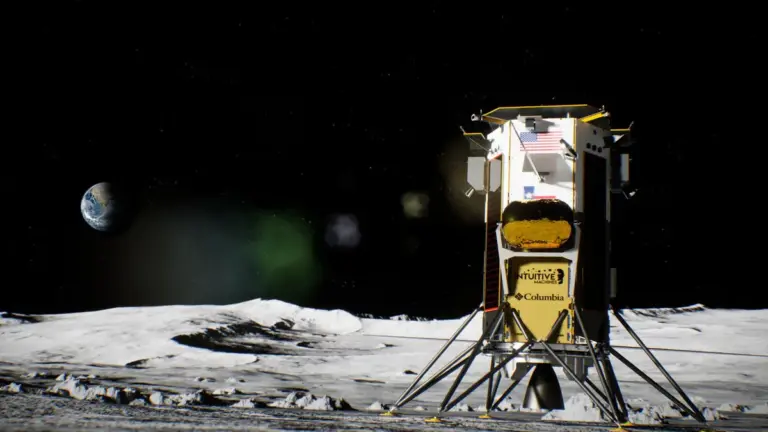
After the historic landing on the moon, the American company is collaborating with Space Forge to develop a commercial return system – towards producing pure crystals in orbit around the Earth for the global chip market.
The simulator was developed with the assistance of the Israeli company Sim Dot Space, which was founded by engineers who were involved in the Genesis 1 mission
Terran Orbital is a satellite manufacturer that mainly serves the aerospace and defense industries. Terran Orbital provides end-to-end satellite solutions by integrating satellite design, manufacturing, launch planning, mission management
Lior Harman - co-founder of TYPE5 VC Space Tech Group: the space market in Israel generates tens of millions of dollars - a relatively small figure compared to the inherent potential in this field and certainly compared to other countries
Satellite manufacturers, spacecraft operators and the like need to make specific and verifiable commitments to limit the number of objects actually in space, not just the predicted number of abandoned objects they produce.
Israel Aerospace Industries has signed an agreement with the Weizmann Institute of Science and the Ministry of Science and Technology under which it will design, develop and build the first Israeli astronomical observation satellite
The innovative design comes with special features to support the astronauts as they conduct scientific experiments on the surface of the moon as well as the women who will be one of the first crew to land. NASA hopes the updated suit will be