
Hayadan > geology
geology

- Avi Blizovsky
- No comments
Two years after rejection of proposal to recognize Anthropocene as official geological epoch, researchers claim flaws in process and call for independent review; those involved in decision say rules were followed

- Avi Blizovsky
- No comments
A method that infers landforms from tiny changes in the ice surface has identified 1,943 subglacial valleys. About a third of them are new to mapping, and some extend hundreds of kilometers beyond existing maps.

- Avi Blizovsky
- 11 comments
Cities will collapse, computers will stop working, and most books will disappear. But a thin layer of concrete, plastic, metals, chicken bones, and chemical changes may tell future researchers that an industrial civilization briefly existed here.


- Avi Blizovsky
- One response
New research suggests that asteroid impacts during the Hadean period were not just local, short-lived events. The energy they delivered deep into the Earth heated the mantle, increased crustal melting and recycling, and delayed the emergence of

- Avi Blizovsky
- No comments
Deep beneath Turkey's surface, scientists reveal subtle but powerful movements that are reshaping the continent's crust

- Avi Blizovsky
- No comments
New study finds that the extinction of vegetation during the Permian-Triassic mass extinction limited carbon absorption and led to a long-term increase in temperatures

Scientists reveal that the sun's journey through the Orion Nebula could have changed Earth's climate
- Avi Blizovsky
- No comments
About 14 million years ago, in the middle of the Miocene epoch, the solar system passed through the Orion Nebula. At the same time, the Earth cooled and the Antarctic ice sheet formed. Is there a connection between the two phenomena?

- Avi Blizovsky
- 3 comments
How an ancient impact on Australia may have triggered global changes in climate and ocean chemistry

- Avi Blizovsky
- One response
New research reveals that massive asteroid impacts, which created two of the largest craters on Earth, did not cause long-term climate changes
- Avi Blizovsky
- 4 comments
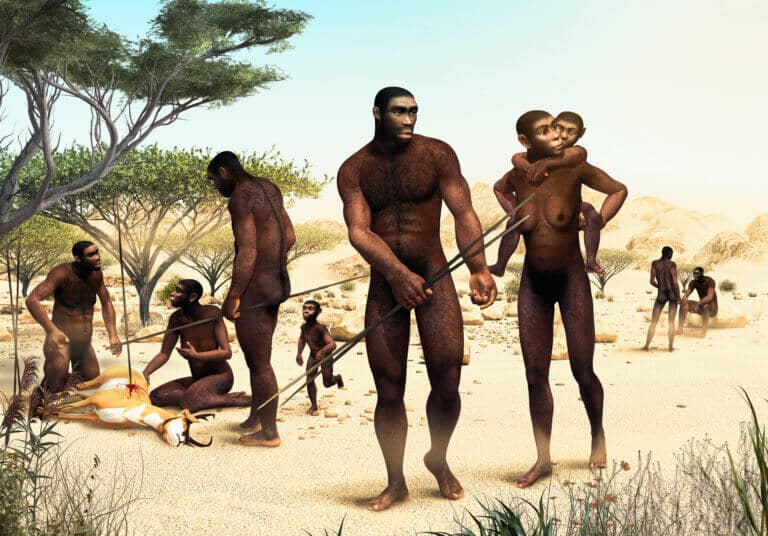
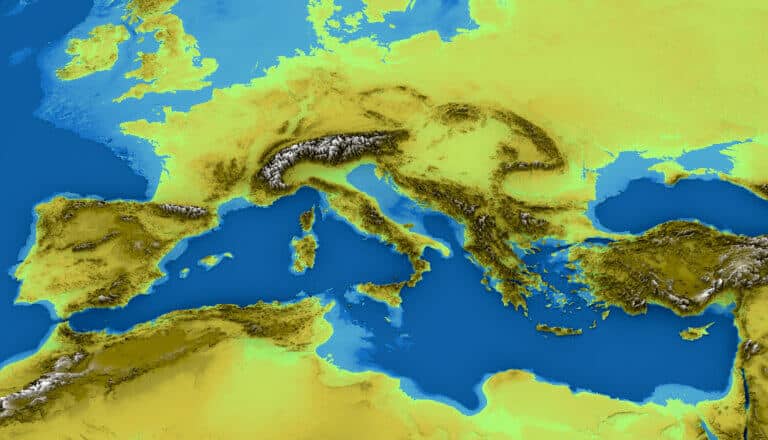
Sediment studies in the Mediterranean reveal the existence of a green corridor in the Sahara desert that emerged at the exact time when our ancestors migrated from Africa about 2.1 million years ago
- Voice of Science website - Israel Science Foundation
Following the drying up of the Mediterranean Sea about five million years ago, valleys developed in its southeast that are about eight kilometers wide and about 1,000 meters deep

- Young Galileo
- One response

- Weizmann Institute
- No comments

- Tel Aviv University
- 3 comments

- Angle - a news agency for science and the environment
- 2 comments

- Scientific American Israel
- 11 comments

- Ben-Gurion University
- 6 comments

- Avi Blizovsky
- One response
The vast underwater structure in the Pacific Ocean was described in 2013 as the largest single volcano on Earth. Later studies have challenged this classification, revealing a connection between volcanism, plate movement and the rise of hot material from the mantle.

- Avi Blizovsky
- 6 comments

- Tel Aviv University
- One response

- Dr. Asaf Rosenthal
- 4 comments

- Dr. Asaf Rosenthal
- 10 comments

- Dr. Asaf Rosenthal
- One response

- Avi Blizovsky
- 3 comments
- The Hebrew University
- 7 comments
- Avi Blizovsky
- 7 comments
- Rami Yushobiev
- 6 comments
- Rami Yushobiev
- 2 comments