ancient climate

Sun's shield shrank into Earth's orbit in the past—and may have contributed to ice ages

The heliosphere has previously contracted into Earth's orbit and may have contributed to ice ages

Models led by Haifa-born Prof. Meirav Ofer, director of NASA's SHIELD Center, indicate three encounters of the solar system with dense interstellar gas clouds. The clouds could have collapsed the heliosphere
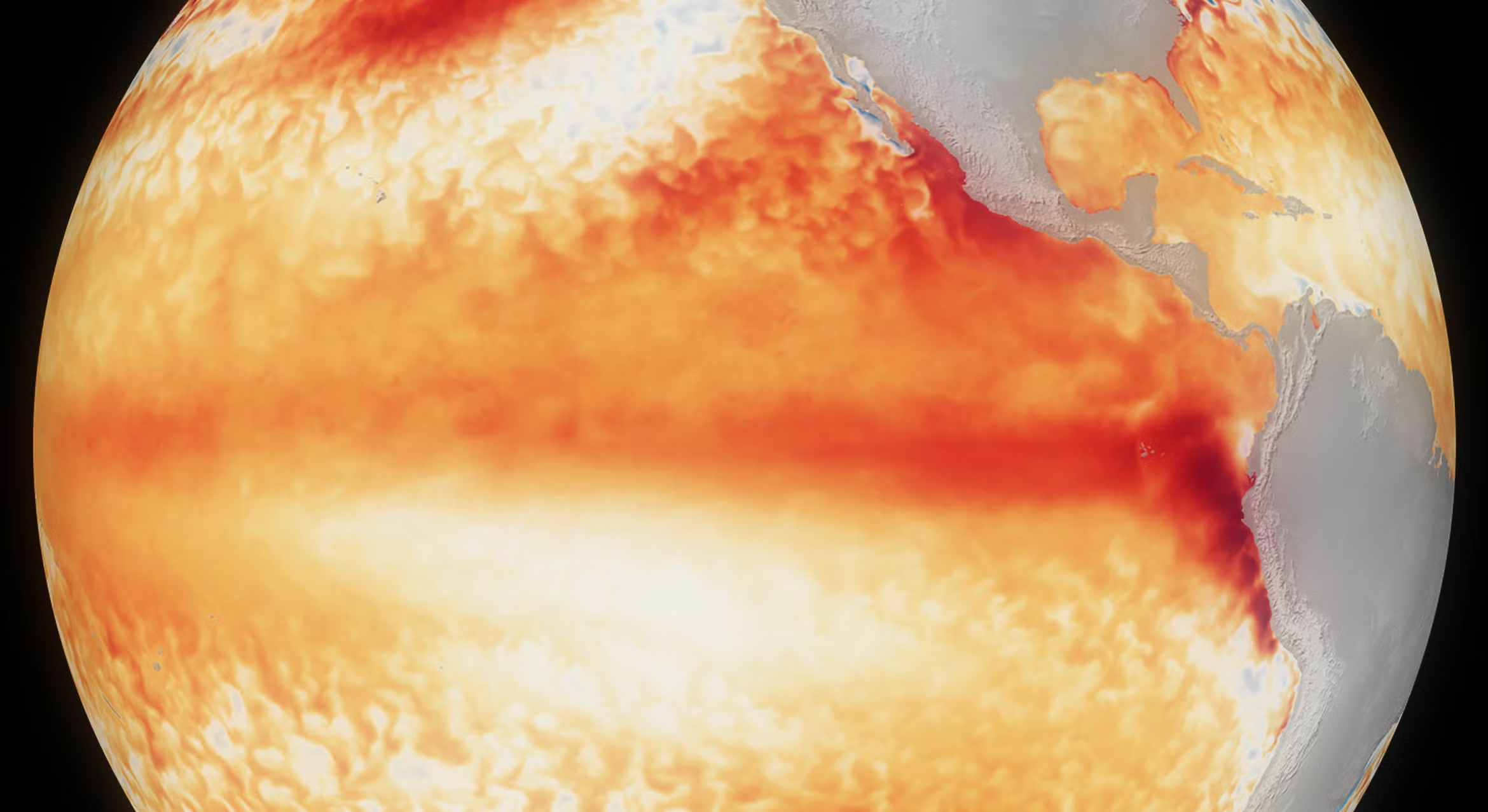
El Niño has strengthened in the last 40 years to a level not seen in the thousand years before industrialization

El Niño has strengthened in the last 40 years to a level not seen in the thousand years before industrialization

An analysis of living and fossil corals from the Galapagos Islands found that the variability of the El Niño-La Niña system in the eastern Pacific Ocean is now 36.5% higher than it was during the pre-industrial millennium. The strengthening is mainly due to
A dinosaur egg sampled for geochronology. Photo: Dr. Bi Zhao

Atomic clock for fossils: Direct dating of dinosaur eggs from China reveals an age of about 85 million years

Researchers have applied U-Pb carbonate dating directly to eggshells from the Qinglongshan site in Yunyang for the first time, determining an Upper Cretaceous age and offering a new window into ancient climate and dinosaur diversity dynamics
Large asteroids collide with Earth. The illustration was prepared using DALEE and is not a scientific image

Two huge asteroids hit the Earth 35 million years ago - and did not change anything

New research reveals that massive asteroid impacts, which created two of the largest craters on Earth, did not cause long-term climate changes
Evaporation of the Dead Sea. Illustration: depositphotos.com

Rains, steam, and everything in between

A comparison between the level of evaporation in the current Dead Sea compared to the ancient period, may help in understanding the climate that existed in our region, in the past