Structural biology

Ada Yonat works near measuring equipment in the laboratory and sees her reflection in the mirror.

Ada Yonath's scientific legacy: How the decoding of the ribosome led to the understanding of antibiotic action

After the death of Prof. Ada Yonath on August 31, 2026, this article reviews the scientific legacy she left behind: decades of struggle with a problem that was considered almost unsolvable, the development of crystallographic methods, the deciphering of the ribosome, and the postulation of
Prof. Ada Yonath, Nobel Prize laureate in Chemistry, passes away at age 87

Prof. Ada Yonath, Nobel Prize laureate in Chemistry, passes away at age 87

Prof. Ada Yonath of the Weizmann Institute, who deciphered the structure of the ribosome and won the Nobel Prize in Chemistry in 2009, passed away on August 31, 2026. Over decades of research, she persisted on questions that were considered almost unanswerable.
Virus-sponge proteins that attack viruses. Illustration: Prof. Rotem Sorek's laboratory, Weizmann Institute

The miracle sponges of phages

A study published in Science shows how viruses attacking bacteria capture or cut immune alarm molecules, using new "sponge" proteins identified by a combination of AlphaFold, artificial intelligence, and experimental biology.
fight against corona virus Illustration: Image by Fernando Zhiminaicela from Pixabay

Identifying a trap and finding the ultimate anti-coronavirus

When disordered segments of protein molecules were first discovered in the late 80s, scientists used to cut them out and throw them away. Illustration: Dr. Hagen Hoffman's laboratory, Weizmann Institute

Not arranged and not by chance

Hasilon's eyes - watching the bottom of the sea even in the dark. Photo: shutterstock

in the eye of the chasilon

Helix-shaped cholesterol crystals. Digital processing of data obtained from four different crystals in different cells using soft x-ray imaging under cold conditions (cryo-SXT)

The bad crystal

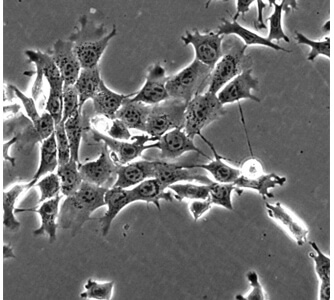
Breast cancer cells in culture as seen under an optical microscope. You can see the bands connecting the cells. Photo: Prof. Geiger, Weizmann Institute

All together and each separately

Cells. Illustration: shutterstock

The genetic internet

The fibers look like Legos in an electron microscope. Source: Weizmann Institute magazine.

Self-assembling proteins

2D model of the human protein 2LANCL (in green) which is not known to bind metals. In yellow - the amino acids from which, according to the algorithm, the binding site is composed. The template according to which the model of the XNUMXLANCL protein was built contains a zinc ion whose position is marked in blue

Following the metal

ribosome. Great protein. Illustration: shutterstock

See transparent

The sapphire of the sea. Illustration: German nature artist Ernst Heckel, (1834-1919). From Wikipedia

How did the sea sapphire disappear?

A new 3D printing method has been developed by Jennifer Lewis and her team at Harvard, using multiple print heads and a customized 'ink' to create complex living structures, complete with tiny blood vessels. Click here to see how it works. Photo: Wise Institute at Harvard University and SEAS

An important step towards XNUMXD printing of living tissues

Prof. Yoel Sussman. Photo: Weizmann Institute

Insects will serve as "factories" for human proteins