
Hayadan > Proxima Centauri
Proxima Centauri

- Avi Blizovsky
- 3 comments
New research reveals that civilian and military radar systems emit radio signals strong enough to be detected from hundreds of light years away – and could reveal our existence to intelligent civilizations

- Avi Blizovsky
- 3 comments
New research using the ALMA telescope reveals that frequent and extremely intense bursts of radiation from Proxima Centauri could destroy the atmospheres of nearby planets and make them uninhabitable.
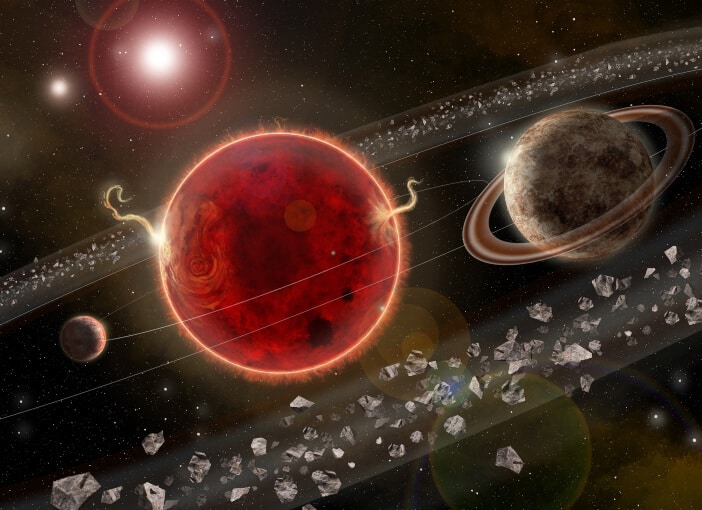
- Science site The Conversation
- 4 comments

- Scientific American Israel
- One response

- Avi Blizovsky
- No comments


- Avi Blizovsky
- 8 comments

- Prof. Omri Vandel
- 11 comments


- Universe Today
- 123 comments
At a recent rocket propulsion conference in Connecticut, scientists announced that they had studied the issue and concluded that interstellar travel outside the solar system would never be practical.

- Universe Today
- 61 comments
Universe Today is asked this question from time to time: How long would it take to travel to the stars? Could a person do it in their lifetime? There are many answers to this possibility, some simple, others