
Hayadan > Pottery
Pottery

- The Hebrew University
- One response
A study from the Hebrew University of Jerusalem links a period of widespread fires, soil erosion, and clay accumulation thousands of years ago to the appearance of pottery in the region. The researchers suggest that Neolithic people may have noticed how
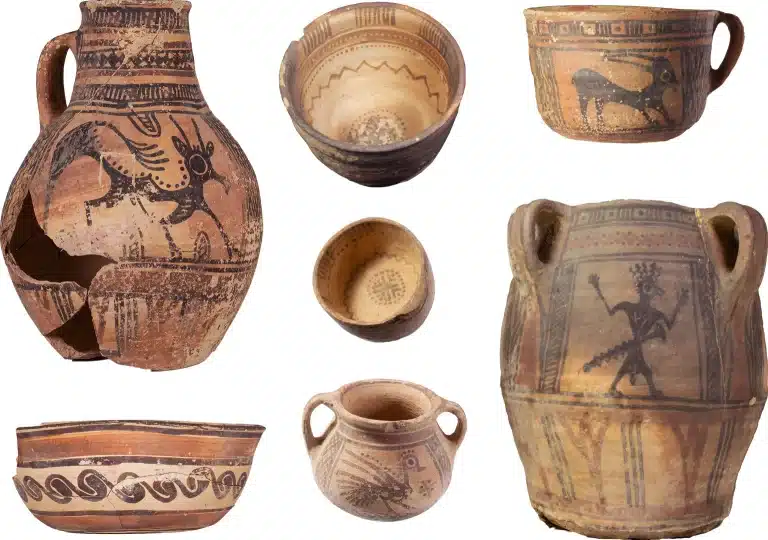
Already 3,200 years ago: Pottery from northern Arabia became a "brand" that exported as far as Timna
- Avi Blizovsky
- No comments
A multidisciplinary study of painted pottery from the Quraya oasis in the northwestern Arabian Peninsula has found a combination of recognizable design, consistent raw materials, centralized production, imitations, and long-distance trade. The researchers argue that

- Israel Antiquities Authority Archeology
- One response
The rock-cut mikveh was discovered during excavations by the Israel Antiquities Authority and the Western Wall Heritage Foundation, sealed in a layer of destruction dating to 70 CE, containing ash and utensils typical of Jerusalem on the eve of the destruction – tangible evidence of the events of destruction.

- Avi Blizovsky
- No comments
On pottery discovered at Tel Hama in the Jordan Valley, the fingerprints reveal the work of children in the Bronze Age

- Bar-Ilan University
In the archaeological excavation project that took place, for the second year in Tel Tabna, findings were discovered that indicate, among other things, the use of the area as an administrative regional center in the Roman period.

- Israel Antiquities Authority Archeology
- No comments
The hook, which appears to have been used for hunting sharks, was uncovered in the excavations of the Antiquities Authority before the establishment of the Agamim neighborhood in Ashkelon * The unique find will be presented for the first time at the 48th Archaeological Congress, in the organization of the Antiquities Authority, the Society for Land Exploration

- Haifa University
- 3 comments