
Hayadan > Planetary Sciences
Planetary Sciences

- Avi Blizovsky
- No comments
The researchers examined the relationship between sediment mixing caused, in part, by burrowing worms with a mineral called pyrite, which plays a key role in oxygen accumulation. As more pyrite is formed and buried under the mud, sand or

- Avi Blizovsky
- No comments
German researchers and the German Space Agency will try three strategies to study the asteroid that will approach within 31,000 km of Earth in 2029.
- Avi Blizovsky
- No comments
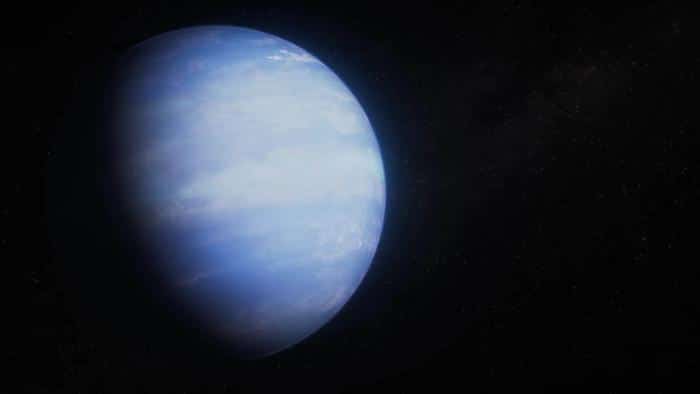
Methane found in WASP-107 b reveals core mass and stormy sky

- Weizmann Institute
- No comments


- Itai Nebo, editor of the Davidson Institute website
- 5 comments

- Itai Nebo, editor of the Davidson Institute website
- 16 comments

- Haim Mazar
- 3 comments

- Haim Mazar
- No comments

- Haim Mazar
- One response

- Dr. Moshe Nahamani
- No comments

- Hayadan Service
- One response

- Elisef Kosman
- 3 comments

- Scientific American Israel
- 2 comments

- Haim Mazar
- No comments

- Haim Mazar
- No comments
New findings study Saturn's largest moon, Titan, whose atmosphere contains an abundance of organic materials.

- Haim Mazar
- 2 comments

- Haim Mazar
- No comments

- Elisef Kosman
- 12 comments

- Weizmann Institute
- 2 comments

- Haim Mazar
- 16 comments

- Weizmann Institute
- One response


- Haim Mazar
- No comments

- Scientific American Israel
- No comments

- Haim Mazar
- One response

- Haim Mazar
- One response

- Haim Mazar
- One response
- Haim Mazar
- 4 comments

- Haim Mazar
- 2 comments

- Haim Mazar
- No comments


- Popular Science Israel
- 2 comments