Mount Sharp

Curiosity discovered a “sea” of polygonal cracks on Mars – and it’s unclear how they formed

Curiosity discovered a “sea” of polygonal cracks on Mars – and it’s unclear how they formed

A new panorama from the Valle Grande Valley shows a vast field of honeycomb-like patterns. NASA is investigating whether they were formed by dried mud, heat and cold cycles, sediment compaction, or water loss.
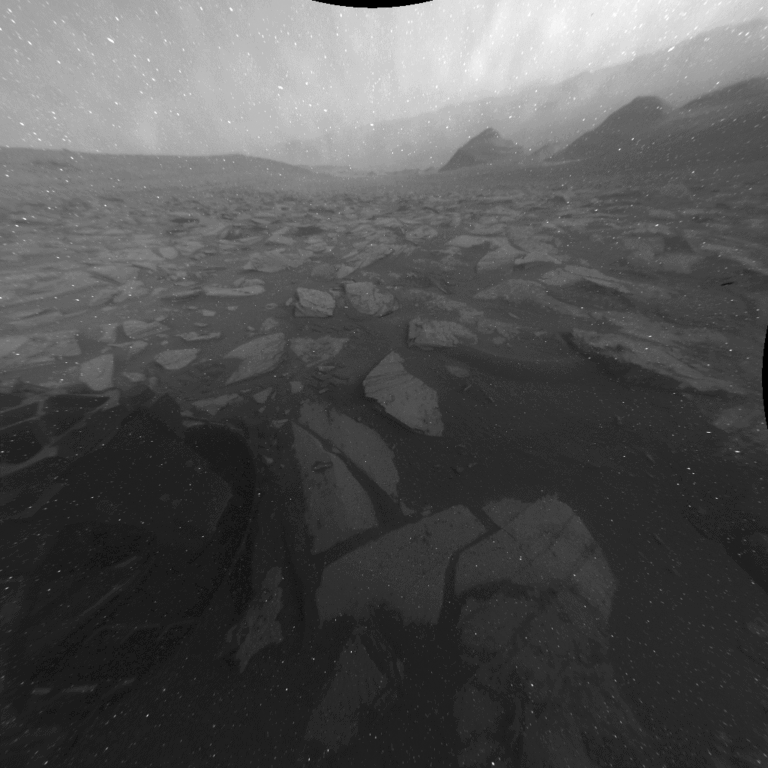
Curiosity's rear Hazcam recorded the shadow of the rover's rear in a 12-hour view toward the Gale Basin floor. Several factors caused several artifacts in the image, including a black spot, the sun's distorted appearance, and rows of white pixels extending from the sun. NASA/JPL-Caltech

Viewing a full day on Mars, sunrise to sunset

Curiosity's rear Hazcam recorded the shadow of the rover's rear in a 12-hour continuous view from sunrise to sunset toward the Gale Basin floor
"Selfie" photo taken by Curiosity. In the background you can see Mount Sharp which stands in the center of Gale Crater, and Curiosity is currently climbing to its upper layers. To take selfies, Curiosity uses a camera mounted on its robotic arm, and takes pictures of itself from many angles. The images are then edited into a single image in Photoshop. Source: NASA/JPL-Caltech/MSSS.

Five years since Curiosity landed on Mars