
Hayadan > Moon exploration
Moon exploration

- Avi Blizovsky
- No comments
At the 7th Manned Space Conference in Beijing, the chief planner of the Chinese lunar program presented the mission structure: two Long March 10 rockets, the "Mengzhou" spacecraft and the "Lanyuan" lander that will meet in orbit around the moon, and two astronauts.
- Avi Blizovsky
- No comments
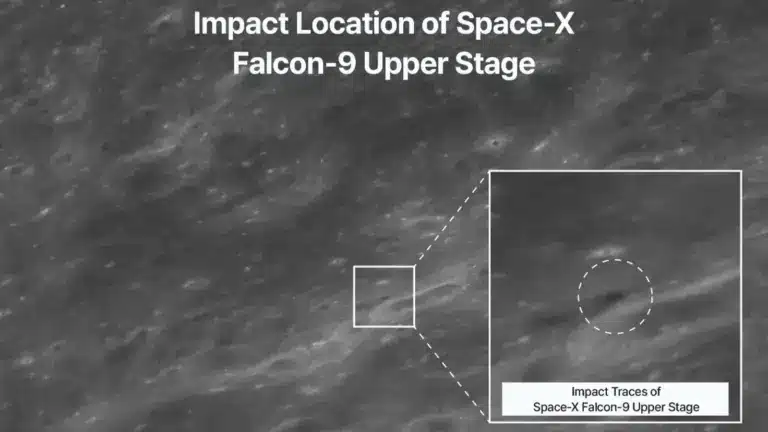
The South Korean probe Danuri confirmed the impact near Einstein Crater and documented changes in the ground and the scattering of material. The incident did not endanger anyone, but the large number of missions to the Moon requires planning in advance for the disposal of launch stages.

- Avi Blizovsky
- One response
The upper stage, which launched in January 2025 and remained in a high orbit around Earth, was expected to impact near Einstein Crater at a speed of about 8,700 km/h. No immediate confirmation of an impact observation was received, and NASA will search for the crater

- Avi Blizovsky
- No comments
The Japanese rover SORA-Q, sent to the Moon with the SLIM lander, launched from a small two-wheeled vehicle, navigated around the lander, and photographed its surroundings. The findings, published in Science Robotics, demonstrate how tiny robots may expand the
- Avi Blizovsky
- No comments
The next Artemis mission will remain in low Earth orbit and test docking with SpaceX and Blue Origin lunar landers. The New Glenn explosion could delay the 2028 manned landing plan.

- Avi Blizovsky
- No comments
Blue Moon Mark 1, an unmanned cargo lander from Blue Origin, has completed environmental testing in the thermal vacuum chamber at Johnson Space Center. The lander is designed to demonstrate landing, propulsion and navigation technologies for lunar missions.

- Avi Blizovsky
- No comments
New call invites researchers, academic institutions, and companies in Israel to propose experiments and CubeSat payloads for possible integration into NASA's Artemis III–V missions
- Avi Blizovsky
- No comments
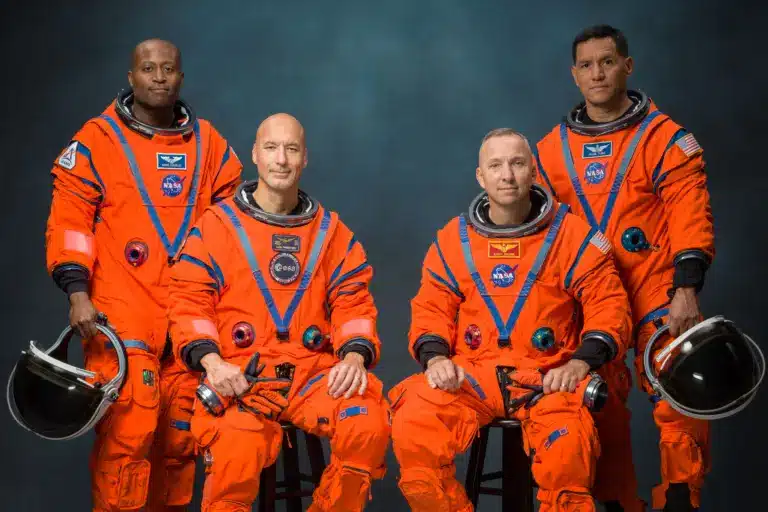
The Artemis II crew surpassed the record of Apollo 13, making a historic pass around the moon and entering a window of scientific observations, communications blackout and a solar eclipse as seen from the spacecraft.
- Avi Blizovsky
- One response
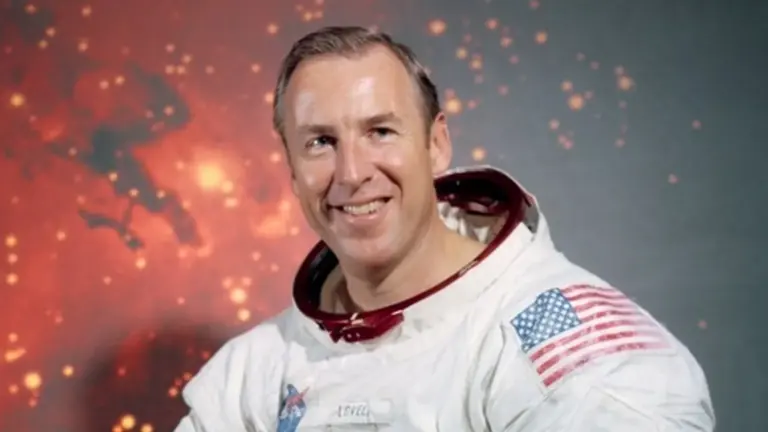
Lovell, who flew on four space missions and was one of the first to orbit the moon, has died at the age of 97. His cool-headed leadership of the Apollo 13 mission became a global symbol of survival and cooperation, and his story was immortalized in the film

- Avi Blizovsky
- No comments
Three scientific instruments will reveal water and minerals, enabling a deeper understanding of the Moon ahead of humans' return to it as part of the Artemis program

- Avi Blizovsky
- 3 comments
The failure of the second lunar mission by the Japanese company ispace brings back memories of the dramatic crash of the Israeli probe "Beresheet" in 2019. Both missions, which have their roots in the Google Lunar XPRIZE competition, reached the moon – but did not

- Avi Blizovsky
- No comments

- Avi Blizovsky
- No comments
The Firefly lunar lander has successfully landed in the Mare Crisium region on the near side of the Moon, carrying NASA science and technology instruments as part of the Commercial Lunar Payload Services (CLPS) initiative.

- Avi Blizovsky
- No comments
The two countries will jointly manage the mission, each country will conduct advanced experiments on the lunar surface and its surroundings, advanced technologies will be developed, and resources will be dedicated to scientific education.

- Avi Blizovsky
- No comments
NASA issued a call to private companies that want to continue the project without government funding. NASA will focus on future lunar missions utilizing technologies and tools from VIPER

- Avi Blizovsky
- One response
This technology has implications beyond lunar vehicles, in broader applications of heat management in spacecraft

- Avi Blizovsky
- No comments
China is the only country to successfully land on the hemisphere of the moon that faces away from Earth. * The container containing the samples collected by Changa 6 is expected to land on Earth on June 25

- Avi Blizovsky
- No comments
The purpose of the mission is to test the materials' resistance to radiation and the potential for the compatibility of printed parts in future space missions

- Guest article
- One response

- Hayadan Service
- 4 comments

- Avi Blizovsky
- No comments

- Elisef Kosman
- 12 comments

- Haim Mazar
- No comments

- Haim Mazar
- 3 comments

- Haim Mazar
- 4 comments

- Amber dew
- 6 comments

- Dr. Gali Weinstein
- 7 comments
- Ran Levy
- 11 comments
- Avi Blizovsky
- 12 comments
- Rami Yushobiev
- 14 comments
- Avi Blizovsky
- 5 comments
- Rami Yushobiev
- 5 comments
The unmanned Chandrayaan 1 mission will launch in June, a delay of about three months. Separately, India will soon announce the exact flight dates of its first manned mission to the moon
- Rami Yushobiev
- No comments
- Avi Blizovsky
- No comments