Methane

UN: The world is expected to cross the 1.5 degree mark within a few years

UN: The world is expected to cross the 1.5 degree mark within a few years

A new report by the United Nations Environment Programme states that even in the most optimistic scenario, warming will peak at around 1.8 degrees. Returning below the threshold set in the Paris Agreement is only possible through immediate cuts
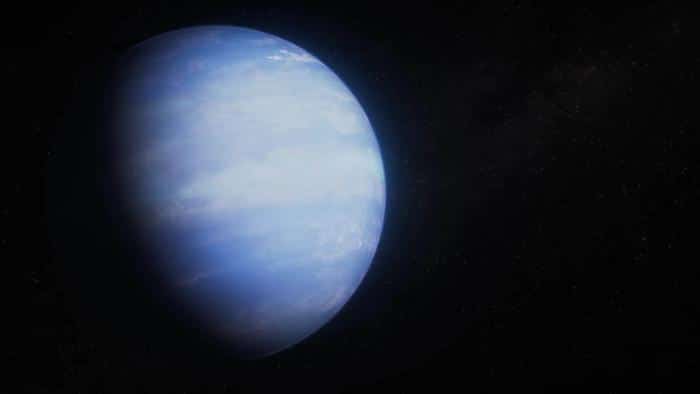
Artist's impression of GJ 504b, nicknamed the "Pink Planet," in orbit around its star. James Webb Space Telescope observations indicate salt clouds in the cold object's atmosphere. Credit: NASA's Goddard Space Flight Center

James Webb Telescope Discovers Salt Clouds in the Atmosphere of the “Pink Planet”

The James Webb Space Telescope has produced the first detailed spectrum of GJ 504b, a cold, dim object known as the “pink planet.” The researchers identified a variety of molecules and found that only salt clouds explain the
Interstellar comet 3I/ATLAS in Webb's infrared observation, with mapping of water, carbon dioxide, and methane

Webb Detects Methane in Interstellar Comet: Hint at Chemistry Formed in Another Solar System

New Webb observations of interstellar comet reveal unusually abundant methane and carbon dioxide, providing glimpse into chemistry of another planetary system
An artist's impression of a large gas giant planet orbiting a small red dwarf star called TOI-5205. Credit: Image by Katherine Cain, courtesy of the Carnegie Institution for Science

Webb Space Telescope Discovers Planet with Unusual Atmosphere

Analysis of TOI-5205 b finds an atmosphere poor in heavy elements relative to its parent star, a result that challenges accepted models of giant planet formation
The algae contains molecules that can inhibit methane production in the digestive tract of migratory birds. The algae Asparagopsis taxiformis. Illustration: depositphotos.com

If there are greenhouse gases – let them eat algae: Algae supplement reduced ~40% of methane emissions from calves

Study finds that adding the red algae Asparagopsis taxiformis to calf feed reduced methane emissions without harming health or growth rate – potential for a quick tool in the fight against the climate crisis
A team of researchers used observations from the Webb Space Telescope (in white) to detect methane gas at Make-Make. Sharp emission peaks near 3.3 microns reveal methane in a gaseous state above the surface of Make-Make. A continuum model (in light blue) has been added for comparison. Gas emission peaks are identified where the observed spectrum rises above the continuum. An artist's impression of the surface of Make-Make is shown in the background. Credit: Courtesy of S. Protopapa, I. Wong/SwRI/STScI/NASA/ESA/CSA

Webb Telescope Discovers Gas for the First Time on Distant Dwarf Planet Makemake

The discovery makes Make-Make only the second trans-Neptunian body, after Pluto, to have gas detected. The researchers suggest that it may have a thin atmosphere or be geologically active.
MethaneSAT satellite. Illustration courtesy of the Environmental Defense Fund (EDF)

Jeff Bezos' climate change monitoring satellite shuts down – and becomes space junk

MethaneSAT, the first environmental satellite operated by a civic organization, shuts down after 15 months of operation. Researchers: "The information collected has already changed the rules of the game in monitoring methane emissions"
Measuring methane emissions. Israel has pledged to reduce methane emissions by 30 percent by 2030. Photo courtesy of Greenpeace Israel

Methane: The Hidden Problem of Natural Gas

SwRI is studying how Saturn's largest moon maintains its dense atmosphere. Scientists think Titan's core is covered in layers of ice and a subsurface liquid ocean. New experiments show that nitrogen and methane gases produced by organic matter in the core seep to the surface, regularly renewing the atmosphere. Credit: Southwest Research Institute

Scientists decipher Titan's dense atmosphere – new discoveries about the sources of nitrogen and methane

New research suggests that nitrogen and methane seep from Titan's rocky core to the surface, helping to maintain its dense atmosphere. The findings could shed light on the planet's internal chemistry.
This view of Belva Crater was created using data collected by the Mars Perseverance rover on April 22, 2023. Credit: NASA/JPL-Caltech/ASU/MSSS

The lost atmosphere of Mars has been discovered hidden in its clay

Mars was not always the cold, desolate desert we see today. There is more and more evidence that water once flowed across the surface of the Red Planet, necessitating the existence of a thick atmosphere, but suddenly
An artist's concept of WASP-107 b shows turbulent atmospheric mixing within the planet's gas envelope. Credit: Roberto Mollar Candanosa/Johns Hopkins University NASA, ESA, CSA, Ralf Crawford (STScI)

The Webb Space Telescope offers the first glimpse into the interior of an extrasolar planet

Methane found in WASP-107 b reveals core mass and stormy sky
Barbecue on Independence Day. Photo: shutterstock

Hamburger in front of environment

Illustration: pixabay.

Smart cities turn trash into a resource

The new report denies the claim that switching to raising cattle in pastures will allow a reduction in the amount of greenhouse gases emitted into the atmosphere. Illustration: pixabay.com.

Pasture cattle: not as environmentally friendly as you thought

In the study, the scientists examined collisions that occur between the molecules. Collisions of atoms have been studied in the past, but atoms - according to classical physics - are spherical, while molecules have an elongated structure. The structure of a colliding body affects the way it will move after the collision. Will elongated molecules behave differently from spherical atoms? And is knowing their shape enough to predict the outcome of the collision? Illustration: pixabay.com.

So what do you do when you meet?

A particularly hot summer in Alaska in 2004 caused the collapse of the permafrost seen in the photograph. Source: NPS Climate Change Response.

Thawing the ice freeze could accelerate global warming

Natural gas drilling rig. Natural gas consists of 90 percent methane, which is released in very large quantities during the production and treatment of natural gas, accumulates in the atmosphere and increases the greenhouse effect and climate change. Photo: aherrero

The vicious cycle of methane

An artificial photosynthetic system that includes DNA molecules combined with a standard dye. Image: Kalmars University in Sweden

Artificial photosynthesis to convert solar energy into chemical energy

An artificial block of methane hydrate burns easily in open air (MH21 Research Consortium)

Hot ice / Lisa Margonelli

The planet HD189733b emerges from behind its sun. Image: NASA

Want to discover life in space? Look for methane

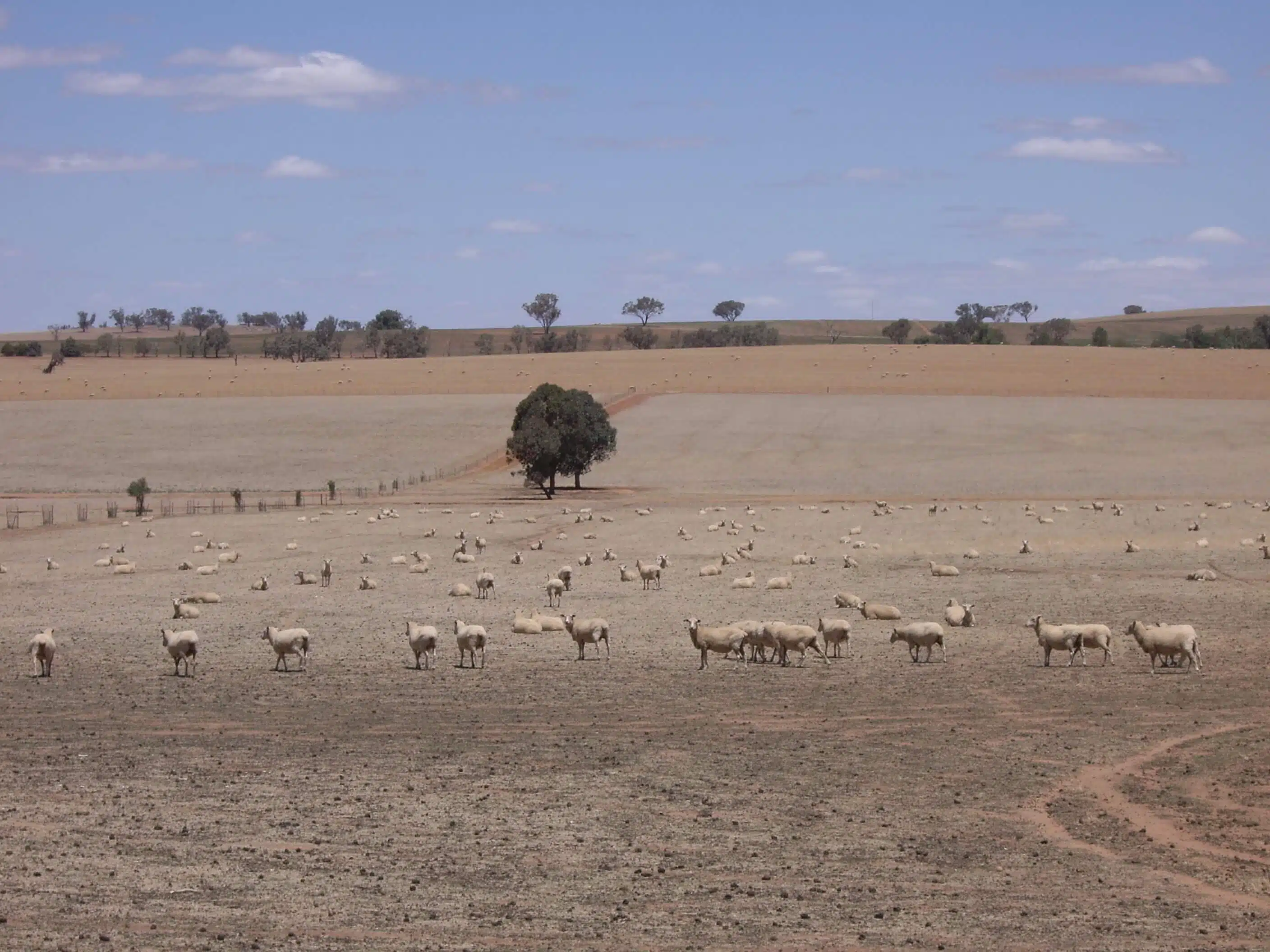
Sheep grazing in the Riverina region of Australia, during the drought of 2007. From Wikipedia

Meat production with less damage to the atmosphere

Artist's impression of a lake on the Saturnian moon Titan. Image: NASA

Titan – Part 3: Lakes

Artist's impression of a lake on the Saturnian moon Titan. Image: NASA

The methane puzzle on Mars and Titan

Microorganisms called "methanogens" - bacteria that turn carbon dioxide into methane in trees that were damaged by them

A new source of methane

The moon Titan. Photo: NASA's Cassini spacecraft

A deluge of methane in Titan's spring showers

oregano

Oregano to reduce warming?

Lake Nyos

"vibrant" lakes

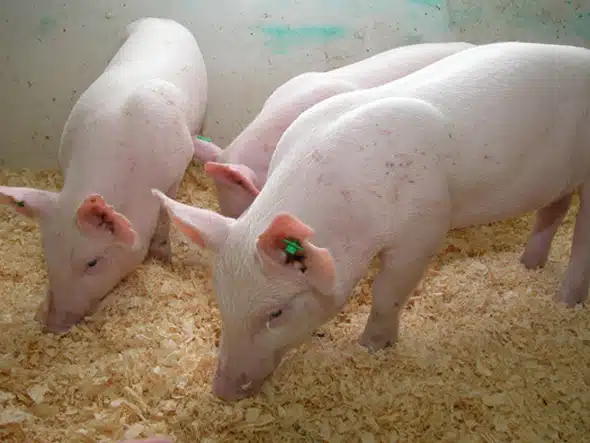
Transgenic pigs - Enviropiglets. Photo: University of Golf, Canada

Environmental pig

Rare supporting cells in the inner ear of mice began to transform into sensory hair cells

An important step forward in converting methane gas to liquid fuel

Rare supporting cells in the inner ear of mice began to transform into sensory hair cells

Bacteria are electrifying

Rare supporting cells in the inner ear of mice began to transform into sensory hair cells

Mars is not a dead planet

Rare supporting cells in the inner ear of mice began to transform into sensory hair cells

Competition between bad and bad

Rare supporting cells in the inner ear of mice began to transform into sensory hair cells

Hubble found organic molecules on a planet outside the solar system

Rare supporting cells in the inner ear of mice began to transform into sensory hair cells

Additional amounts of methane have been discovered on Mars