Martian atmosphere

Detection of electrical discharges in dust plumes by the SuperCam instrument on the Mars Perseverance rover. Credit: Nicolas Sarter

Scientists have discovered electrical sparks on Mars that could rewrite our knowledge of its atmosphere

Electric sparks within dust plumes on Mars have been discovered for the first time, and they are changing our understanding of the planet's atmosphere and climate.
The HiRISE camera on NASA's Mars Orbiter took this close-up image of a "new" impact crater (on a geological scale, but very old on a human scale) in the Sirenum Posei region of Mars on March 30, 2015. Photo: NASA

Dust storms on Mars play a huge role in drying out the planet

Wet Mars, billions of years ago, and Mars today. NASA figure, based on data transmitted by the MAVEN spacecraft

Mars: Interim Summary of MAVEN Spacecraft Findings  

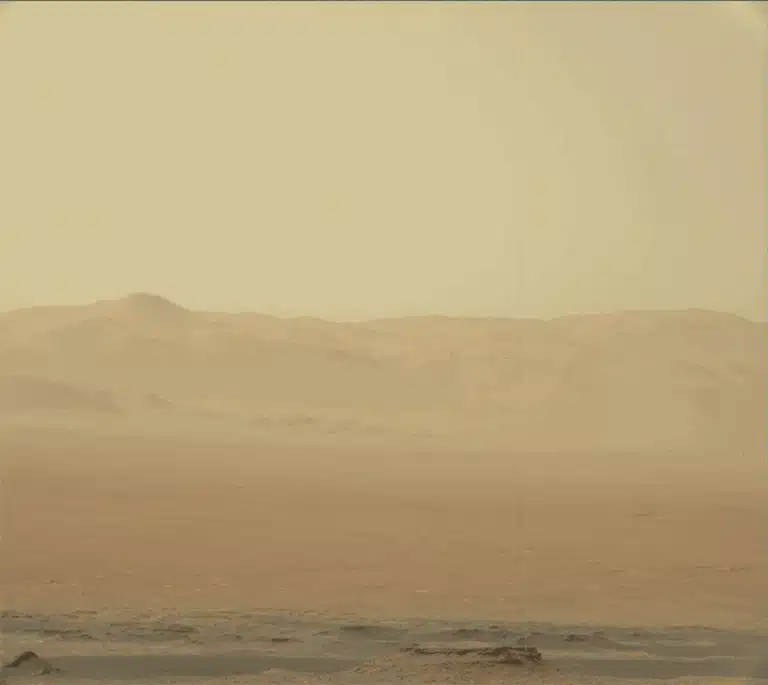
The intensification of the dust storm on Mars as photographed by the Mars rover Curiosity located inside Gale Crater and looking at the crater wall. The photos were taken during June 2018

The Martian dust storm becomes a global phenomenon

Mars and the ice caps at the poles alone. Photographed by the Rosetta spacecraft during a flyby of Mars in 2007. Source: ESA.

Researchers: It snows on Mars during the summer nights

The depletion of the atmosphere turned wet Mars into a desert. Imaging of the MAVEN spacecraft in the sky of the planet. Photo: NASA

The solar wind has removed most of the Martian atmosphere

Artist illustration of "The Living Mars" Illustration by Kevin Gill, NASA

Students propose to "green" Mars using blue bacteria

Volcanic ash deposits color Meridiani Planum, as seen from the Mars Express space probe. They also hint at the wind directions in this region of Mars.

March Express - new findings (1)

The depletion of the atmosphere turned wet Mars into a desert. Imaging of the MAVEN spacecraft in the sky of the planet. Photo: NASA

Who moved my atmosphere?