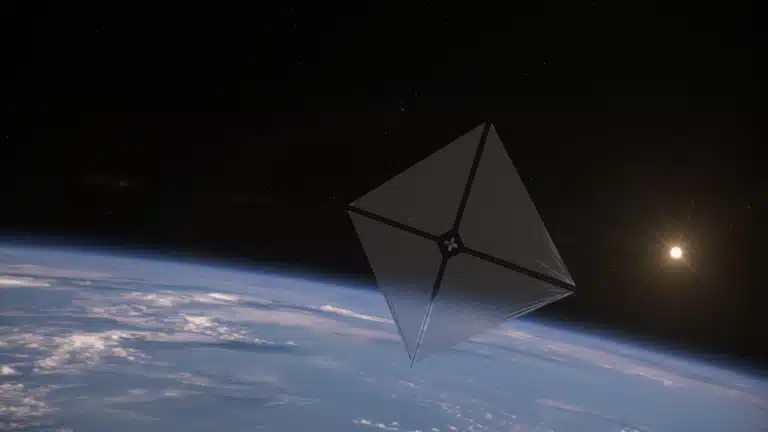
The discovery of an atmosphere around the rocky planet LHS 1140b has brought the possibility of sending tiny spacecraft to other solar systems back into the headlines. Miniaturized electronics, light sails, and powerful laser arrays are making the idea a research topic
A new theoretical study points to another problem with interstellar light sails: As they approach relativistic speeds, the Doppler effect and the deflection of light reduce the efficiency of the thrust. In one of the weakest contributions of light, even
A revolutionary design by young engineers proposes a giant ship 58 kilometers long, which will accommodate generations of colonists on their way to an Earth-like planet in the Alpha Centauri system.
A research program proposes launching a nanospacecraft with a light sail, propelled by a laser beam at up to about a third of the speed of light, to reach a nearby black hole within decades and test the theory of relativity under extreme conditions—if one is found.