A study by the Weizmann Institute and Kyoto University used hybrid human-chimpanzee cells to identify a change in the control of genes related to the skeleton. The researchers are examining how it may explain some of the vulnerability of joints
The study of "Page 7," the most complete known skeleton of a Neanderthal infant aged 6–14 months, found a gap between dental age and body and brain development, suggesting that Neanderthals followed a different developmental trajectory.
A new article in the American Journal of Biological Anthropology argues that the conventional division into three genera – Homo, Australopithecus, and Paranthropus – no longer accurately reflects the evolutionary relationships emerging from fossils and phylogenetic analyses.
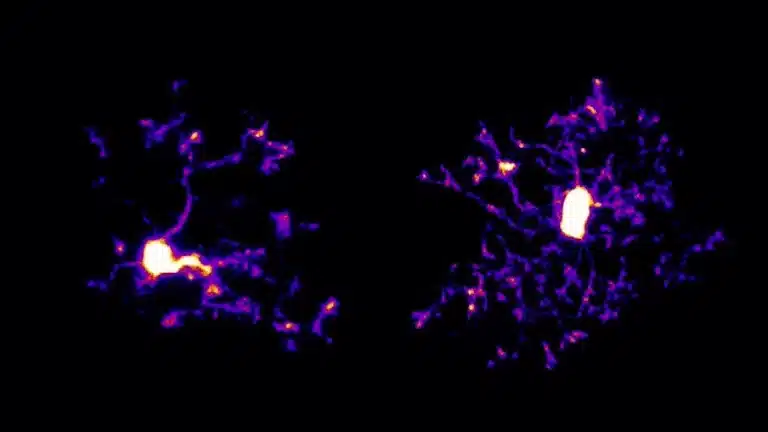
A study in Neuron found that human-specific copies of SRGAP2 slow and coordinate the maturation of microglia and synapses. The extended developmental window may allow for the formation of more complex neural networks, but the study did not examine
Hundreds of illusory stone tools have been discovered on the surface in the Lower Galilee. At least ten of them were carved so that fossils, crystals, and natural cavities remained visible and prominent—a choice that researchers interpret as possible evidence of aesthetic sensitivity.
TRACE reconstructs genealogical relationships from genomes of humans living today. The researchers identified a "ghost lineage" in all populations tested, and remnants of an even older lineage that passed to humans through the Denisovans.
Genetic data from 27 Neanderthals who lived in northwestern Europe less than 52,500 years ago show that the groups in the region were relatively related. The researchers found no evidence of extensive mating between relatives, late genetic mixing
Researchers compared the timing of laughter bursts in four living species of great apes and in children. Laughter following tickling was particularly rhythmic in all groups, but in humans it was rapid, variable
Researchers have successfully extracted proteins from the enamel of six Homo erectus teeth discovered in China. A variant shared by Homo erectus and Denisovans raises the possibility that genetic heritage from this early human population was also passed on, via Denisovans, to
An analysis of 386 fossils from 21 hominin species found a combination of a gradual increase in body weight and a significant jump that occurred within the genus Homo about two million to two and a half million years ago. At the same time,