Examinations of surviving cubes, archival documents and computer simulations show that the last experiment led by Werner Heisenberg required far more uranium and heavy water than were available for the German nuclear program.
Nobel Prize winner who studied chlorophyll and developed filters for gas masks resigned in protest of anti-Semitism, but saw assimilation as a solution to the Jewish question
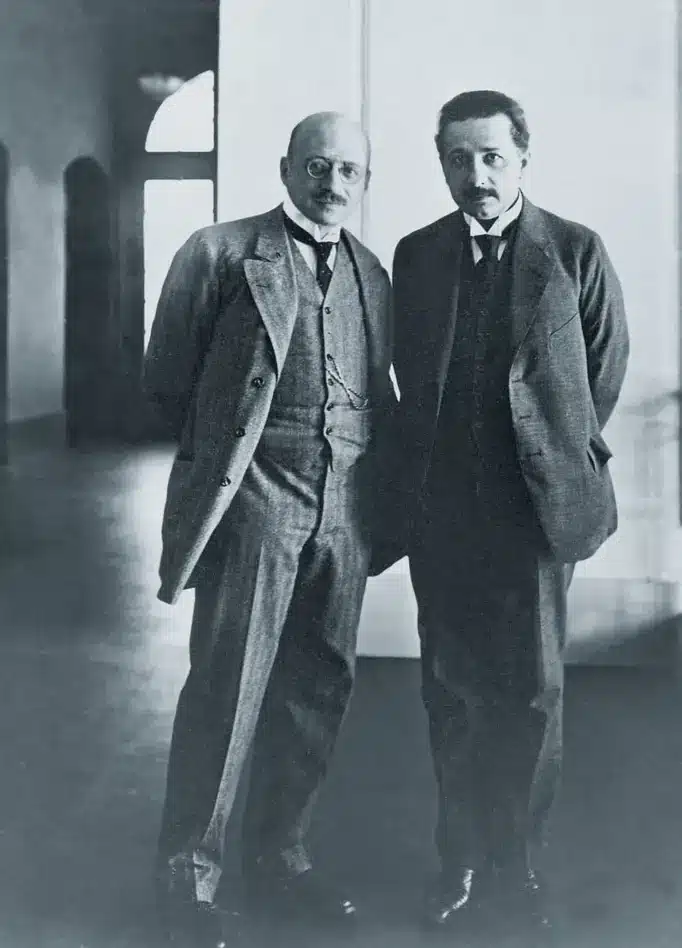
Two of the greatest scientists of the 20th century were close friends, even though one was a pacifist and opposed to nationalism while the other put science at the service of chemical warfare and the German Empire.
The Jewish-French historian Marc Bloch revolutionized the study of history, fought in two world wars and joined the French underground against the Nazis. In June 1944 he was tortured and murdered by the Gestapo; in June 2026 he was inducted into the Pantheon with his wife Simone
A few weeks after the publication of the general theory of relativity, German-Jewish astronomer Karl Schwarzschild found the first exact solution to Einstein's equations. The solution, sent from the front lines of World War I, later laid the foundation for the mathematical description of
Semyon Shubin graduated from university at the age of 19, made fundamental contributions to the physics of metals, and founded a school of theoretical physicists in the Urals. The Stalinist terror stopped his scientific work and sent him to his death in a labor camp.
Blaise Pascal lived only 39 years, but he had a profound influence on mathematics, physics, probability theory, calculating machines, and philosophy. His ideas continue to shape the way we calculate, measure, and make decisions in today's world.
Joseph Rapoport was a decorated combat officer and pioneering geneticist. After refusing to submit to the pseudoscientific teachings of Trofim Lysenko, he was expelled from the Communist Party and from his scientific work. Years later, he returned to research and was one of the founders of the field of genetics.
Three chapters in American history reveal the complex relationship of science with power: the secrecy and lack of oversight of the Manhattan Project, the erasure of enslaved people's agricultural knowledge, and the use of eugenics to justify forced sterilization and discrimination.
Jacques Hadamard was an extraordinary French mathematician who contributed to number theory, mathematical physics, and the study of mathematical thought. His life combined scientific achievements, family tragedies, and a deep commitment to justice and human rights.
Researchers have identified numerous notes attributed to Galileo in a 16th-century copy of Ptolemy's central astronomical work, a discovery that may shed new light on how he evolved from the geocentric tradition to the revolution.
According to an analysis by researchers at Leiden University in the Netherlands, evidence in medieval chronicles indicates that the monk Aylmer of Malmesbury linked observations in 989 and 1066 to the same periodic comet—hundreds of years before Halley established
From a hungry child who wandered through camps, exile, and kolkhozes in Kyrgyzstan – to a leading scientist at the Weizmann Institute, developer of affinity chromatography and the avidin-biotin system, winner of the Israel Prize and the Wolf Prize: Prof. Meir Wilczek celebrates 90 and continues
Nobel laureate James Watson has died at the age of 97; along with his seminal contribution to uncovering the structure of DNA with Francis Crick, new historical research highlights Rosalind Franklin’s central role – and
From Richard Wagner's article (1850) and Wilhelm Marr's coining of the term "anti-Semitism" (1879), through Lennard and Stark's "German physics" and Bieberbach and Jansch's psychological engineering—to Hilbert's counter-reaction: "Mathematics has no races"
In the upcoming series of posts, I will deal with selected chapters from the fascinating history of thermodynamics. In the first post we opened with the basic question: What is temperature?
A scientist has discovered a unique Islamic astrolabe from the eleventh century in Verona, Italy, which includes inscriptions in Arabic and Hebrew. This find illustrates the rich scientific collaboration between Muslim, Jewish and Christian cultures in the Middle Ages, and presents the
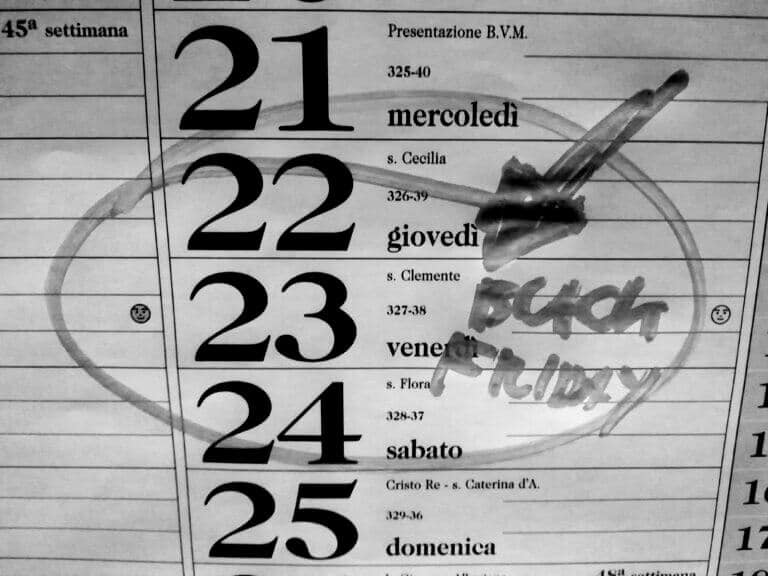
The week is not an astronomical cycle like the day or the year. How did the Jewish Sabbath, the seven celestial bodies, and Roman tradition connect to the cycle that is used today by almost the entire world?