
Hayadan > EUROPE
EUROPE

- Avi Blizovsky
- No comments
Two studies in Nature, based on 712 new ancient genomes, point to an unknown migration into Scandinavia about 4,000 years ago and a population movement from central Europe westward about 3,000 years ago. According to the researchers, movements

- Avi Blizovsky
- No comments
A study in Science Advances found that without man-made climate change, the rainfall in Storm Boris in 2024 would have been only 6%–9% lower, but flood peaks would have been 14%–22% lower. The reason: saturated, non-absorbent soil

- Avi Blizovsky
- 5 comments
The movement that emerged in the US following the cancellation of grants and political interference in research is establishing an international organization in Switzerland. In Israel, a struggle is already underway over the composition of the National Council of Scientists, research budgets, statements by university heads, and the buffer between the political echelon and the system.

- Avi Blizovsky
- No comments
On August 12, 2026, the moon's shadow will pass over Greenland, western Iceland, and northern Spain. The total eclipse will last a maximum of two minutes and 18 seconds, and most of Europe will see only a partial eclipse.

- Avi Blizovsky
- One response
OMB proposal gives political appointees more power in funding decisions, limits collaborations with countries designated as adversaries, and makes it harder to publish articles and attend conferences. European research organizations fear long-term harm to collaboration

- Avi Blizovsky
- No comments
Europe didn't get a new climate overnight, but its starting point changed quickly. The same atmospheric pattern that brought heat in the past is now producing much higher temperatures, as the continent has already warmed by about 2.5 degrees Celsius.

- Avi Blizovsky
- One response
The ECMWF and WMO European Climate Status Report found that 95% of Europe experienced above-average heat, 70% of rivers flowed below average, and more than 10,000 square kilometers burned.

- Avi Blizovsky
- No comments
A new scientific review suggests that ancient impact craters created mineral-rich hydrothermal systems that may have served as a cradle for the development of pre-biological chemistry.

- Avi Blizovsky
- One response
A new study seeks to highlight a point that worries public health experts: Not only is the “average temperature” rising due to the climate crisis, but also extreme weather patterns that have already occurred in the past may return – and when they do

- Avi Blizovsky
- One response
The study proposes a new definition: the "radiolitic habitable zone" - in contrast to the classic "habitable zone" (the region around a star that allows liquid water to exist on the surface), the radioolitic habitable zone focuses on places where water exists.

- Avi Blizovsky
- No comments
According to EU President Ursula von der Leyen, Europe is committed to research freedom, mega-grants and global cooperation.
- Avi Blizovsky
- 3 comments
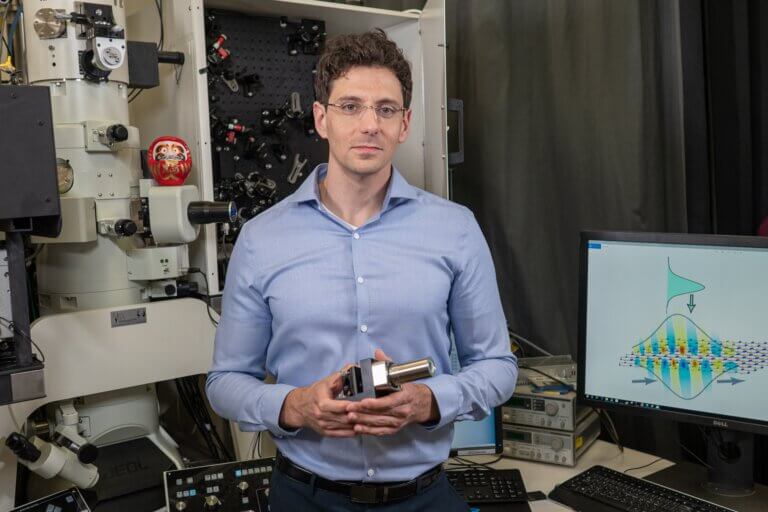
"The observations will be made possible through the control we have developed over the wave nature of free electrons," explains Prof. Kaminer

- Avi Blizovsky
- 2 comments

- Avi Blizovsky
- No comments
Researchers are documenting the damaging impact of worsening drought and wildfires over the past three years

- Elisef Kosman
- 3 comments

- Science site The Conversation
- 10 comments

- Science site The Conversation
- 4 comments
- Dr. Asaf Rosenthal
- 16 comments

- Avi Blizovsky
- 5 comments
- Rami Yushobiev
- 4 comments
- Avi Blizovsky
- No comments
- Hayadan Service
- No comments