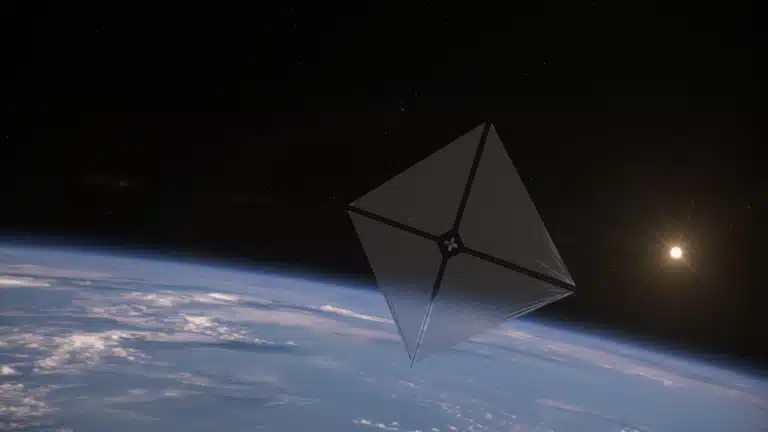
The discovery of an atmosphere around the rocky planet LHS 1140b has brought the possibility of sending tiny spacecraft to other solar systems back into the headlines. Miniaturized electronics, light sails, and powerful laser arrays are making the idea a research topic
A new theoretical study points to another problem with interstellar light sails: As they approach relativistic speeds, the Doppler effect and the deflection of light reduce the efficiency of the thrust. In one of the weakest contributions of light, even
A revolutionary design by young engineers proposes a giant ship 58 kilometers long, which will accommodate generations of colonists on their way to an Earth-like planet in the Alpha Centauri system.
NASA's Breakthrough Initiative, Saber Astronautic, and JPL have announced Project Tolliman, a project to find out whether the nearest stars have planets that could support life