sexual reproduction

In the picture on the left: leaves that have undergone regeneration. Courtesy of the researchers and the Volcanic Institute

The plants can reproduce sexually or by cloning, but not at the same time

A new study by Dr. Moshe Reuvani from the Volcanic Institute, published in the journal Nature, found that the presence of a protein called florigen, which is secreted by the plant during flowering (the stage of sexual reproduction), is related to the decrease in the ability of the plant
An illustration by Prof. Luca Jovine of Karolinska Institutet shows the structure of Fsx1 (right) that was deciphered by the researchers. The structure belongs to an archaeon that originated in a highly saline aquatic environment (represented by salt on the left).

Hypothesis: The mechanism that enables sexual reproduction was created about a billion years before its actual appearance

The Technion researchers and their colleagues abroad: It is possible that the cellular mechanisms that enable the fusion of the sperm and the egg were created as early as 3 billion years ago in single-celled organisms of the archaea type
Prof. Oded Ravavi. Photo: Tel Aviv University spokesperson

Can high temperature accelerate the rate of evolution?

Researchers from Tel Aviv University demonstrated with the help of worms that epigenetic inheritance of sexual attraction can influence the process of evolution
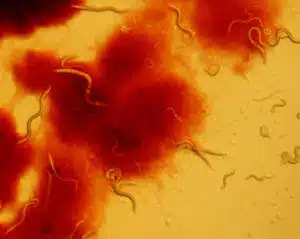
C. elegans worms in a petri dish - those that reproduced sexually survived better

The advantage is that it reproduces sexually