sulfur

After the Big Bang, an interstellar cloud of gas and dust composed of the elements silicon (gray), sulfur (yellow), and argon (purple) remained.

Giant star caught naked, revealing source of silicon and sulfur formation

An international team of scientists, led by Northwestern University and the Weizmann Institute of Science, has identified a new type of supernova that provides a rare glimpse into the depths of stars and reveals sites of production of heavy chemical elements.
This composite image shows a portion of the interstellar medium where scientists searched for sulfur using X-ray imaging of Charisma. The X-ray binary system GX 340+0 is the blue dot in the center. The image is a blend of X-ray (shown in dark blue), E-ray, and light images. Credit: DSS/DECaPS/eRosita/NASA's Goddard Space Flight Center

X-ray satellite CHRISMA reveals missing sulfur in Milky Way

High-resolution observations of star-forming regions reveal sulfur as both a gas and a solid in the interstellar medium—hinting at the composition of dust and the chemistry of the galaxy
A tiny life form that penetrated the sedimentary rocks and fed on the minerals therein created thin, parallel tubes between two channels. Marble sample from Namibia | Source: Cees Passchier

Thin tubes to the distant past

Unusual structures found in marble and limestone rocks in Namibia were probably created millions of years ago by tiny animals that fed on the minerals in the rocks.
The James Webb Space Telescope enables a detailed analysis of the atmospheres of extrasolar planets and the possibility that they have life. Credit: NASA GSFC/CIL/Adriana Manrique Gutierrez

Molecular illusion: Laboratory findings cast doubt on signs of extraterrestrial life

New research challenges the assumption that specific molecules detected on other planets are a sign of life, showing that they can be synthesized under controlled laboratory conditions without any biological activity
Red worms dig in the compost. Even the worms that exist today mix substances. Illustration: depositphotos.com

Worms - uncredited heroes of evolution

The researchers examined the relationship between sediment mixing caused, in part, by burrowing worms with a mineral called pyrite, which plays a key role in oxygen accumulation. As more pyrite is formed and buried under the mud, sand or
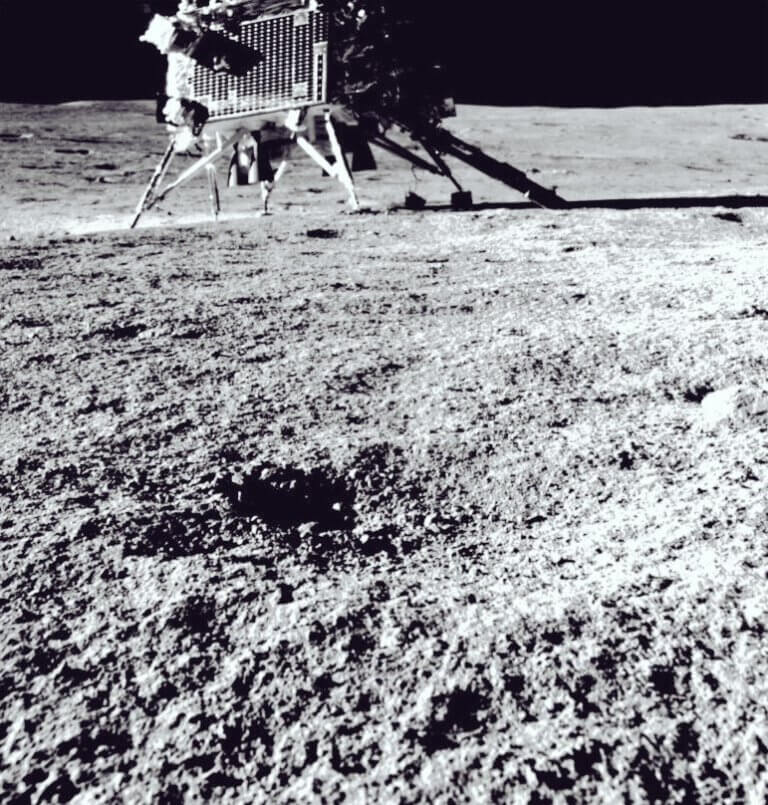
The Indian lander Vircam as photographed from the Paragain robotic vehicle. Photo by the Indian Space Agency ISRO

Surprising presence of sulfur in the soil of the South Pole of the Moon by the Indian robotic vehicle Paragain in the Chandrayaan-3 mission

The vehicle discovered a wide variety of heavy elements, but this is the first evidence of the presence of sulfur * The rover will tour the south pole of the moon for two weeks and look for signs of water ice
Pyrite - fool's gold. From Wikipedia

The sulfur cycle: not what you thought

Sulfur in the S3 configuration. is found together with rare metals such as gold and may indicate the existence of these metals

A new form of sulfur has been discovered

Rare supporting cells in the inner ear of mice began to transform into sensory hair cells

Iron "snow" helps the hot star maintain its magnetic field

Rare supporting cells in the inner ear of mice began to transform into sensory hair cells

Stinky Mars: Sulfur deposits give off rotten smells