An international study has found that the long-standing correlation between UV and X-ray emissions from quasars is not constant throughout the history of the universe – a hint that the structure of the accretion disk and “corona” around supermassive black holes is not as universal as was believed for decades.

Astronomers around the world have discovered strong evidence that the material around supermassive black holes has not remained the same throughout the history of the universe. If confirmed, the findings could overturn a key assumption that has shaped the study of black holes for nearly fifty years.
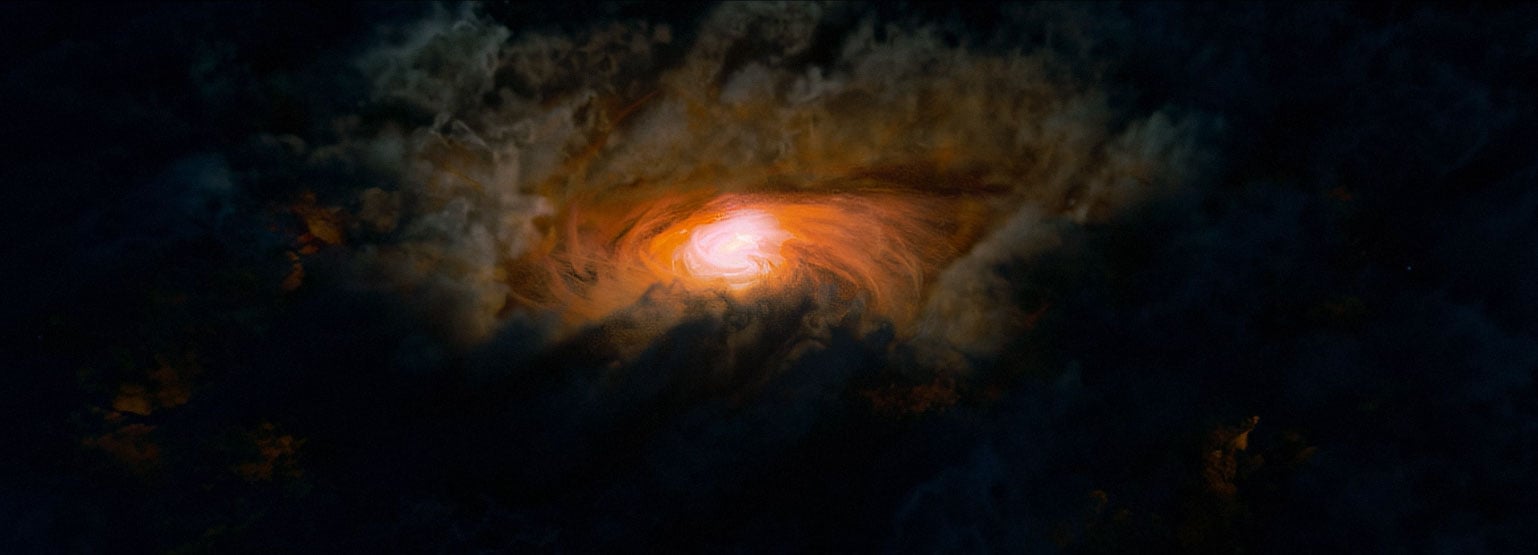
First recognized in the 1960s, quasars are among the most luminous objects ever observed. Their extraordinary brightness comes from supermassive black holes that pull in nearby matter with strong gravitational forces. As this material falls in, it creates a rapidly rotating disk that eventually feeds the black hole.
The disk heats up to extreme temperatures as particles collide and rub against each other as they orbit the black hole. This process releases an incredible amount of energy, producing anywhere from a hundred to a thousand times more light than an entire galaxy of up to a hundred billion stars. The UV radiation produced is strong enough that telescopes can detect quasars from vast distances, even near the edge of the observable universe.

Radiating UV to X-ray: An old connection
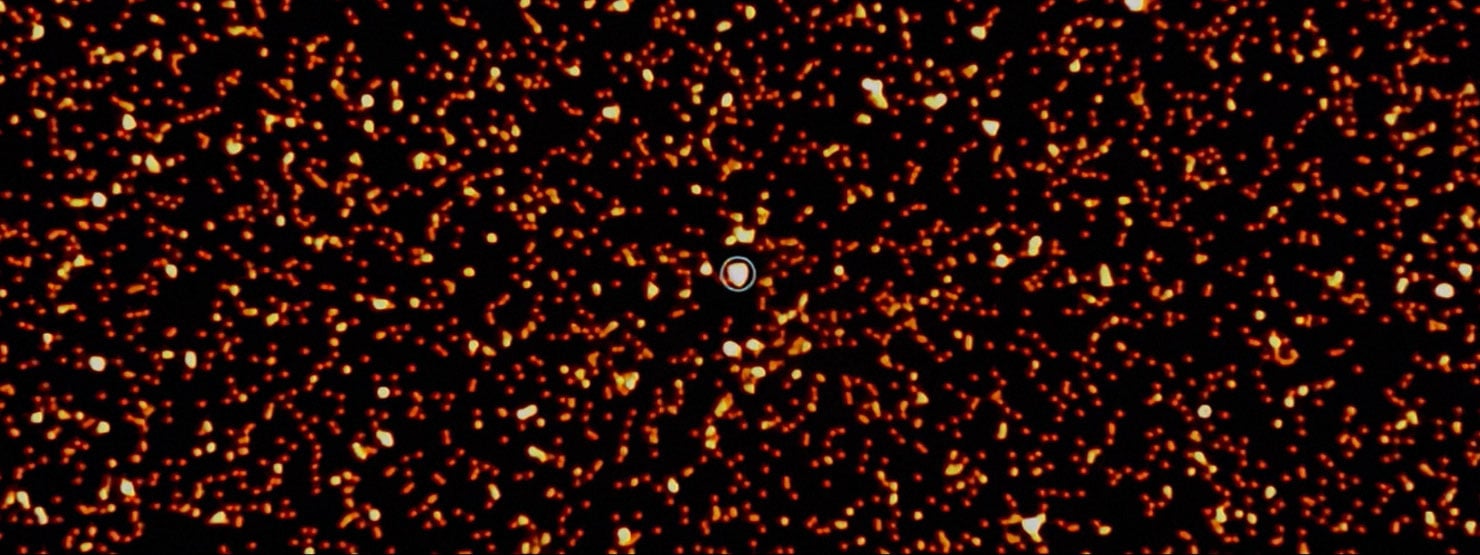
It is believed that the UV light from the disk is also the fuel for the X-ray radiation produced by quasars, which is much more energetic: the UV light rays, when in space, encounter clouds of high-energy particles very close to the black hole, a structure also called a "corona."
When repelled by these energetic particles, the UV rays gain energy and create intense X-ray radiation that our detectors can detect.
Because of their shared history, there is a close correlation between the X-ray and UV emissions of quasars—brighter UV light generally means stronger X-ray intensity. This correlation, discovered nearly fifty years ago, provides fundamental insights into the geometry and physical conditions of the material close to supermassive black holes and has been the focus of intense research for decades.
The latest study adds a twist to previous studies because it casts doubt on the universality of correlation – a fundamental assumption that implies that the structure of matter around black holes is similar throughout the universe.

It shows that when the universe was younger – about half its current age – the correlation between X-ray and UV radiation was significantly different from the correlation observed in the nearby universe. The discovery suggests that the physical processes that link the accretion disk and corona around supermassive black holes may have changed over the last 6.5 billion years of the universe.
"The verification of a non-universal relationship between X-ray and UV radiation over cosmic time is very surprising and challenges our understanding of how supermassive black holes grow and radiate," said Dr. Antonis Georgakakis, one of the study's authors. "We tested the result using different approaches, but it seems to be consistent."
The universality of the UV-X-ray connection is the basis for certain methods that use quasars as "standard candles" to measure the geometry of the universe and ultimately to study the nature of dark matter and dark energy. This new result emphasizes the need for caution, and shows that the assumption that the structure of black holes does not change over cosmic time needs to be rigorously reexamined.
"The important development here is methodological," said Maria Kira, the lead author of the paper.
More on this subject on Hayadan.com - Science news: