
New study reveals that moderate-intensity tremors associated with the Lee-Lincoln fault in the Taros-Lytaro Valley could endanger permanent bases as part of the Artemis program
A new study finds that subtle seismic activity beneath the moon's surface—not meteorite impacts—is responsible for surface changes in certain areas. The implication: Moonquakes could pose a real risk to the stability of future infrastructure built on the moon's surface.
The researchers found that shaking caused by moonquakes, rather than meteorite impacts, was responsible for the surface changes in the Taurus-Littrow Valley, the landing site of the Apollo 17 mission in 1972. They were also able to identify the likely source of these tremors and assess the risks using new seismic models. The findings have critical implications for planning long-term manned missions and establishing permanent bases on the Moon.
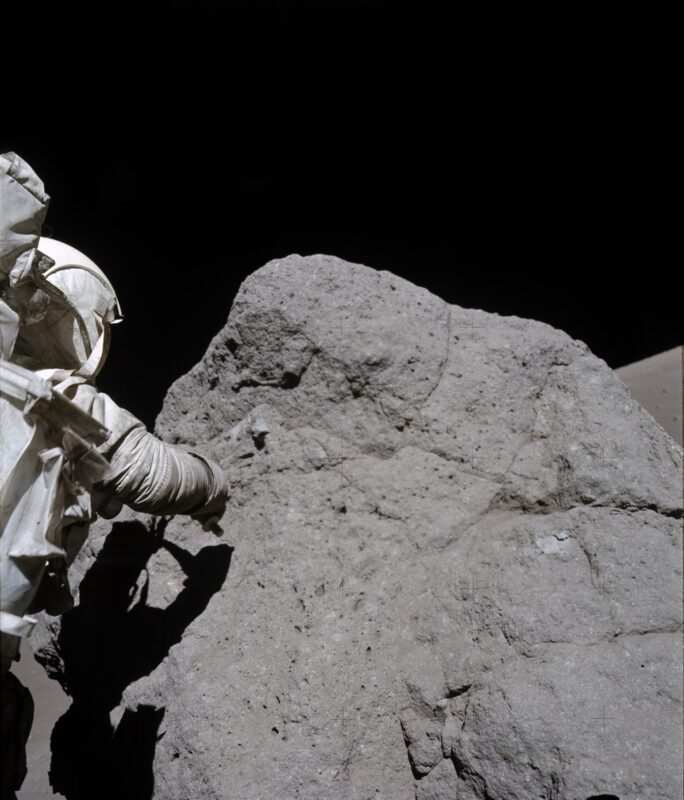
Geological evidence from the Apollo 17 site
The team of researchers examined data from the site, where rock samples from landslides and landslides—events triggered by moonquakes—were collected. Based on these signatures, they were able to estimate the magnitude of the tremors and infer their origins.
Professor Nicholas Schmer from the University of Maryland explained: "We don't have sensitive instruments on the moon like we do on Earth that can measure the intensity of tremors directly. So we looked for indirect indications – for example, fallen rocks or landslides caused by seismic events."
Alarming findings: active cracks
The study results showed that earthquakes measuring about 3 on the Richter scale – relatively small by Earth standards – have occurred repeatedly in the area over the past ninety million years. These tremors have been linked to the Lee-Lincoln fault, which runs through the center of the valley. The findings suggest that the fault is still active today.
Professor Thomas Waters, a senior scientist at the Smithsonian, said: "The global spread of young thrust faults like this, and the likelihood that some are still active, warrant consideration in determining the location of future bases on the Moon."
Statistical but not negligible risk
Computer simulation showing seismic waves propagating from a shallow moonquake that occurred on the Lee-Lincoln fault in the Taros-Littrow Valley, impacting the Apollo 17 landing site. The accompanying audio represents the vertical motion of the ground in the simulation (accelerated 10 times). In the background – a global mosaic from the LROC-WAC camera. Red and blue represent positive (upward) and negative (downward) vertical motion. Credit: University of Maryland, Nicholas Schmerr
Researchers have calculated the seismic risk on the moon and estimated that there is a one in twenty million chance that a damaging earthquake will occur on a given day near an active fault. On the face of it, this is a very low probability, but Shemer emphasized: "The risk is not zero. In long-term projects, it has to be taken into account, especially when it comes to expensive infrastructure or manned missions."
Implications for future missions
The study found that short missions, such as Apollo 17, were relatively low-risk. However, future long-duration missions or permanent stations are much more vulnerable. New landing systems, such as SpaceX's Starship system for the Artemis program, could be vulnerable to ground shaking in areas where moonquakes occur near the surface.
Shemer emphasized: "If astronauts stay there for one day, it's mostly a matter of bad luck. But if it's a residence for an entire decade, the risk becomes extremely rare to statistically noticeable – about one in 5,500."
A new field: lunar paleoseismology
The researchers define their field of work as “lunar paleoseismology” – the study of ancient tremors. While on Earth, one can dig trenches and examine evidence of past tremors, on the Moon one must rely on data from Apollo missions, satellite observations, and high-resolution images. Shemer estimates that the Artemis missions will bring seismic equipment that is much more advanced than that of the Apollo era and will enable breakthroughs in the field.
The main conclusion: As on Earth, so on the Moon, infrastructure should not be built directly on or near a geological fault. The further away you get from the fault, the less risk there is.
The scientific article: Thomas R. Watters & Nicholas C. Schmerr, Science Advances, 30.7.2025.
More on this subject on Hayadan.com - Science news:
