
as well as water-repellent surfaces for medical and military uses - at the Fifth International Materials Engineering Conference at the Ariel University Center in Samaria
Coating and strengthening metals while avoiding the use of the polluting and carcinogenic chromium, and the development of liquid-repellent materials that can prevent the spread of pollutants in medical facilities, are two of the technological breakthroughs in the development of new materials that will be presented at the Fifth International Conference on the Development of Innovative Materials through Mathematical Models (MMT - Mathematical Modeling and Computer Simulation of Material Technologies) ). The conference will be held this week (September 11-8, 2008) at the Ariel University Center in Samaria, with the participation of about 250 researchers and developers from 25 countries from about 40 universities and research institutes around the world.
The use of chrome to coat and harden metallic materials is essential for the automotive industry, to prevent corrosion, to make the metal resistant to high temperatures, and to harden aircraft parts that withstand stress such as engines and passenger seats. However, the electrolytic chromium plating process creates dangerous pollutants that cause, among other things, the formation of carcinogenic substances. Therefore, the international standardization institutions decided that it is necessary to minimize the use of chromium in these processes. As a replacement for chromium, innovative coating and hardening processes based on the use of nanoparticles obtained through a process of mechano-chemical activation were developed in the laboratories of the Materials Research Center at the Ariel University Center in Samaria, headed by Prof. Michael Zinigard. This technology turns aluminum into a coating material - alumina - whose ability to prevent corrosion, wear, etc., on the one hand, exceeds that of chrome, and on the other hand - does not involve the formation of polluting and carcinogenic by-products. The development of these processes takes place with the funding of the aerospace industry and with its active participation.
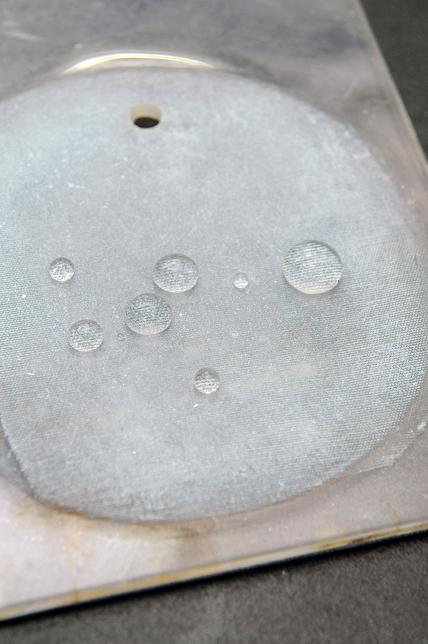
Another area being developed in Nano Technologies that will be presented at the conference is surfaces of materials that repel water and other liquids. The water drops "roll off" the surfaces of the fabric, metal, wood, etc., and do not wet them at all. This is achieved by processing the surface using nanometric methods. These properties enable a series of diverse uses in the military and civilian fields, such as preventing icing on airplane wings, which improves the efficiency of the aircraft, and the development of fabrics and clothing that do not get wet, for military and medical uses. In the medical field, this development is of great importance, to reduce the transmission of infections and bacteria as part of treatment in hospitals and other medical facilities. This development will also be able to save water and utilize the dew for irrigation purposes. These developments, carried out in collaboration with the polymer industry in Israel, will be presented in a special session of the convention that will be dedicated to the topic of superhydrophobicity, led by Prof. Edward Burmashenko from the Ariel University Center, and other researchers from universities around the world.
The international conference, in which ten sessions will be held on various topics, is organized by the Center for Materials Research, which has existed in the Ariel University Center since 1999, and maintains research ties with leading academic institutions in Israel and around the world - USA, Japan, Germany, China, Portugal, Russia, Ukraine and more It is considered one of the four leading centers in the world in the development of new materials through the use of mathematical models.
