
Clean energy giant Qcells will adopt Lumet's ultra-thin conductor technology for its solar cells. Benny Landa, Lumet's founder and chairman, in response to the Hedaan site: "This savings represents 4% of the total module production costs. This is very significant, as it is a much higher profit than the profit margins of the solar photovoltaic module manufacturers, which are very small"

Hanwha Qcells, one of the largest companies in the world in the field of clean energy, has chosen the ultra-thin conductor technology of the Israeli company Lumet, which belongs to the Landa Group, for the production lines of its solar cells around the world. Qcells will be the first solar company in the world to implement Lumet's innovative technology, and as a result, Qcells is expected to increase the efficiency and reduce the cost of its photovoltaic solar cells.
Qcells, which currently operates the largest solar panel factory of its kind in the United States, announced the largest investment in US solar history to build a comprehensive and sustainable solar supply chain in America.
The unprecedented surge in solar energy production worldwide stems from the need for human society to reduce dependence on fossil fuels and increase the use of clean renewable energy. Today, solar energy is the cheapest source of energy and is growing at the highest rate. This is as a result of the industry's relentless pursuit of improving the efficiency of solar cells and lowering production costs.
In response to the science site's question, by how much the savings will increase as a result of the transition to nanotechnology, Landa said: "This savings represents 4% of the total module production costs. This is very significant, as it is a much higher profit than the profit margins of the photovoltaic solar module manufacturers, which are very small."
The most significant cost component in the production of solar cells stems from the metallization process in which conductive silver lines (collectors) are screen printed on the surface of the cell. The industry has been searching for a long time how to reduce the width of the conductor in order to reduce the use of silver (to achieve a lower cost) and at the same time to minimize the shading from the light (to increase the efficiency). However, with the network printing technology used today, it is not possible to provide a conductor with a width of less than twenty microns.
Lumet's metallization technology is capable of producing ultra-thin conductors, even below ten microns, and now enables solar cell manufacturers to increase efficiency and lower production costs at the same time.
Dr. Daniel Marfeld, Senior Vice President and Global Technology Manager at Qcells Hanwha, said: "After we carried out a long process of evaluation and testing, Qcells decided to adopt Lumet's metallization technology for its future photovoltaic solar cell production lines. We see Lumet's metallization technology as having tremendous potential. It constitutes a breakthrough in square fronts and sets records In the thinnest conductors, with the lowest production cost, with the best efficiency, at the highest speeds and in the production line that occupies the smallest area (Footprint)".
Dr. Marfeld added: "Furthermore, in light of Qcells' enormous commitment to expanding production in the US, the automation that characterizes Lumet's technology and the low investment volume in the purchase of equipment (CAPEX) are of particular importance, two elements that achieve great savings and make the connection between the companies For all these reasons, we are excited that Qcells will be the first to implement Lumet's technology in the market The Solar and we look forward to the continued deepening of our strategic partnership."
Benny Landa, The founder and chairman of Lumet added: "We are happy to collaborate with Qcells and look forward to bringing Lumet's technology to the market for the mass production of solar cells together. Qcells has a rich history of pioneering and innovation. In addition to being one of the pioneers in the field of solar energy production, it is also the first to reach gigawatt scale production. As of today, Qcells is a leader in the innovation front. It recently introduced LECO (Laser Enhanced Contact Optimization) technology and now it brings the advantages of Lumet technology to the solar market - once again it is the first! This is very exciting news, both for us and for the solar energy industry."
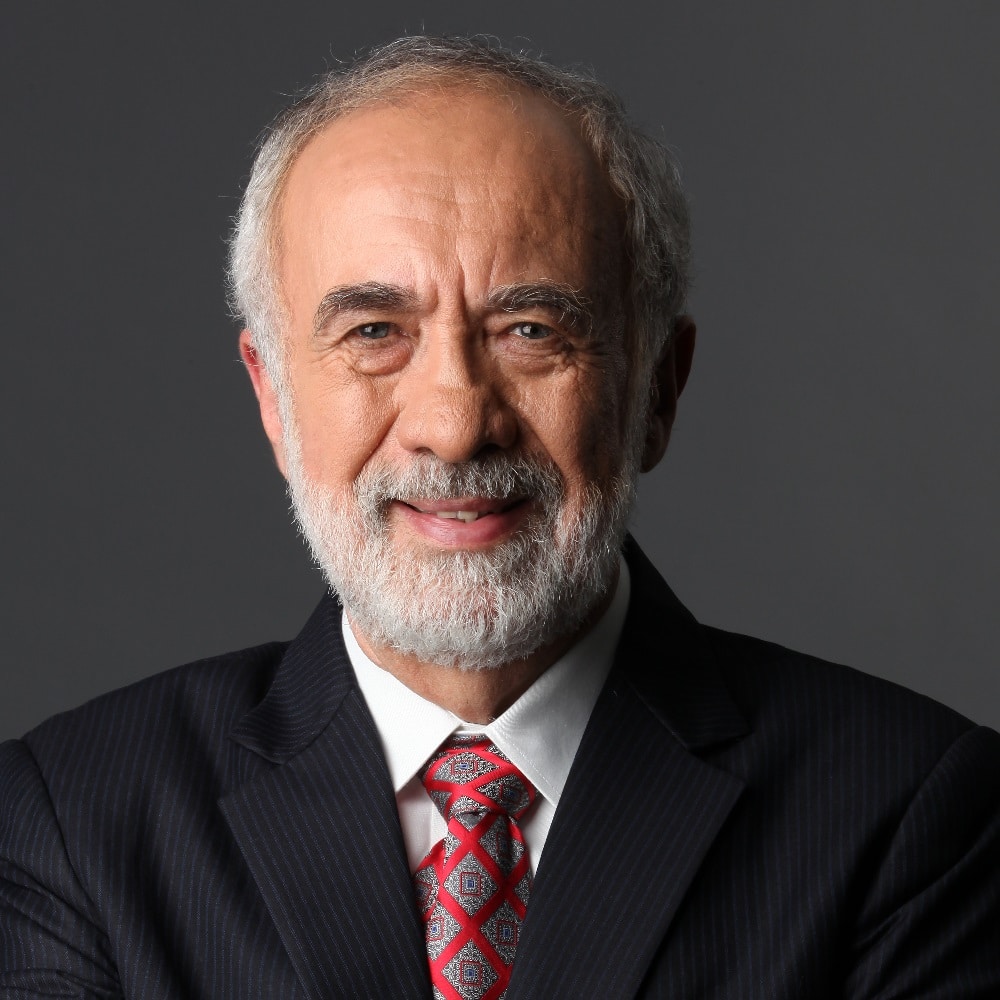
Dr. Merfeld concluded: "Innovation in clean energy technologies is critical to reducing global carbon emissions and developing accessible, reliable and low-cost energy for communities around the world. This is our mission. Today, in collaboration with Lumet, we are taking an important step towards achieving this goal."

2 תגובות
So said the priests of the sect of the oil tycoons
Solar energy is inefficient and unreliable and the proof is the collapse that was in Texas in cold weather, only nuclear energy will save western civilization