
Life may have flourished in areas of hydrothermal vents in the deep sea

A new and controversial theory about the beginning of life on Earth is creating a debate among scientists. One of its consequences is that life is more possible on planets previously thought life could flourish on.
The theory claims that living systems first grew in inorganic incubators - materials that emerged inside iron sulphide rocks.
The idea was put forward by Prof. William Martin from the University of Dusseldorf, and Prof. Michael Russell from the Scottish Environmental Research Center in Glasgow. In their eyes this is a conventional idea. In their opinion, instead of the building blocks of life developing first, and then developing a cell-like structure, the researchers say the cell comes first and is then filled with living molecules.
Since the 20s, most of the accepted theories about the first cells and therefore also about the beginning of life have been that chemical reactions in the oldest atmosphere of the Earth created the building blocks of life, which slowly and gradually led to the creation of the first cells.
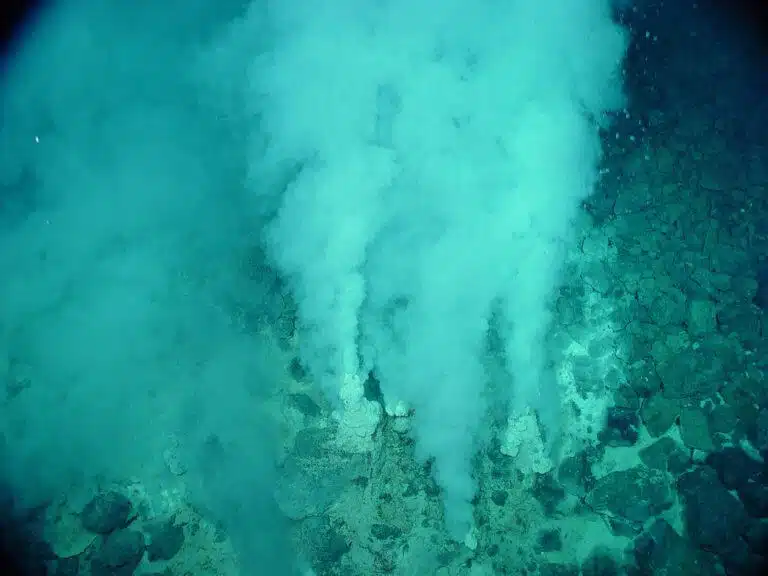
In explaining the new theory, Professors Martin and Russell emphasize their problems in explaining the hypothesis of cell development. Instead of the building blocks of life developing first and then forming cells, they believe cells came first. They say that the first cells were not living cells, but inorganic and were composed mainly of iron and sulfur and were created not on the surface of the earth but in the darkness of the bottom of the oceans. Life, they say, is a chemical continuation of heat-conducting currents through the Earth's crust, something that can happen on any planet that has rocks and water.
According to Dr. Russell, "Hydrothermal currents rich in elements such as hydrogen, cyanide, sulfides and carbon monoxide emanate from the earth's crust on the ocean floor, and they acted chemically with the cells made of sulfide metal. They created the microscopic environment that allowed chemical reactions to take place, and that kept the building blocks of life highly concentrated where they formed rather than dispersing them across the ocean. The iron sulphide cells were the place where life began."
One implication of the idea is that life on other planets or some large moons in our solar system like Europa – an ice-covered moon of Jupiter – might look more like that ancient life.
The study was published in Philosophical Transactions of the British Royal Society of Sciences.
