
In its reasoning, the committee stated that: "Prof. Adi Kimhi is one of the pioneers in deciphering the mechanism of programmed cell death in mammals. Prof. Kimhi developed pioneering approaches to deciphering this complex pathway in human cells which directly affects the process of normal development and cancer. Her work revealed innovative systemic molecular mechanisms for understanding the death process at a level The production of proteins and their breakdown. Prof. Kimchi has made a long-term contribution to cultivation Young scientists and women in science".
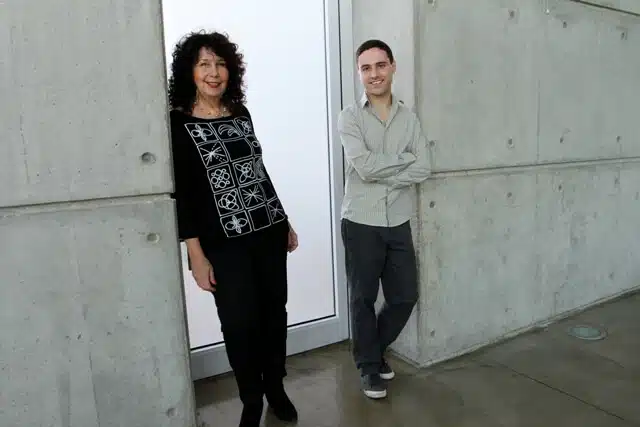
The Minister of Education, Naftali Bennett, announced today (Wednesday) the winning of the Israel Prize winner in the field of life sciences research Prof. Adi Kimchi, and congratulated her on winning the prize.
The award committee met under the chairmanship of Prof. Haim Sider - chairman of the committee, with his members - Prof. Shulamit Michaeli and Prof. Menachem Segal. This year, the committee's composition includes female representatives, in accordance with the new policy established by Minister of Education Bennett.
In its reasoning, the committee stated that: "Prof. Adi Kimhi is one of the pioneers in deciphering the mechanism of programmed cell death in mammals. Prof. Kimhi developed pioneering approaches to deciphering this complex pathway in human cells which directly affects the process of normal development and cancer. Her work revealed innovative systemic molecular mechanisms for understanding the death process at a level The production of proteins and their breakdown. Prof. Kimchi has made a long-term contribution to cultivation Young scientists and women in science".
Adi Kimchi worked and continues to work all these years to promote women in science through the establishment and implementation of various programs aimed at providing equal opportunities to women scientists at various stages throughout their academic career. Adi has been a member of the Israel National Academy of Sciences since 2015. Works to strengthen the connections of the Israeli academy with academies abroad. Adi's research opened new avenues in a systemic view of all death proteins.
Prof. Adi Kimchi was born in 1947 to parents who immigrated from Thessaloniki in Greece, the father immigrated before World War II and the mother during the war.
Adi grew up and studied (elementary and high school) in Tel Aviv, and for several years she also studied ballet and modern dance with Gertod Krauss (Kalet Peres Israel). After completing her high school studies, Adi decided that her love of science was stronger than any other challenge and began her studies at Tel Aviv University in the microbiology track as part of the academic reserve. After graduating with a master's degree with honors in 1970, she served as an officer in the medical corps. She completed her doctoral studies in 1977 in the Department of Microbiology at Tel Aviv University under the guidance of Eugene Rosenberg. In the years 1977-1981, she carried out postdoctoral research in the Virology Department at the Weizmann Institute of Science, in the group of Prof. Michel Rebel (Israel Prize Laureate), in the field of the antiviral action of interferon. In 1982, she joined the faculty of the Department of Molecular Genetics at the Weizmann Institute and established a research group that discovered and established in 1982-1988 the communication between tumor-inhibiting cytokines and the expression of certain oncogenic genes leading to the inhibition of cancer cell growth. In 1987, she spent a sabbatical year in the group of Robert Weinberg at the Whitehead Institute in Cambridge, where she studied the relationship between the cytokine TGF-β and the retinoblastoma gene. She was appointed to the rank of associate professor in the department of molecular genetics in 1988 and was promoted to full professor in 1997. She was chosen to serve in the Helena Rubinstein Chair for Cancer Research. In 2001, Adi was appointed to the charge of the Department of Molecular Genetics and served in this position for 6 years. In this framework, she headed the Center for Molecular Genetics named after Forchheimer. In 2011, she was appointed Chairwoman of the Council of Professors at the Weizmann Institute. She was a member of the Council for Higher Education in Israel and participated in the opening of study programs in universities and colleges and in maintaining internationality in the higher education system.
Adi has been a member of the Israel National Academy of Sciences since 2015. Works to strengthen the connections of the Israeli academy with academies abroad. Works to encourage girls in middle schools to choose STEM subjects in collaboration with the Young Academy of Sciences.
Adi worked and continues to work all these years to promote women in science through the establishment and implementation of various programs aimed at providing equal opportunities to female scientists at various stages throughout their academic career. In this context, she served for several years as the president's advisor for the advancement of women in science and during this period was at the head of the national program to support outstanding female students to enable them to successfully complete their post-doctoral training at leading institutions abroad.
Adi is known as a pioneer and leader in the field of programmed cell death and the coping of cells with emergency situations including autophagy pathways, central biological processes necessary for normal fetal development and maintaining the physiological balance of tissues in the adult organism. In her research, she discovered new molecular mechanisms that participate in cell death processes and various stress conditions and found malfunctions in these mechanisms that lead to various diseases. The breakthrough in these directions occurred in the early 90s when Adi proposed that new unbiased genetic approaches should be developed that would be suitable for extracting genes that participate in cell death in response to certain stress conditions, thus increasing and expanding molecular knowledge in the field of cell death. Therefore, she developed a unique "gene hunter" approach that was based on the random neutralization of messenger RNA (mRNA) through the introduction into cells of cDNA libraries cloned in the opposite direction (antisense), combined with the intelligent use of positive functional selections. In doing so, she was a decade ahead of the approaches accepted today in the world that use RNA interference (RNAi) libraries to extract genes by neutralizing RNA, and was the first to discover new molecular pathways in this pioneering way. Adi was able to identify a new group of cell death proteins which she called DAPs (Death Associated Proteins). The DAPs proteins have been studied in depth over the years in Adi's group and in many groups around the world. The most famous of them is DAP-Kinase (DAPK1) which is an enzyme with a complex structure that phosphorylates certain proteins as part of its activity in the cell. Since he was discovered in Adi's group in 1995, more than 1000 articles have been published about him, with the Kimchi group leading the field all these years. The mechanism of its action was cracked by Adi, as well as the structure of the protein and the mechanisms that activate the enzyme during stress which led to new understandings of the function of DAPK1 at the junction of decisions between cell death and survival. In addition, a series of works by Adi's group demonstrated for the first time using cancer model systems that DAPK1 acts as a tumor suppressor gene. Later it was found that the expression of the gene is paralyzed by certain epigenetic mechanisms (methylation of the gene's promoter) in a wide variety of human cancers. Monitoring the epigenetic change has become over the years an important prognostic and diagnostic sign in cancer. The study of all members of the DAPs family (DAP1, DAPK1) is open , DAPK2, DAP3, DAP5) led Adi to identify new pathways and establish groundbreaking principles In the field of autophagy - a biological process in which the cell digests itself from the inside using special vesicles that pack internal organelles and cell parts, and lead the contents to be fully discharged in the lysosome. Research has also recently led to the identification of an alternative pathway for the translation process of critical proteins that control embryonic stem cell differentiation.
In parallel with the works mentioned above, Adi's research opened up new avenues in a systemic view of all the death proteins known so far. She demonstrated that the three main channels related to decisions between cell death and life, namely apoptosis, autophagy and programmed necrosis, are related to each other through backup mechanisms, and through bi-functional proteins, including controlled transitions between channels. The knowledge accumulated in the group led for the first time to drawing a road map of cell death that combines about a hundred proteins from the three channels and describes the communication between them that creates a complex network of interactions between proteins. Later, Adi developed approaches that make it possible to measure in real time inside the cell the entire set of interactions between the death proteins at once, thus turning the road map into a dynamic map. In addition, functional approaches were developed in her group to detect the weak points of the network in various pathological conditions including cancerous tumors and conditions of pathological death of nerve cells in the brain in order to accelerate or inhibit cell death, respectively.
Adi's works earned her wide international recognition and many awards including: the Milstein Award for her achievements in interferon and cytokine research (1999), the Landau Award (1999), the annual Jacqueline Serousi Cancer Research Award (2002), the Teva Founders Award (2007) , the Lombroso Prize in Cancer Research (2006), an award for distinguished achievements in the field of cell death (2012), Emet Award in Physiology (2012), ECDO Award for achievements in the field of cell death (2013). She was invited to give many honorary lectures at conferences and in universities around the world. She has organized international conferences in the field of cell death and cancer. She has served on international committees including professional evaluation committees in various institutions and universities around the world. She is a member of the Board of Governors of international scientific societies such as ISICR.
Adi has published about 150 articles in first class journals such as Nature, Cell, Science, Nature Cell Biology, Molecular Cell, , EMBO J., Genes &Dev Nat. Commun. And about 20 more chapters in the books. The high number of citations to her works (h-index 65), 22,555 Web of Science citations:) reflects the fact that her discoveries about the DAP genes, autophagy, and the new avenues she opened in looking at and systematically analyzing the network of death proteins, are the basis for extensive international research. She has also won many competitive research grants over the years, including recently a prestigious research grant from the European Community ERC Advanced Grant.
Adi raised a generation of students, mentored about 65 students and more doctoral students, among them faculty members in academic institutions in Israel and around the world, and scientists who reached impressive achievements in the field of business entrepreneurship and key positions in biotechnology.
Adi is married to Avraham, and they have two sons, Leopardod and Yariv, and five grandchildren.
