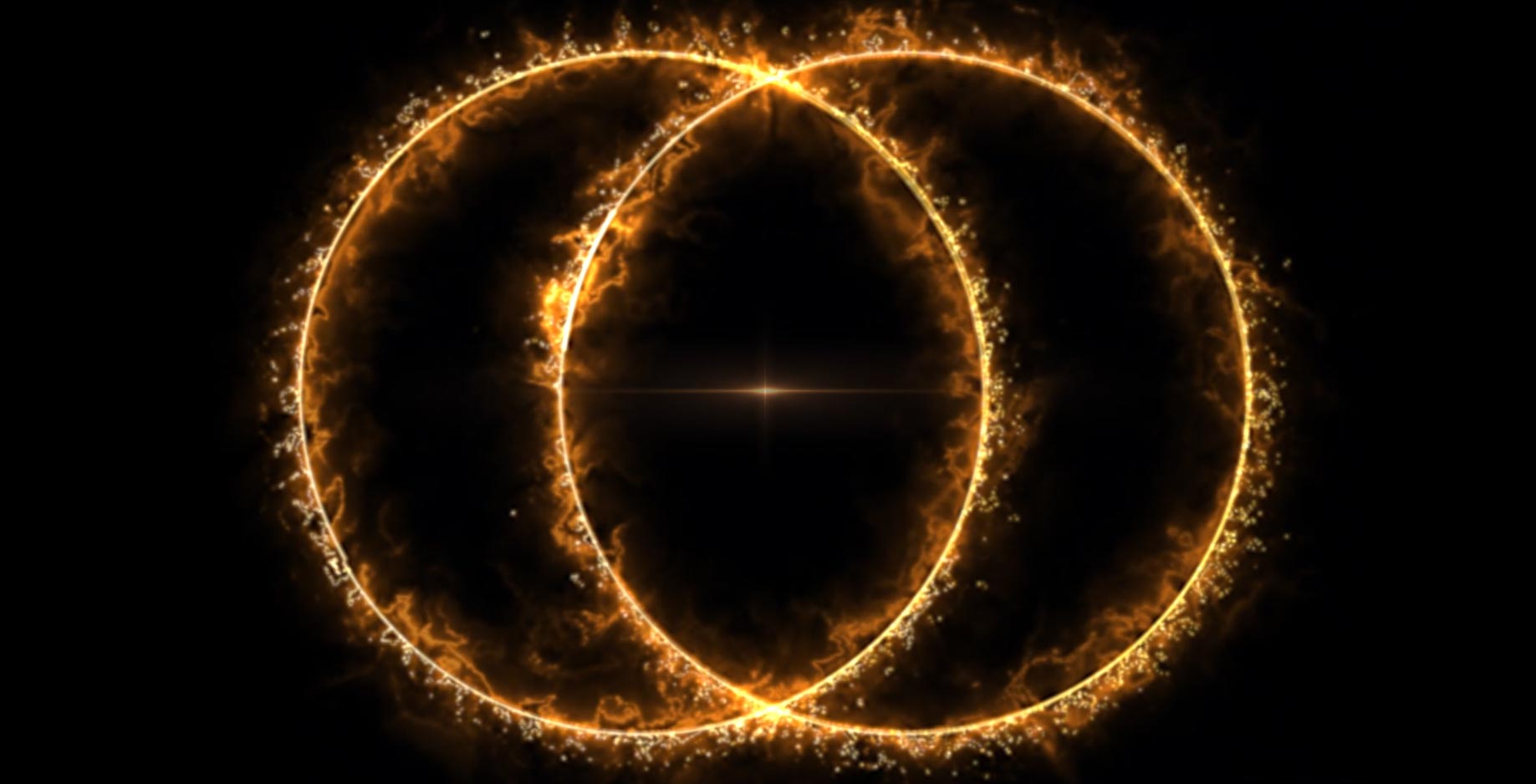
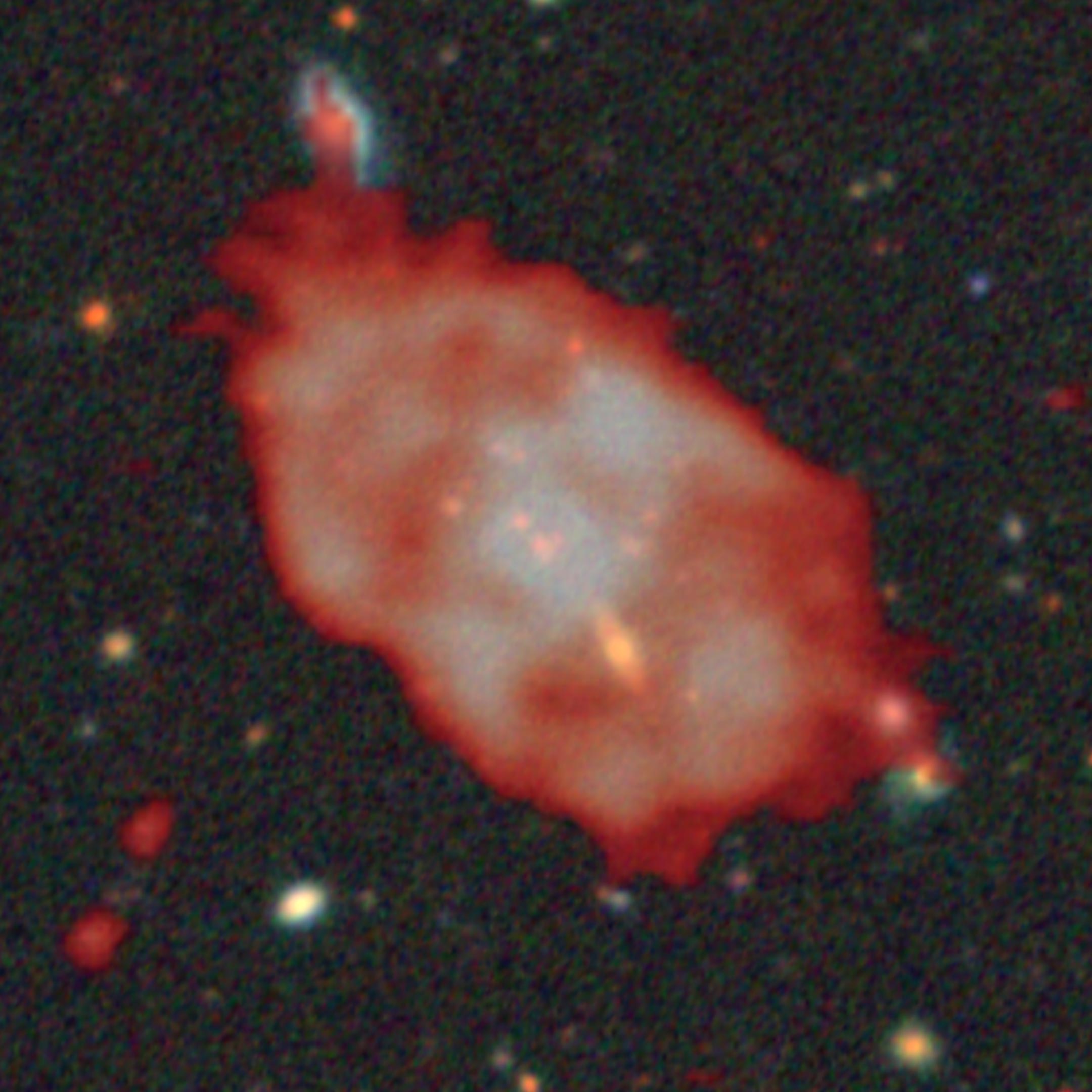
Astronomers have identified RAD J131346.9+500320, a double-ring structure billions of light-years away, and suggest that black hole jets and superwinds shape such rare radio rings; two other radio giants have been found in galaxy clusters.

Astronomers have identified the most distant and powerful ORC ("odd radio circuit") ever observed.
These strange, circular structures are a new cosmic mystery, first discovered just six years ago. So far, scientists have only verified a handful of them, most of them enormous—ten to twenty times the diameter of our Milky Way.
ORCs are vast, faint rings of radio energy that surround galaxies and can only be detected at radio wavelengths in the electromagnetic spectrum. They are made of fast-moving magnetized plasma. Previous studies have suggested that they may form when supermassive black holes or entire galaxies collide, creating huge shock waves.
New clues: Winds on spiral galaxies
A new paper points in a different direction: These ghostly rings of radio emission may be related to strong “superwinds.” These massive flows of charged particles are caused by activity within host spiral radio galaxies.
The discovery was led by Indian scientists through the citizen science initiative RAD@home Astronomy Collaboratory and LOFAR, the world's largest and most sensitive radio telescope at short frequencies (10 to 240 MHz).

Double-ringed cosmic giant
The source, designated RAD J131346.9+500320, lies near redshift ~0.94 (when the age of the universe was half its current age), making it the most distant and powerful ORC known.
It has two cut rings – only the second example with this feature – which raises more questions than answers.
Dr Ananda Hota, founder of the RAD@home Astronomy Collaboratory, said: "This research shows how professional astronomers and citizen scientists together can push the boundaries of scientific discovery."
"ORCs are among the strangest and most beautiful cosmic structures we've ever seen – and they may hold important clues about how galaxies and black holes evolve together, hand in hand."
Giant radio rings and twisted jets
In addition to the newly identified ORC, the RAD@home Astronomy Collaboratory discovered two other amazing cosmic giants.
The first object, RAD J122622.6+640622, spans nearly three million light-years—more than 25 times the diameter of the Milky Way. One of its powerful jets abruptly changes direction sideways, as if being deflected by an external force, before creating a dazzling ring of radio emission about 100,000 light-years across.
The second galaxy, RAD J142004.0+621715, is about 1.4 million light-years across. It has a similar ring of radio energy at the end of one jet, while a narrower jet emanates from the host galaxy in the opposite direction.
Both of these galaxies are located within densely populated galaxy clusters, regions filled with extremely hot gas at temperatures of millions of degrees. The interaction between their fast jets and this surrounding plasma probably sculpts the dramatic radio patterns seen in these systems.
All three of the new objects being studied reside in galaxy clusters with masses of about 100 trillion suns, suggesting that encounters between relativistic jets of magnetized plasma and the surrounding hot material may play an important role in the formation of these rare and complex cosmic rings.
A family of exotic plasma structures
Co-author Dr Partik Devda, said: “These discoveries show that ORCs and radio rings are not isolated curiosities – they are part of a wider family of exotic plasma structures shaped by black hole jets, winds and their environment.
"The fact that they were discovered by citizen scientists highlights the continued importance of human pattern recognition, even in the age of machine learning."