
Thanks to two technologies developed by Professor Benoît Marsan and his research team from the Department of Chemistry at the University of Quebec in Montreal, Canada, the scientific and commercial future of solar cells could change completely. Researchers have found solutions to two of the problems that in the last two decades have hindered the development of efficient and cost-effective solar cells.
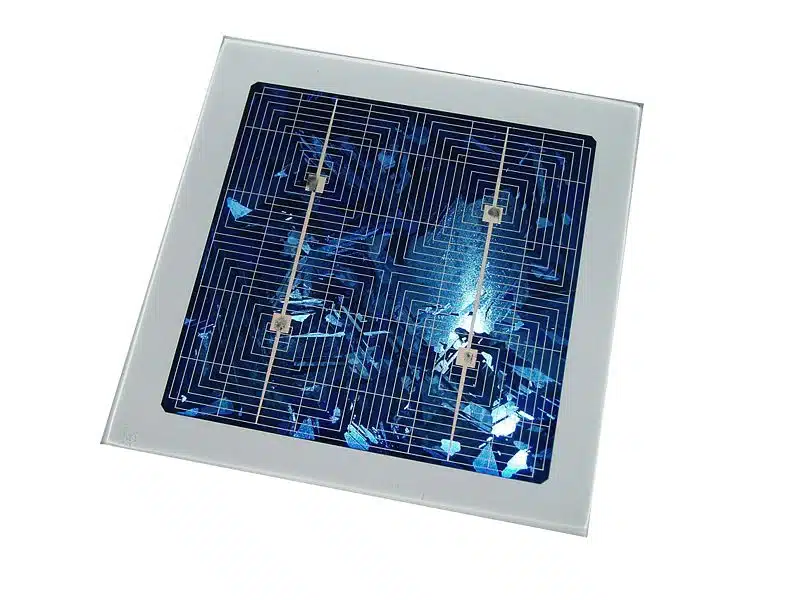
The Earth absorbs more solar energy in one hour than the entire annual consumption of humanity today. Unfortunately, despite this tremendous potential, solar energy is hardly utilized. The electricity produced by conventional solar cells, which are composed of semiconductor materials such as silicon, are five to six times more expensive than traditional energy sources, such as fossil fuels and hydroelectric power. Over the years, many research teams have tried to develop a solar cell that is both energy efficient and cheap to manufacture.
One of the most promising solar cells was developed in the early nineties by Professor Michael Graetzel from Switzerland. Based on the principle of photosynthesis - the biochemical process by which plants convert solar energy into sugars (their nutrients) - a Graetzel type solar cell consists of porous layers of nanoparticles of dye ( pigment) white - titanium dioxide - coated with a molecular dye which absorbs sunlight, similar to the chlorophyll found in the green leaves of plants.The titanium dioxide coated with a pigment dipped in an electrolytic solution and a platinum-based catalyst completes the system.
As in a normal electrochemical cell (such as alkaline batteries) the two electrodes (the titanium dioxide anode and the platinum cathode in the Graetzel cell) are located on both sides of a liquid conductor (the electrolyte). Sunlight passes through the cathode and electrolyte, then draws electrons from the titanium dioxide anode, a semiconductor located at the bottom of the cell. These electrons move through a wire from the anode to the cathode, creating an electric current. In this way, solar energy is converted into electricity.
Most of the materials used to make these economical, flexible and easy-to-produce solar cells allow them to be embedded in a wide variety of objects and materials. In theory, these cells have tremendous potential. Unfortunately, despite the excellent idea inherent in it, this type of cell has two main problems that prevent it from becoming commercial: the electrolyte is - a) extremely corrosive, which reduces its durability; b) has a compressed color, which prevents the efficient passage of light; and c) limits the photovoltaic voltage to 0.7 volts.
The cathode is coated with platinum, a material that is expensive, opaque and rare. Despite many attempts, until Professor Marsan's latest contribution, no one has yet found a satisfactory solution to these problems.
The research team worked for several years on the design of an electrochemical solar cell. Their work involves innovative technologies, for which many patents have been obtained. The researchers realized that the two technologies developed for the electrochemical cell could also be used for Graetzel type solar cells, especially as follows: for the electrolyte - a completely new type of electrolyte was prepared in the laboratory and obtained at a high concentration. The resulting coagulated liquid is transparent and non-corrosive and can increase the photovoltaic voltage, and thus the capacity and durability of the cell.
For the cathode - the expensive platinum can be replaced with cobalt sulfide, which is much cheaper. In addition, this substance can be prepared in the laboratory in an efficient, stable and simpler way.
Carbon-based solar cells
Dr. Moshe Nahamani
Chemists from Bloomington University in Indiana, USA, invented an unusual solution for preparing wide carbon sheets used to absorb light - attaching a three-dimensional patch to each side of the carbon sheet. Using this method, the scientists claim, they were able to melt sheets containing up to 168 carbon atoms, for the first time ever.
"Our interest stems from the desire to find an alternative and readily available material that can absorb light efficiently," said chemist Liang-shi Li, who led the research. "Today, the most common materials for absorbing light in solar cells are silicon and compounds containing ruthenium, with each type having its own disadvantages."
Their main disadvantages are the high cost and lack of long-term availability. Although ruthenium-based solar cells may be cheaper than those based on zorn, ruthenium is a rare metal on earth, similar to platinum, and will soon disappear if the demand for it increases. Carbon is cheap and common, and in its form as graphene is able to absorb a wide range of radiation wavelengths. In fact, graphene is similar to graphite, except that it consists of a monolayer of carbon atoms. The material graphene has already proven its ability to be used as an alternative material, effective, cheap to produce and less toxic, to other materials used today in solar cells. However, this material is not liked by the scientists.
In order for the graphene sheet to be useful in absorbing photons originating from sunlight, it must be large. However, in order to use the absorbed solar energy to generate electricity, the sheet must not be too large. Unfortunately, scientists have discovered that working with large sheets of graphene is complicated, and that it is difficult to control their sizes. The larger the graphene sheet, the stickier it is, a fact that makes it stick to other graphene sheets. However, the formation of such a pile of graphene sheets prevents the flow of electricity through them.
Chemists and engineers experienced in working with graphene have developed a variety of methods to obtain individual graphene sheets. The most effective solution, until this study, was to dissolve the graphite material (from top to bottom) to form sheets and wrap polymers around them to keep them separated from each other. However, this method results in sheets with random sizes that are too large to absorb light for solar cells.
The researchers tried a different idea. By attaching a three-dimensional semi-rigid, semi-flexible side group to the sides of the graphene, they were able to obtain graphene sheets with 168 carbon atoms that remained separate and did not stick to each other. Using this method, they were able to produce smaller separated graphene sheets (from bottom to top) and maintain their uniform size. For scientists in the field, this is the largest stable sheet of graphene created using a bottom-up approach.
The side "patch" consists of a hexagonal carbon ring and three pointed "tails" composed of carbon and hydrogen. Since the graphene sheet is rigid, the side ring connected to it must rotate at ninety degrees relative to the plane of the sheet. The three tails, on the other hand, are free to move, but two of them tend to close the graphene sheet to which they are attached.
At the same time, the tails do not function as a simple cage. They also play the role of "anchors" for the organic solvent that allow the entire structure to dissolve. The researchers were able to dissolve thirty milligrams of the substance in thirty millimeters of solvent. "In this study, we found a way to dissolve graphene," says the researcher. "This property is just as important as the sheer size of the graphene itself."
To test the effectiveness of their graphene as light absorbers, the scientists built basic solar cells composed of titanium oxide as the electron absorber. The scientists were able to obtain a current density of 200 microamperes per square meter and a voltage of 0.48 volts. The graphene sheets absorbed a significant amount of light in the visible to near-infrared range (900-200 nm) with an absorption peak at 591 nm.
Now, the scientists are in the process of redesigning the graphene sheets to have sticky ends that would allow attachment to the titanium oxide, a feature that would further improve the efficiency of the solar cells.
"Collecting energy from the sun is a necessary first step," says the lead researcher. "Being able to convert this energy into electricity is the next step. We believe we have a good start."

17 תגובות
Moshe:
The calculation is considered.
However - he is correct for his time and I don't know what the situation is today.
In my opinion, in the contracts offered today, the guaranteed payment for the next 20 years is not 2.06 NIS for each kWh, but less.
The idea behind setting the diminishing returns was to encourage people to act quickly.
He did not encourage you, so it seems that the matter will be less profitable for you.
To Michael,
As someone who is considering purchasing a solar panel, I am following the correspondence between you and Ernoza, although it also represents my doubts. I did receive a number of offers from the system suppliers, but I have a feeling that they do not present all the expected costs (maintenance, cleaning panels, fees, insurance [and what is not included in insurance], etc.). There is a factor of a decrease in productivity utilization, each company presents a different figure - who can guarantee this? And in addition, in the expected revenue stream they do not reduce 4% annually, as published by the Authority for Public Electricity Services (Annex update to known price... - dated 2.6.08). Does your financial calculation really take into account the information I mentioned? Thank you if you wait for us from your experience.
Eran:
You don't know where I got the numbers from, even though I told you it was a deal I signed and I know exactly the numbers in it.
I don't write the name of the company just to avoid advertising.
By the way - the expected income from a system of up to 4 KW is also exempt from tax.
The declared depreciation is one percent per year and not five percent.
In my calculations I took all the factors into account.
A state law that includes a commitment for 20 years cannot change during those 20 years. I don't know where you got that from. If it changes - the state will have to pay huge compensations and those who rely on the law will not lose.
I really don't care if the system is obsolete in five years.
The financial calculation will continue to be correct and I am installing the system - not to have the most innovative system - but to make a profit.
To Michael.
I really don't know where you got your calculations from. I know from what is happening entirely from people who put such boards in my seat and what they were told and what they signed
I know that the representatives said that for a NIS 1.5-2 million investment they will make NIS 15000 in a month when there is sun all month - that is, summer months
That is, 180000 per year apparently. - 20 percent is not.
Second thing..it is indeed a country and its laws..but laws can change..and in our country even those who passed a compensation law in secession are still waiting for their compensation from 2003...good luck with that then.
Third thing - I bothered to find out for this section - there is a declared wear and tear on the system (and I mean declared.. both the company and the installers state this) of at least 5 percent per year and the warranty you said here is not really known to those with the roof.. they have a sort of limited warranty of periodic treatments...but if something beyond that happens..nothing and periodic treatment also costs money..simply reduced.
Now think of all these and hope for the best and you will still get something dangerous that will be obsolete in 5 years anyway in the best case scenario.
Eran:
מה לעשות?
You can be wrong.
That is what you are doing in your response.
The first mistake is that you did not read my words carefully.
No one told me about 8% - this is a calculation I made based on the dry data.
The annual return is actually close to 20%, but after all the calculations I found that it is equivalent to 8% bank interest.
The second mistake is that you did not internalize that this is a state law and not something that the electric company has control over.
To the best of your knowledge there is no such law and this only shows that to the best of your knowledge it is not good:
http://www.sunlease.co.il/PDF/electricity_law_he.pdf
The third mistake is a factual error - not only is there no major wear and tear, but I accept warranty for the system for many years so that on the one hand no repair will cost me money and on the other hand - it is clear that the company that sells it does not want to lose, so it is also clear that the claim about the wear and tear is incorrect.
To Michael .. for the bitter mistake ..
As a scion of a family of air conditioner installers and electricians, be sure that what I'm telling you now is verified...
In contrast to the money in the bank that receives an annual return (and this is if we are not talking about the devaluation in its cumulative value at all, which is another issue)
1. You are talking about a system that is a perfect starting point for every metal and spare parts thief in the area..especially since their main market is coop roofs and buildings like that..things that there is no living soul to protect.
2. The parts of these systems have incredible wear and tear... and they require maintenance accordingly... it's a lot of money... a lot... you have no idea how much... not to mention insurance for the entire system from any factor.
3. And that
the most
Important
You only get money for the electricity you generate...meaning is there rain? cloudy? Forget about money... it's not a monthly cow but a production cow and since the absorption capacity is limited anyway because the current cells don't yet use who knows what the sunlight will do... it won't matter to you whether it's a hotter or less hot day... summer or spring.
4. You decided to sign an agreement with an electrical company, one of the most powerful bakeries in the market that does not hesitate for a moment to cut the wings of this or that... who guarantees you in the contract... and as far as I know there is no such contract... that even in 5 years from now they will not go out of business or change significantly the conditions unilaterally.. something they are completely allowed to do...
Who said they would need you and your electricity at all.
5. If something has a million and a half shekels, I can think of much safer investment avenues than such a risky thing.
6...in the economy, when they tell you a return of 8%, they mean after your investment has been returned...
That is, in the best case, only after 10 years will you return the entire investment and then you will only be able to earn... 10 years...
I'm just saying that you will understand... in 10 technological years your entire system will be a dying antique...
Think about a 10-year-old computer compared to a new computer... because that's how this field has been progressing recently.
Just curious, how many people here watched the episode I linked to earlier?
Those who don't see lose, it's really interesting 🙂
Eran M, what is "to the 9th Senate" what did you mean? The US Senate? I didn't understand.
In any case, there is no doubt that solar energy is the future.
to 9 The Senate, probably. The technological capability of both the aviation-transportation of such systems outside of space and in terms of the utility of the solar cells has not yet reached the right point.
These days, and in fact in recent years, two processes are happening that may cause this to happen and may, on the other hand, cause this project to be unnecessary:
1. The privatization of private aviation. In the future, the price for lifting a kilo of material into outer space will drop significantly as spaceflight advances.
2. Improvement and miniaturization of solar cells - in addition to improving efficiency, the thickness of the new generation is smaller and as a result cheaper and lighter.
I think that the future is actually in cellular windows, when every house with the help of the windows and their connection to the electricity grid will be able to recover the majority of the electricity consumption in the houses of the future.
I remember one of my lecturers at the university years ago said - that as a nation grows, its energy production capacity and energy consumption increase. I think this is partially accurate, over the years the energy efficiency of devices increases, it is possible that in the future we will indeed be able to supply ourselves with solar electricity for our home.
Tal, what you said is correct, and it is also stated in the chapter to which I gave a link earlier, but I believe that the benefit will outweigh the dangers by tens of thousands, and it is possible to plan such protection mechanisms that even if by chance there is a deviation of the beam from the point of reception, the transmission mechanism will stop working immediately, for example, you can transmit to it from a point The reception on the earth has a very unique signature that it can read only when it is aimed directly at that point, as soon as there is a deviation of even a few meters from that point, the signature will disappear and the satellite will stop transmitting.
Atomic reactors can also be very dangerous and cause a disaster if they are not operated correctly, but it is a fact that humanity chose to use them because of their usefulness.
The energy beam may indeed also be used as a deadly weapon, but it seems to me that countries will not be in a hurry to use it as a weapon as they currently avoid using the many stockpiles of atomic weapons they have (and maybe I'm wrong)
In any case, if a power like the USA decides to build such an array, who will prevent it from doing so?
I thought there was enough infrared radiation at night to generate some electricity but it turns out not. In such a situation, it will be necessary to develop ways to store the electricity for the night and I read here not long ago that they discovered a method that sounds promising, which is to produce hydrogen from the excess electricity during the day and use it at night in fuel cells to produce electricity.
The solar man, the main problem with transmitting such a power of energy from space with microwave radiation is that in the event that the satellite moves for some reason and does not transmit exactly to the station receiving the energy, then it can vaporize an entire village (I'm almost sure I've read this information before here on the site). It sounds effective as a weapon (extremely brutal), but not as a method of producing electricity, I don't believe that any country, company or any other entity would take the risk involved in producing electricity with this method.
Eran:
I think you are wrong though.
Although it is always possible to argue that it is not worth equipping yourself with new technology because tomorrow there will be better technology, but in the end - no one acts according to this consideration (and it is good that this is the case because nothing would be bought that way and new technologies would not be developed).
This is true in any field - whether it's cars, computers, telephones or solar panels, but in the case of solar panels, another consideration is added that completely turns the tide.
The government is interested in people being equipped with them as quickly as possible and therefore included in the electricity law an incentive that would encourage people to be ahead of time and be equipped with the technology.
In general - the electric company is obliged to buy all the electricity produced by a private consumer at a price that is 4 times higher than the price at which it sells the electricity to him, for a period of 20 years.
The interesting thing about the law is that this offer is offered only to those who will be equipped with a solar system this year! The conditions that those who equip themselves with them will receive in the coming years will be much worse!
I have already received a quote from one of the companies dealing with the issue and according to the data I have, it is an investment that in the end (if it is money you can invest for the long term - and it is not millions or even hundreds of thousands) is equivalent to investing the money in a savings account that carries an interest rate of over 8% per year.
I guess anyone would be happy to find a savings method that has a guaranteed interest rate like that.
The funniest part is that there are all these suckers working on buying solar panels for millions and putting them on the roofs
They are told that they will return the investment hahaha
Now this thing will come and retire the old boards only to replace the boards with the roofs...
So called...suckers don't die they just change
Tal,
At night there is no more infrared light than during the day, in fact - there is less (because it is colder).
In general, every object with a temperature emits light with a total intensity proportional to the temperature to the power of 4. Also, at different temperatures, the radiation maximum occurs at different frequencies according to the Planck distribution. I won't write the exact distribution here (those who want can search on Wikipedia, it certainly appears there) what is important is that the higher the temperature, the maximum appears at a higher frequency (ie at a shorter wavelength - bluer).
for example,
Look at the heating element in a coil oven - in the first stage it already emits heat but does not yet emit light (that is, it emits invisible radiation - red impera), but then it begins to emit red light and then orange, and if you heat it up more you will reach a yellow light. In order to reach white light, you will have to heat it to about 5800 degrees, but the oven will never be able to reach this (the metal will evaporate). The temperature of 5800 in which I am female is not accidental, it is the temperature of the surface of the sun (when it is found exactly with this method) which emits its light in a distribution that peaks at the wavelengths characteristic of visible light - this is not a coincidence because in the process of evolution, the human eyes were determined to notice light at these wavelengths In the best way (or that's how man was created so that he could see who he prefers, I won't get into an argument about that).
Near infrared light means that it is a wavelength close to red - that is, as the temperature of the coil oven just before it turns red - it is hot and no body on earth that is in thermal equilibrium with its environment (excluding volcanoes, etc.) is at this temperature - that is The source of energy in Impera Adom will also be the sun - meaning that it will also only work during the day.
So that the movie does not get stuck every moment, it is recommended to press "Pause" right at the beginning and let the movie load for about 10 minutes before starting to run.
Here is one of the most beautiful episodes from the series "The Earth Project" from the Discovery Channel. In this episode, an idea is proposed for the absorption of solar energy by satellites outside the atmosphere, that is, without any energy losses and absorption, then transmitting it to the earth as microwave radiation. The experiment shown in the episode looks very successful and promising. :
http://www.tudou.com/programs/view/PSgKU0R4CvI
PS - When entering the website you will probably be asked (once or twice) to install fonts in Chinese, you can choose "Cancel" or install from the Windows disk, even if you choose not to install the fonts the episode will still be available for viewing.
Experience
Tal, it seems to me that infrared radiation is emitted only from hot bodies, and in the night sky there is no hot body in the sky that can emit such radiation that it can be used to produce energy (the stars that are visible in the night sky are too far away).
And again, it seems that Ray Kurzweil's vision is coming true, and is coming true before our eyes, Kurzweil predicts that within about 10 years solar energy will be able to provide 100% of the energy consumption of all of humanity at a price that will be cheaper and more economical than using oil and gas.
For countries like Israel that base their economic power on technology and science this will be excellent, on the other hand stupid and primitive countries like Iran, Saudi Arabia and the Gulf principalities that base their economy and wealth on natural gas and oil resources will fall hard, which is also good for Israel...
It seems that the man knows what he is talking about...
Those who say "the graphene sheets absorbed a significant amount of light in the visible range up to the near infrared" does this mean that the graphene sheets also absorb the infrared radiation at night and can generate electricity from it?