
The bluish acacia, an invasive tree brought to Israel from Australia, is spreading rapidly and threatening the local ecosystems. New research offers innovative solutions, including biological control using weevils, chemical control, and mechanical methods such as solar disinfection, in order to stop its spread and protect biodiversity
Tomer Atir, Zveta - news agency for science and the environment
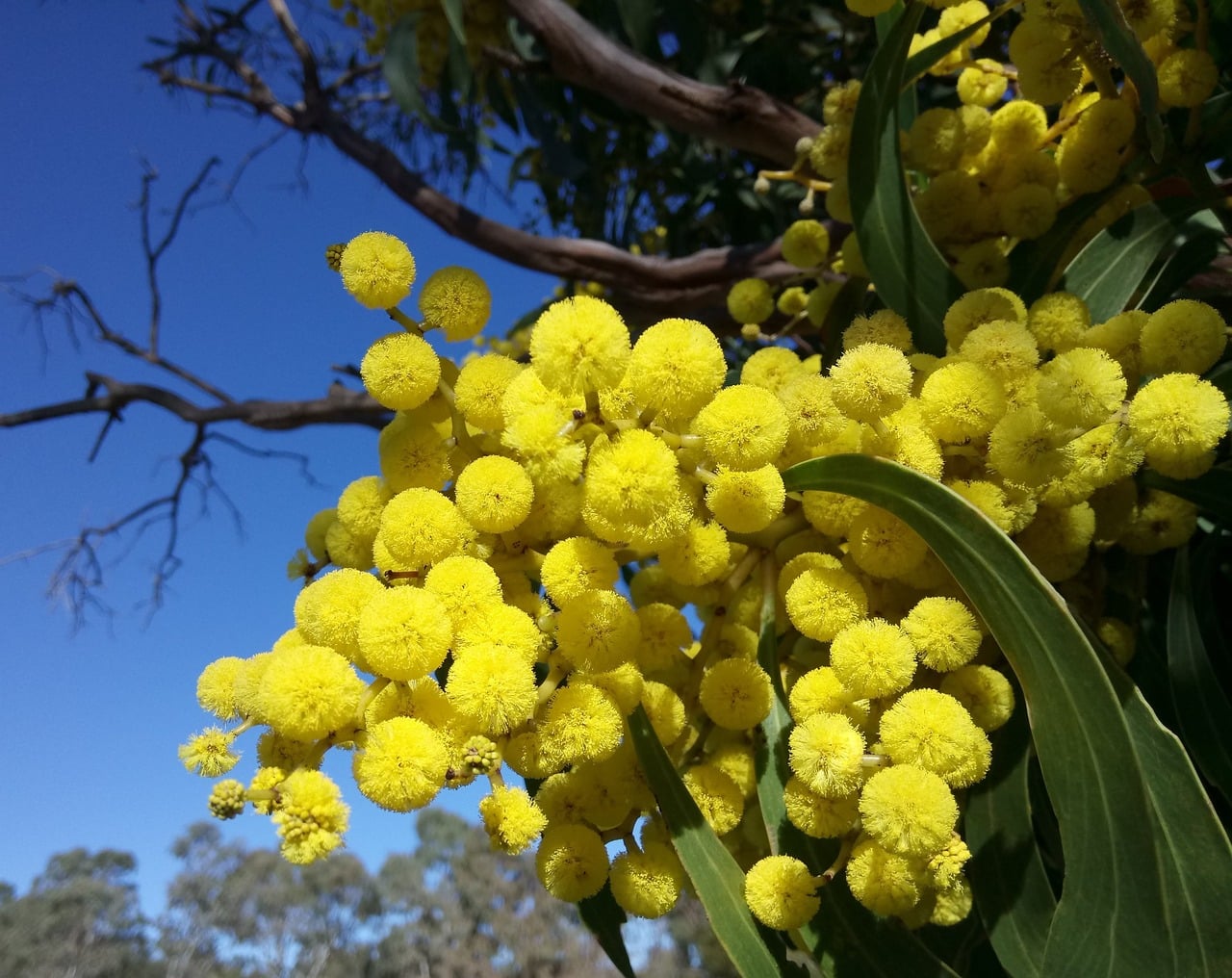
You have probably seen her on the sides of the roads; The bluish acacia is a low tree that in the spring months is covered with a wonderful yellow bloom. But as beautiful as it is, it is also harmful. The tree was brought to Israel from Australia by the British during the Mandate days to stabilize soils, and over the years has spread far beyond its original range. "The bluish plant is the most common invasive plant in the KKL-Junk forests," says Shani Gleitman, an ecologist in the KKL-Junk Forestry Division, which is why many efforts are being made exterminate him in order to protect the habitats it invades.
A new study conducted by the Shamir Research Institute in collaboration with the Kimet Israel Foundation describes the development of tools to deal with the invasive species. "It is difficult to define what an invasive species is with simple quantitative definitions," explains Dr. Oded Cohen, a researcher of invasive plants at the Shamir Research Institute and a research fellow at the University of Haifa. "I refer to an invasive plant as a foreign plant to the ecosystem, which multiplies and spreads in its new environment at a rapid rate and on a large scale." According to him, such a change has a negative effect on the environment, and the challenge is that the ecological implications are revealed at a much slower rate than the rate of spread of the invasive species, Therefore, precautions must be taken. "When we understand that a species is multiplying and spreading without control, we will immediately treat it as an invasive species and try to eradicate its spread." The most is in the early stage," he explains.
Sandy or hard dunes
"The bluish plant is a species from the legume family, and like many plants from this family, it fixes nitrogen and enriches the soil with organic matter," says Cohen. Despite this, the legume family, and in particular the acacia species that were brought from Australia to many places In the world, includes the plants whose environmental vulnerability has the economic cost the highest "The method changes the conditions of the habitat," Cohen explains. One of the things that happens in Israel following the spread of the bluish method is that the surface changes, for example soft sand turns into stabilized soil. In sandy areas such as the dunes in the buds, the rodents and reptiles are harmed and pushed out of the space. According to Cohen, after the invasive plant is removed, nature is restored and animals such as gerbils and sand marion return to their habitat.
Cohen is researching ways to prevent the entry of blue acacia into new habitats and to stop its spread in habitats where it is already present. the possibilities In dealing with bluish acacia He divides into three groups. The first group is biological control with the help of weevils - an insect that is a "natural enemy" of the bluish method. The weevils damage the seeds of the plant and thus slow down its spread. A second group is chemical pest control - use of chemical substances that harm the plant. The use of this method may endanger the environment of the invasive species and damage plants that are not invasive species. However, not everywhere alternative methods can be used and therefore chemical pesticides are used. A third group is the use of mechanical (physical) actions. As part of this group, the bluish sycamore, for example, is often cut down, but other invasive species can also be treated with the help of uprooting, self-initiated burning or by peeling the tree trunk in a way that damages the plant's transport system and causes it to dry out.

A new mechanical tool is called solar disinfection, for the contribution to its development Prof. Yaakov Katan was awarded the Israel Prize in 2014. Photo: Unsplash
Solar disinfection
Although the actions taken, have not yet succeeded in completely eradicating the spread of the method. The seeds are spread very easily with the help of wind, hikers, animals or vehicles moving the branches of the tree. "One of the main reasons for the difficulty in dealing with the bluish method is that it produces a large and durable seed bank in the soil," explains Gleitman. "The seeds can be kept fertile but dormant in the soil for decades, thus preserving for a long time the potential for re-sprouting, for the renewal and continued spread of the populations in the open areas. The meaning of the seed dormancy mechanism is that the extermination of the old individuals found on the surface of the soil does not provide the desired result of Containment and reduction of blue acacia populations, over time."
Therefore, a new means of handling the underground seed bank of the bluish method is required. A new mechanical tool is called solar disinfection, for the contribution to its development Prof. Yaakov Katan was awarded the Israel Prize in 2014. The solar disinfection is carried out by covering the ground with a polyethylene plastic sheet, and using the sun's rays to heat the ground. Heating the ground neutralizes environmental hazards that are under it. To get an optimal result, the soil must be moist from artificial irrigation or rainwater. "The heat, together with the humidity, damages the bluish acacia seeds," Cohen explains and adds that the acacia seeds have the potential to cause damage even 50 years later. According to him, this process is not selective and also damages the soil. Therefore, it will be necessary to restore the habitat after using this method. In agriculture, solar disinfection is used to combat pests, pathogens and weeds.
"The importance of the research is twofold," says Gleitman. "On the one hand, [the study provides] a deeper understanding of the dynamics of the seed bank in the soil and the factors that influence the breaking or shortening of seed dormancy, and on the other hand [the study provides] an efficient and simple interface tool that may help a lot to improve the effectiveness of the percolation method treatment in the open areas."
Such studies teach us to better preserve natural habitats and local species diversity. "Over time, the question is where and how do we prioritize our resources," Cohen explains and adds that with the help of the tools that are specifically appropriate for each case, it is necessary to determine in which ways to act against invasive species and promote environmental goals. "Maximum benefit must be obtained from our intervention, because every intervention has an ecological, scenic and economic price," he concludes.
More of the topic in Hayadan:
