
Two Iranian missile strikes on the Bazan complex in Haifa Bay illustrate the vulnerability of Israel’s energy industry. Experts warn of risks of pollution, harm to the population and serious disruptions to fuel supplies – and call for a rapid transition to renewable energies and a new strategic plan for energy security
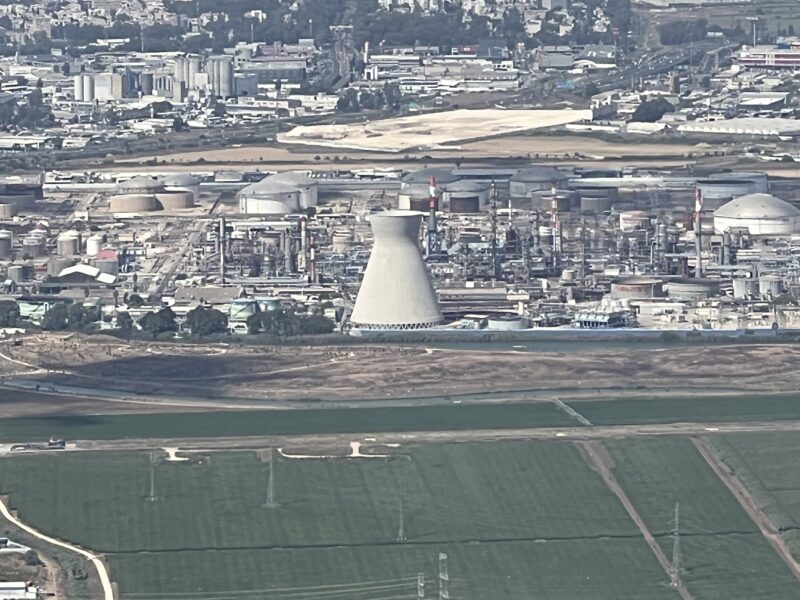
In recent days, one of the most severe extreme scenarios has materialized, including: Warned us already Years: A missile launched as part of the Iranian attack affliction on a pipeline in the Bazan Group (Oil Refineries Ltd.) complex in Haifa Bay, and later a injury Another explosion at the Bazan power plant – this time fatal – which caused the deaths of three plant employees as a result of smoke inhalation. Following the explosion, the Bazan Group announced that its facilities, including the refinery facilities and all of its subsidiaries’ facilities, had been shut down. Bazan facilities are a pillar of Israel’s fuel supply and their continuous functioning is critical to the economy. At the same time, they are not only a health and environmental hazard, but also a dangerous strategic target in the heart of a populated area. How can Israel’s energy security be maintained without endangering the civilian population?
Hidden danger
The Bazan Group is primarily engaged in the purchase of crude oil and its refining – that is, the conversion of crude oil into products such as gasoline and diesel. As a result of the missile strikes, fuel leaks were created that could cause multi-system pollution on several levels. "There are significant dangers here of soil pollution, water pollution and air pollution," explains Dr. Daniel Mader, a researcher and consultant in the field of environmental sciences at SP Interface. According to him, fuel leak could significantly harm groundwater and drinking water in the area, and in the event that hazardous materials reach the sea – destroy Marine ecosystems and even endanger the port's operations and facilities Water desalination Near the beach.
In addition to the environmental dangers, there are immediate dangers to the public. "If there is an explosion of hazardous materials, it will endanger the entire population around. Massive fires like the ones that have already occurred could spread to industrial buildings and residential areas," explains Madar. "Many residents have complained about the smoke emissions that reach their residential areas as a result of the impacts," says Dr. Lihi Berman Shahar, CEO of the Haifa Bay Cities Association for Environmental Protection and a graduate of the interface program.
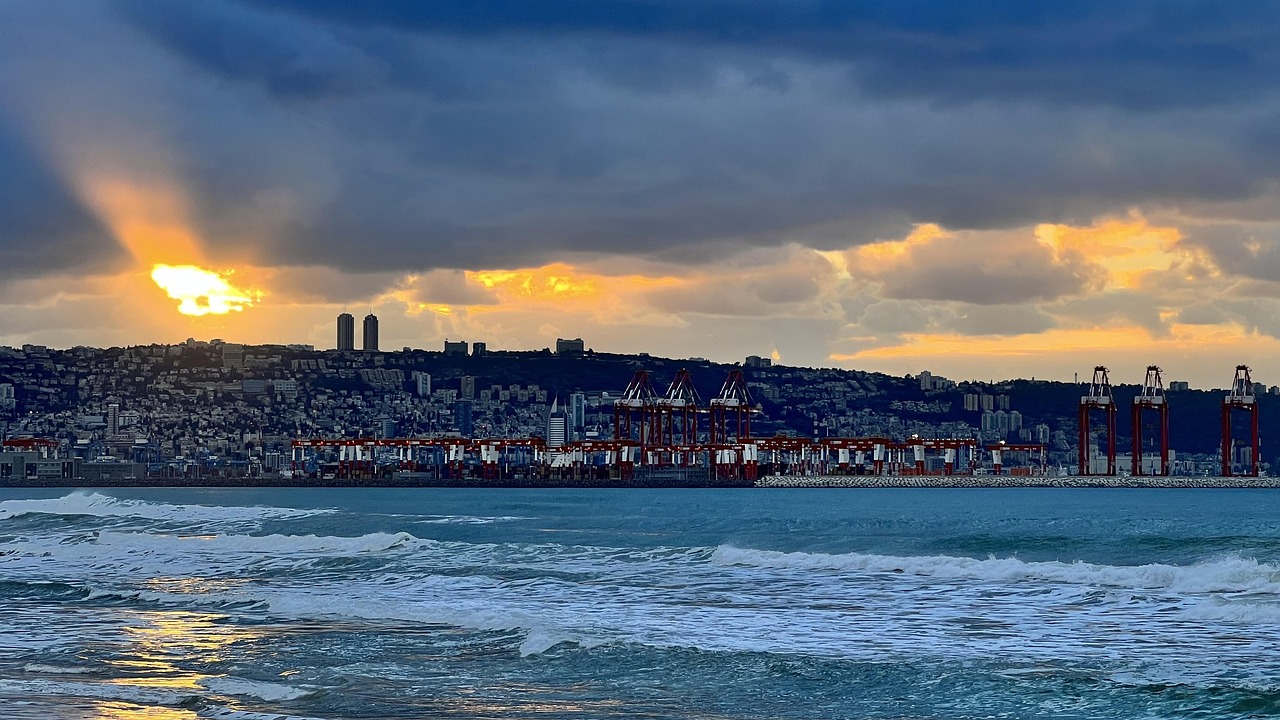
In 2022, the government decided on a plan to remove heavy industry from Haifa Bay and evacuate Bazan within a decade. Haifa Port. Photo: pixabay
Energy and fuel supply
According to Madar, Israel relies on a few large and vulnerable fuel sources. "There are only two major oil refining facilities in Israel - in Ashdod and Haifa. In a country where it is impossible to produce new fuel, the amount of fuel is limited and can only last a few weeks," he says. It is possible to import distillates (refined fuels), but even this option requires advance preparation and is also based on a small number of facilities. "If the refineries are damaged and fail to bring backup ships to bring distillates to the country in sufficient quantities, it is possible to reach a situation in which there is no fuel in a short time. In such a situation, first and foremost, the fuels will be saved for the army, and then the first to be affected will of course be the civilians and the economy," he warns. According to him, the shortage will not be limited to gasoline and diesel, but will also affect other essential products produced at the Bazan Group complex, such as fertilizers, plastics, pesticides, and more.
"If we move For electric transportation, we won't need most of the refinery output and, beyond that, it will be good for the environment, for safety, for security and even economically good for the country – especially if we generate the same electricity using renewable energies. If we are careful, we can also utilize a significant part of the electricity storage potential of electric vehicles for the benefit of energy storage "Nationally decentralized," he says.
Madar also warns that as the parties continue to target civilian infrastructure, the situation could worsen. "Once we hit the Iranians' energy infrastructure, they supposedly have justification to hit ours," he says. The air defense systems do intercept the vast majority of rockets and missiles, but we are witnessing that the defense is not hermetic and, in the end, "one hit could be enough to cause significant damage," he says.
Years of warnings and plans that were put on hold
The Haifa Bay area is one of the most prominent pollution hotspots in Israel, and in recent years, abnormalities have been recorded in the Bazan complexes. In pollutant emissions. Thus, the demand to close the petrochemical complex or at least move it away from population centers has repeatedly arisen due to the overall risks. "There are two main reasons behind the plan to close the factories in Haifa Bay. The first and main reason is that harming the factories is not only a strategic harm but also an environmental and safety risk to residents. The second reason is that once we vacate the factories, we can use these areas in a way that will contribute to the economy and the region in other ways," explains Madar.
B-2022 The government decided on a plan to remove heavy industry from Haifa Bay and evacuate Bazan within a decade.2023 The Prime Minister's Office published the strategic work plan for the development of Haifa Bay, according to which the petrochemical industry activity in the bay will be stopped in 2029. However, the implementation has encountered With delays. "This is what usually happens: stakeholders pressure the government, and it's easy for the government - no matter which government - to postpone things for another year, another two years, another five... You can always provide explanations, but in practice the risk only increases," says Madar.
The window of opportunity that opened
Missile hits in factories are an urgent wake-up call and an opportunity to lead change. "This is proof of how sensitive and inadequate the petrochemical industry is in terms of energy continuity," says Shahar Berman. According to her, a rapid transition to integrating renewable energies and importing distillates with secure storage should be implemented - a move that will contribute to the economy, security and the environment. Shahar Berman calls for immediate action by decision-makers before the clear danger is realized: "We need to invest resources in this immediately and make a rapid transition to importing distillates in order to maintain the continuity of the energy sector."
