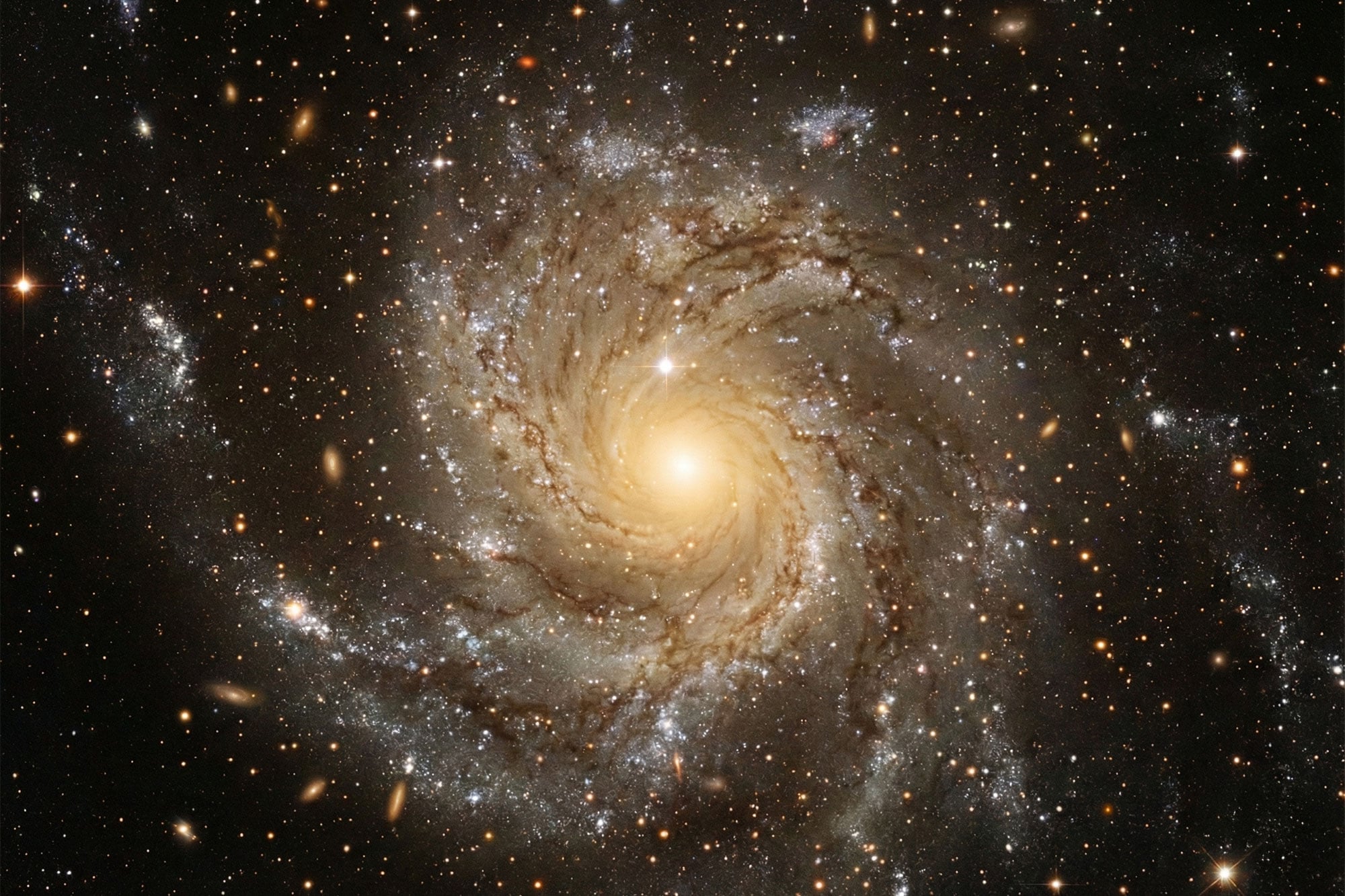
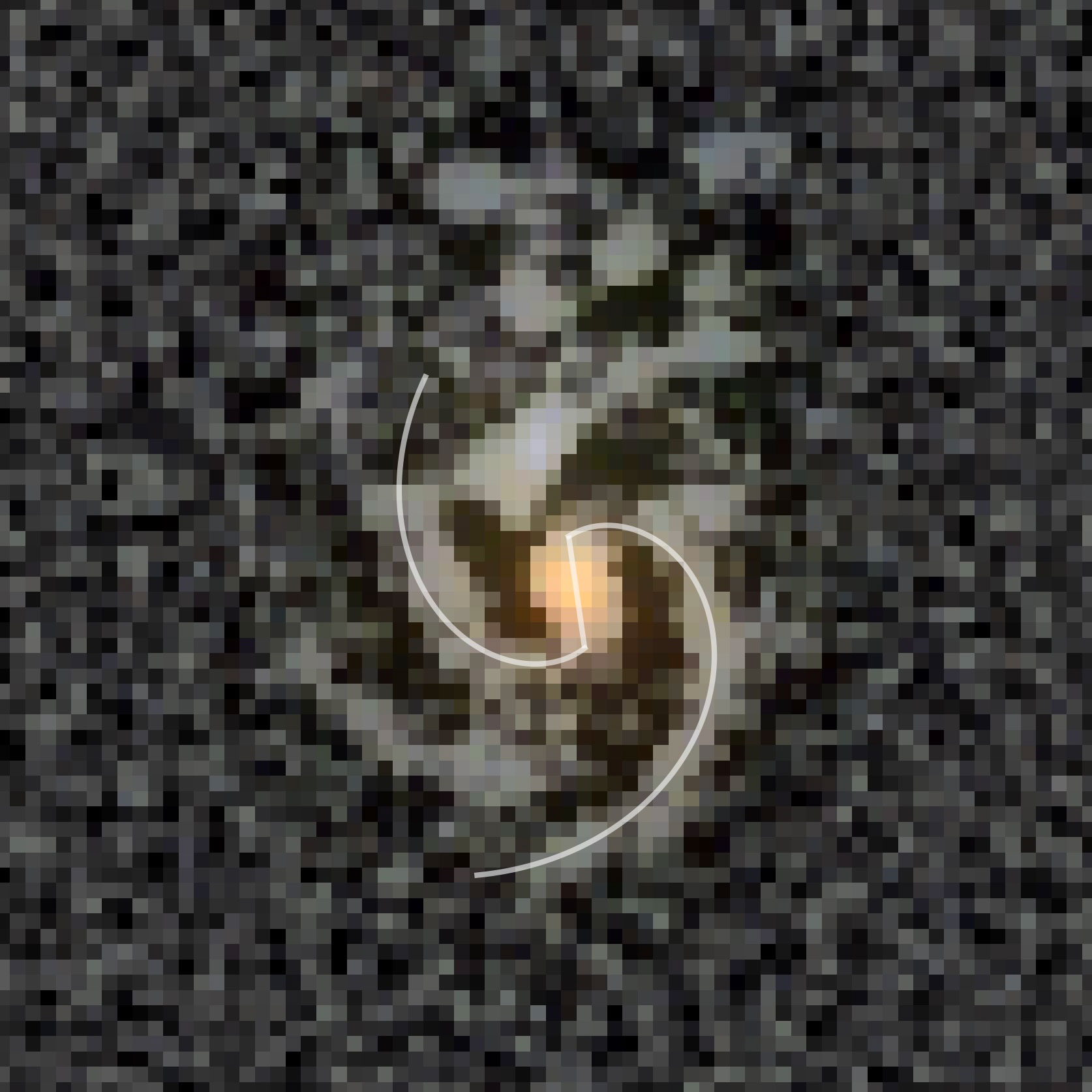
James Webb Space Telescope observations and spectroscopic verification indicate that organized spiral structures with stellar barring could have formed as early as two billion years after the Big Bang, earlier than conventional estimates.

Astronomers believe this barred spiral galaxy may be the oldest galaxy of its kind ever observed.
A study led by Daniel Ivanov of the University of Pittsburgh has identified a strong candidate for being one of the oldest spiral galaxies with a stellar bar. These central structures can be visually prominent and are thought to play an important role in shaping how galaxies evolve and change over time. The Milky Way also has a stellar bar at its center.
The discovery narrows the window of time when stellar bars could have first formed in the universe. By examining the light from the distant galaxy, named COSMOS-74706, the researchers determined that it was observed as it appeared about 11.5 billion years ago.
"This galaxy developed bars two billion years after the birth of the universe," Ivanov said. "Two billion years after the Big Bang."
An early glimpse at galactic structure

The defining feature of these galaxies is in the name: "A bar of stars is a linear feature at the center of the galaxy," Ivanov said. The bar itself is not a body, but a dense collection of stars and gas arranged in such a way that in images taken perpendicular to the plane of the galaxy, there appears to be a bright line crossing the galaxy.
Stellar bars can affect the galaxy's variability over time by drawing gas from the outer regions toward the center. This inward flow can provide material for the supermassive black hole at the galaxy's heart and also reduce the rate of star formation in the galaxy's disk.
Why does this galaxy stand out?
Other researchers have reported earlier barred spiral galaxies, but their analyses are less conclusive because the methods they used to analyze the redshifts of light are not as absolute as spectroscopy, which was used to verify COSMOS-74706. In other cases, the light from the galaxy was distorted when it passed near a massive object, a phenomenon called gravitational lensing.
Essentially, Ivanov said, "this is the highest redshift, spectroscopically verified, unexcited barred spiral galaxy."
He wasn't necessarily surprised to find a barred spiral galaxy so early in the universe's evolution. In fact, there have been simulations that suggested barred galaxies formed at redshift 5, or about 12.5 billion years ago. But, Ivanov said, "I think that's basically not an age where you'd expect to find many of these objects. It helps constrain the timelines of barred galaxy formation. And it's just really interesting."
More on this subject on Hayadan.com - Science news: