
The cities are dense and have a fast pace of life, but still more and more people are moving to them, especially in the developing countries
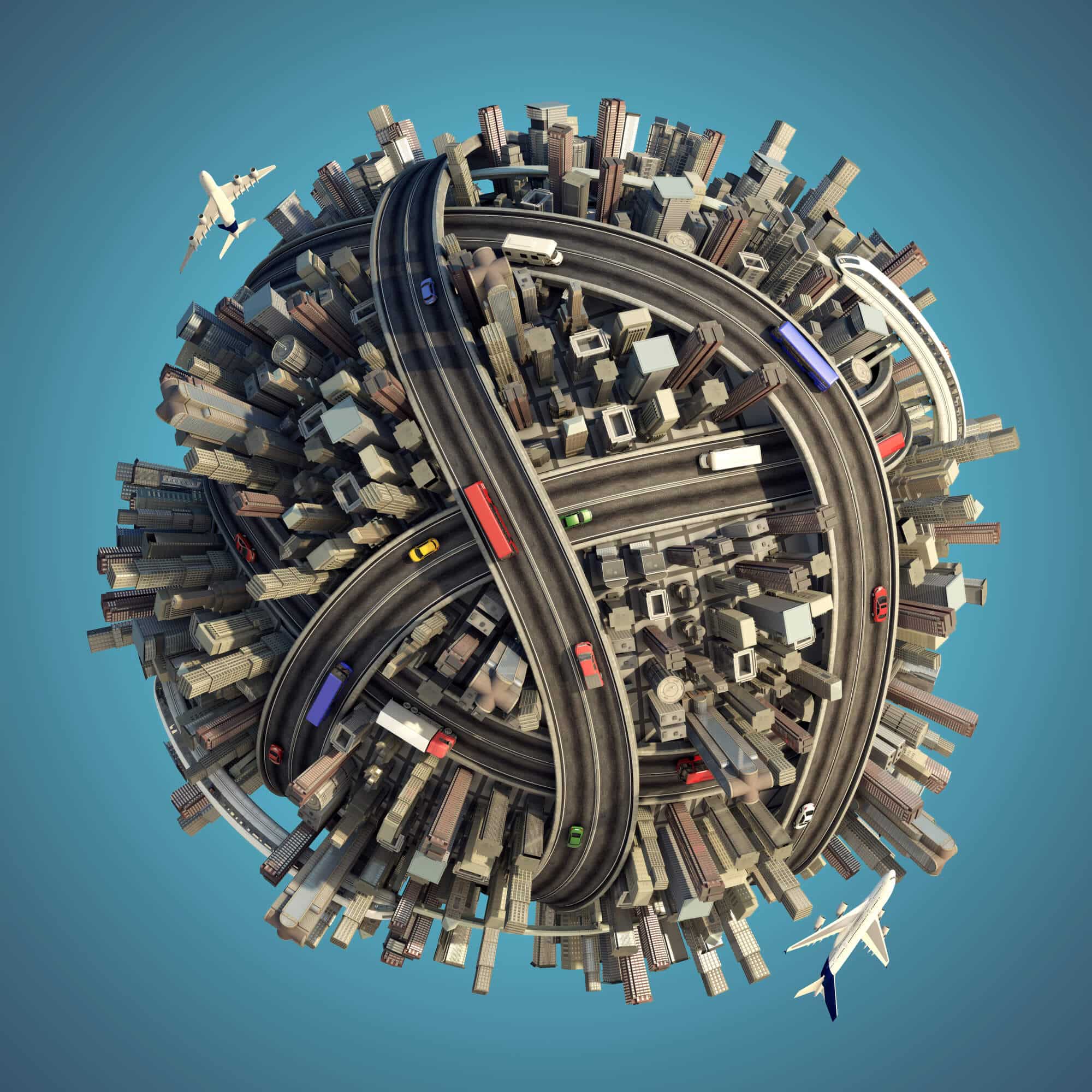
Urban and rural areas are opposites of each other; While one is dense and has a fast pace of life, the other is much more spacious and has a slow pace of life that sometimes even comes to a standstill. But not only the aesthetics and landscape of these places affect the differences between them, but also the people who live in them, the types of businesses on which the economy is based, the schools where the children are educated and the options for leisure activities available to everyone according to their field of affairs. As you understand, there is no lack of reasons for people to order a moving company and move from the village to the city, and here are some of them, but we will also ask the question - is it even worth it?
Why move to the city?
Better job market
Where there are more people, there is more work - it's a simple equation, and it's the main reason why people do Moving an apartment From the village to the city. But what prevents people from driving an hour or an hour and a half to work? After all, almost every town or village is within driving distance of one big city or another. Well, this is where traffic jams come into play, and as the population in any country grows, the level of traffic jams becomes more severe.
Better educational opportunities
In the city, you can get a better education that will open many doors in your career, and therefore many people move from the countryside to the city before they have even entered the job market, and it is likely that after they finish their studies they will not return to the countryside. Almost all the major universities and colleges are located in large cities around the world, and these institutions attract students and professors alike who are interested in studying and teaching under their roof.
lifestyle improvement
Big cities attract people from diverse ethnic groups, creating a complete melting pot of cultures, where people from rural areas can taste foods they wouldn't have in the village, see films they weren't exposed to in the village, and spend time in activities that weren't available to them in the village with people they would never have met in the village.
For some, these are places they never thought they would go, and after going through such a change in lifestyle it is very difficult to go back. Those who managed to keep an open mind will stay in the city and strive to embrace all the opportunities that have become available to them.
Is it really better to live in the city?
In the world of 2021, it is impossible to ignore the daunting future that always hangs over our heads, because global warming does not look like it is going to stop anytime soon, and it will greatly affect the lives of those who live in large cities. Researchers led by Ca' Foscari University of Venice A study published in 2021 in the journal Nature Communications revealed that by 2040, 64-100 million families in India, Brazil, Mexico, and Indonesia will be unable to meet the conditions required to cool their homes, meaning they will not be able to afford air conditioning and will find themselves in a state of discomfort, to say the least. This will be felt mainly in densely populated urban areas, places with hot and humid climates, and countries where the economy is not strong.
The researchers hypothesize that more and more homes will have air conditioners by 2040, with more than half adopting the technology: 85% of homes in Brazil, 61% in Indonesia, and 69% in India. This shift will lead to higher electricity consumption, tripling electricity bills in India and Indonesia and almost doubling electricity bills in Brazil per household.
Furthermore, the coronavirus pandemic has proven that crowded cities are not the safest places to stay during a pandemic, and during periods of lockdown it is very difficult to maintain sanity between four walls and concrete surrounded by a gray urban jungle.
And yet - there are those who are not really in their control
So it seems that in the near-distant future, it will be more beneficial for people to move to places that are less crowded and more open and natural, but unfortunately, this is not possible or suitable for everyone. Not every family will be able to finance an air conditioner, and even more so moving an apartment to another living environment. The transportation problems will probably still exist and even be more serious in the future, and not only that - it is even possible that your genetics will influence you to live in a city rather than a village.
A study published in October 2021 in the journal JAMA Psychiatry suggests that our genes may be the ones that decide where we live. The researchers used genetic information from 385,793 people aged 37-73 from the UK Biobank. They calculated each participant's cumulative genetic risk (polygenic risk score) for various mental illnesses, and examined the relationship between where the subjects had lived in the past and where they had moved to between 1931 and 2011.
Until then, researchers believed that it was the urban environment that put people with a genetic predisposition to mental illnesses at risk of developing symptoms related to them. This study, however, attempted to refute this claim, revealing the opposite phenomenon: Among people who moved from a rural to an urban area, there was a greater genetic predisposition to schizophrenia, bipolar disorder, anorexia, and even autism, compared to people who remained in a rural area.
This means that the genetic predisposition to mental illness was present from the beginning in people who chose to move to the city, while most people who chose to live in the countryside did not suffer from such a genetic predisposition. Of course, it is possible that the reason for moving to the city is related to the possibility of receiving appropriate medical treatment there, but the researchers discovered another and different finding - people who moved from the village to the city had less of a genetic tendency to suffer from ADHD. Therefore, they recommend conducting more studies on this topic, which will examine the other side of the spectrum and not only the high risk cases.
Questions and Answers
Why do people move from the countryside to the city?
According to the article, there are more jobs in the city, and the major universities and colleges are usually located in large cities. In addition, the city offers a variety of cultures, cuisines, and leisure activities that are not available in the countryside.
What is expected to happen to air conditioners by 2040?
According to a study published in Nature Communications, 64-100 million families in India, Brazil, Mexico and Indonesia will be unable to afford air conditioning, especially in dense urban areas with hot and humid climates. The researchers also predict that household electricity consumption will increase significantly.
Do genes influence the decision to live in the city?
A study published in JAMA Psychiatry found that people who moved from rural to urban areas had a higher genetic predisposition to schizophrenia, bipolar disorder, anorexia, and autism. The researchers conclude that such a genetic predisposition was present even before the move.
What is found about attention deficit hyperactivity disorder?
People who moved from rural to urban areas had less genetic predisposition to ADHD. The researchers recommend examining the other end of the spectrum as well, not just the high-risk cases.
The article is sponsored content courtesy of a company Shipping in the spring
More on this subject on Hayadan.com - Science news
- The root of the problem: Trees in cities will save us from the heat
- When even the air conditioner gives up: Heat waves could overwhelm Israel's electrical infrastructure
- Live with the heat, not against it
- Climate migrants and the big city
- Who is braver, the city bird or the country bird?
