
Shah said these things during a panel on robotics that will empower humans instead of replacing them at the AAAS annual conference that took place recently online. necessarily replace them
"If we want robots to integrate into our daily lives, they must be taught to work in an unrestricted human environment." This is what Prof. Julie Shah claims, a professor in the Department of Aeronautics and Astronautics, and who manages the Interactive Robotics Group as part of the Computer Science and Artificial Intelligence Laboratory. Shah made the remarks during a panel on robotics to empower rather than replace humans at the recent AAAS annual conference held online.
"I specialize in the development of smart machines that are able to understand humans to enable more effective collaboration and I have worked for many years in robotics in the field of manufacturing. It is interesting to note that today there are about 8 million industrial robots and about thirty million robots in homes in the United States today. This is a high number of robots, but we do not feel it, because, as in industrial environments, the robots still perform narrowly defined tasks and in fairly structured environments and are actually under constant human supervision. And so they are limited in the value they can provide."
"In addition, in many ways the challenge is how we make these systems adaptive enough, and intelligent enough to integrate into our daily lives and our work flow and be able to improve and increase our well-being. My research discusses the challenges that need to be addressed to make this possible."
"One challenge is the need for the system to see us as more than obstacles. They need to really understand us. As humans think they should be able to. It seems simple. We do it quickly and easily and it's challenging to figure out how to teach robots to do it. What are the right inputs , that a person can give and how do you design the machine so that it is able to leverage them?"
"But in this process, we can really learn from the past and see demonstrations of robots' abilities to help people anticipate what they are going to do, provide tools and materials or information support. It's more than just kind of sitting on the sidelines and waiting for us to tell them what to do. You can give them a kind of occupation As given to human crew members."
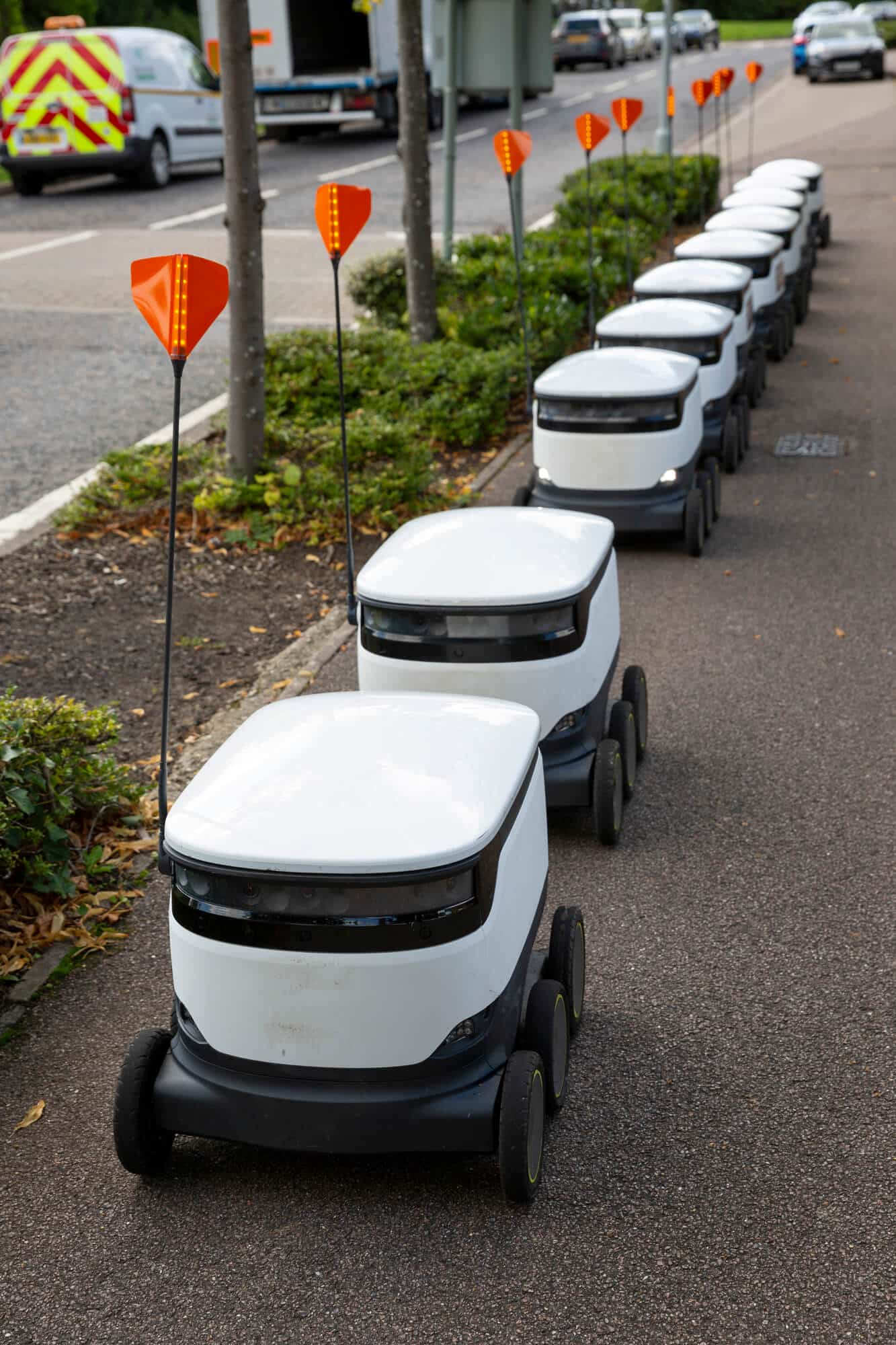
Later, Shah expanded on the need for such solutions, if one wants to increase the scale of the use of robots as messengers, because the current limitation will not allow many robotic messengers to be integrated on crowded sidewalks.
Robots integrate into medical teams
Michelle Johnson Professor of Physical Medicine and Rehabilitation at the University of Pennsylvania in the Department of Bioengineering in the Faculty of Mechanical Engineering: "I run the Rehabilitation Robotics Laboratory, which is part of the Grip Laboratory which is a large robotics center. My research deals with the question of how robots can empower. There is a myth that rehabilitation robotics and robots in general will replace Clinicians. And this is a common myth that I hear everywhere in the world, but there is no choice because there is There is a great shortage of caregivers and the population of adults and people with disabilities is growing."
"This gap cannot be closed easily. The use of technology, in particular robotic technology and information systems can help bridge this therapeutic gap. Our goal is not to use these systems to replace clinicians because the human touch is critical, but to use these systems to provide intelligent assistance to the physician or For the clinician, the robot can empower them and optimize their work by providing technical data and objective measures that allow them to understand the impact of their actions and adapt them to the patient.
"The second myth is that they are too expensive and not worth their cost. I disagree with this myth because I think the expense depends on where the robot is and in what context. I am currently on a Fulbright scholarship in Botswana, a middle-income plus country in South Africa, and I see the gap between these Those who can receive treatment and those who cannot. This is an ideal place to incorporate robots because the number of good and skilled doctors is too small to treat the population. We are talking about a cost ratio Benefit. We make sure that the robots help as much as possible in the automation of repetitive and tiring tasks, but require consistency in order to provide good data to the doctor in a way that makes it useful, and if the benefit is greater than the price, it is worthwhile."
"A third myth in this regard is that the robots are clumsy. A central part of the work that lives is trying to make these systems easy to use."
"We have examples of how these systems have been successful, from medical surgery robots that surgeons now use for laparoscopic care. I was talking about the robots we are developing with the idea of making them more inclusive and affordable, so that they can be used by a larger population of people with disabilities. This applies to Botswana as well as countries Like the United States thinking about ways to engineer them and design them. Innovation is clearly needed, but the main thing we need to do is understand that they can be a key tool in the treatment process And that they will strengthen the medical team and not replace it."
"The corona epidemic increased the development of such robots, although not yet necessarily in human environments. For example, robots have been developed that disinfect rooms with ultraviolet radiation before they are reused. We have seen them in hospitals, hotels, large stores and more."
More on this subject on Hayadan.com - Science news:
