
Researchers have found that the star cluster IRS13 near the supermassive black hole SagittariusA* at the center of our galaxy is much younger than predicted
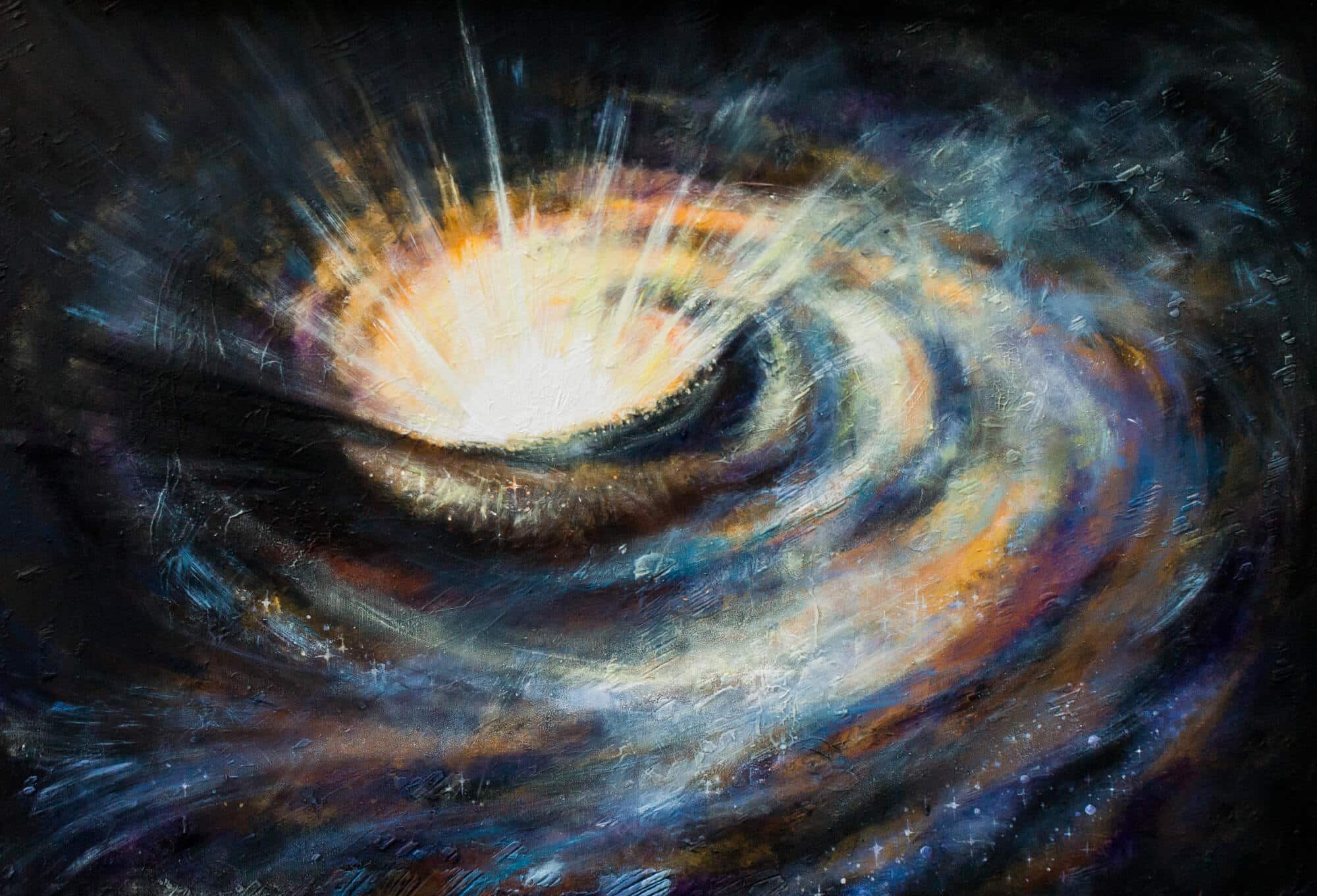
An international team led by Dr. Florian Feisker from the Institute of Astrophysics at the University of Cologne examined in detail a young star cluster near the supermassive black hole SagittariusA* (Sgr A*) at the center of our galaxy. Surprisingly, they found this cluster, IRS13, to be much younger than they expected.
The cluster was discovered more than twenty years ago, but only recently has it been possible to identify its specific members, by combining a diverse array of data from several telescopes collected over several decades.
The age of the stars in the cluster is only a few hundred thousand years, very young by stellar standards, especially compared to our Sun which is five billion years old. The interesting thing is that because of the high-energy radiation and tidal forces of the galaxy, the existence of so many young stars near the supermassive black hole should not be possible.
In connection with this research, another important discovery was made using the Webb Space Telescope. For the first time, Webb produced a spectrum of the center of the galaxy without atmospheric interference. This was made possible thanks to a prism developed at the Institute of Astrophysics, under the supervision of Professor Dr. Andreas Eckart, who is a co-author of this paper. The resulting spectrum revealed the presence of water ice in the center of the galaxy. This water ice, which is commonly found around young stellar objects, is further evidence which supports the young age of some of the stars near the black hole.
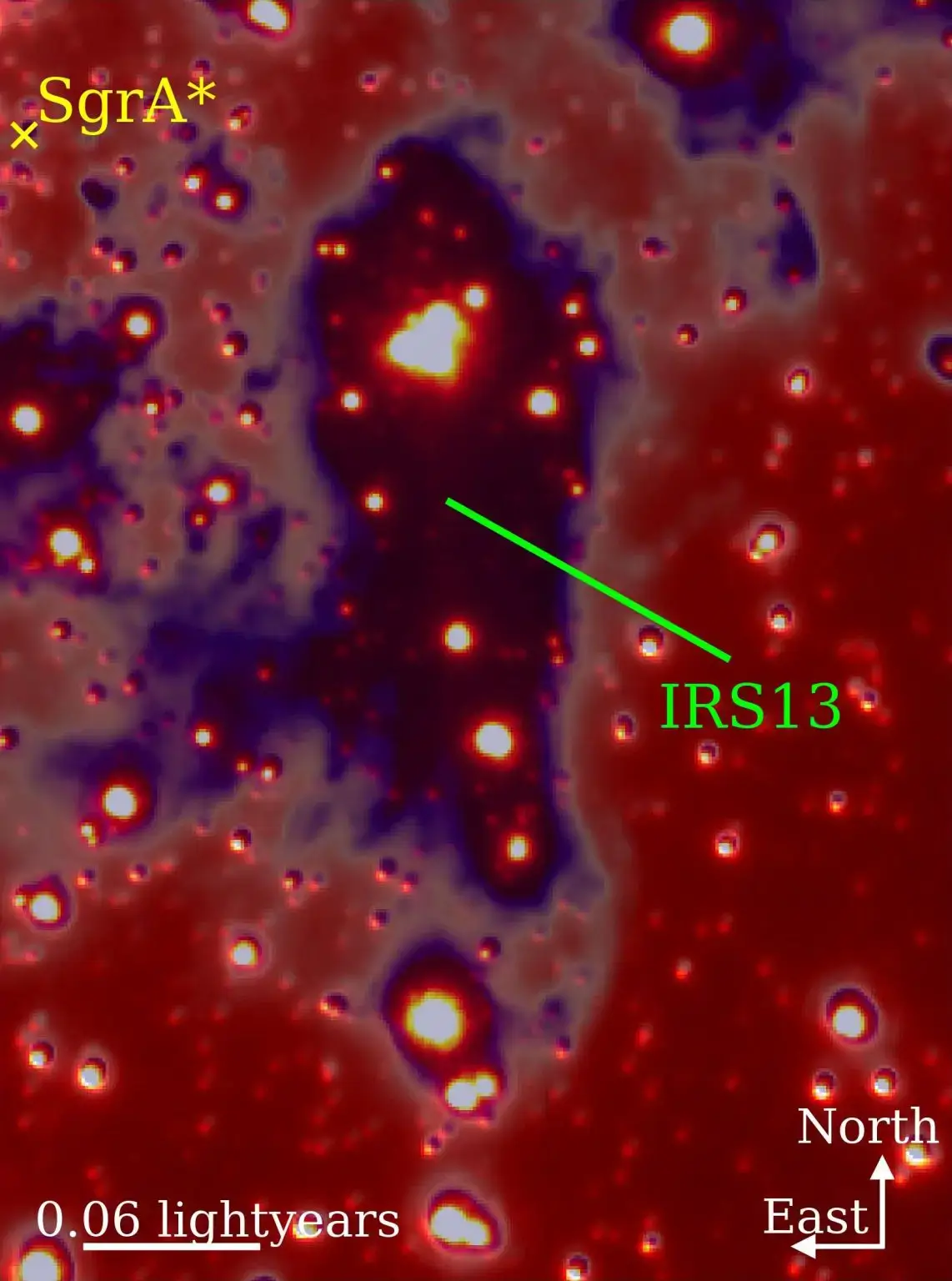
Additional insights from Dr. Fisker's team indicate that IRS13 has undergone a complex formation history. It appears that IRS13 migrated towards the supermassive black hole, being affected by factors such as friction with the interstellar medium, collisions with other star clusters or its internal dynamics. In fact, the black hole's gravity "captured" the cluster. This gravitational interaction probably caused a wave to form An arc shock at the front of the cluster, similar to the tip of a ship cutting through the waves, may have triggered additional star formation, which could explain why the cluster's youngest stars are mostly at its top or front.
"The analysis of IRS13 and the accompanying interpretation of the cluster is the first attempt to solve a decade-old mystery about the unexpectedly young stars at the center of the galaxy," said Dr. Fisker. "In addition to IRS13, there is a star cluster known as the S cluster, which is even closer to the black hole and also It consists of young stars. They are also much younger than is possible according to the accepted theories."
The findings about IRS13 are an opportunity for further research to establish a connection between the immediate surroundings of the black hole and regions a few light years away.
More on this subject on Hayadan.com - Science news:

One response
It sucks that you describe something very cool but use a lot of terms that only those who have knowledge in the field understand..