Spectral analysis of 12 white dwarfs has revealed the remains of disintegrated planetary bodies in their atmospheres. Most of them resemble rocks and meteorites in the solar system, and in two systems, possible signs of material originating from rich bodies were found.
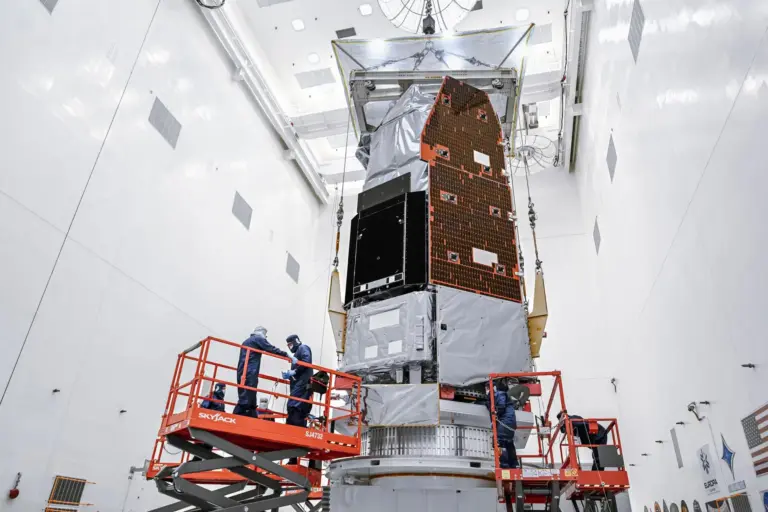
NASA's new space observatory will launch aboard Falcon Heavy nine months ahead of schedule; its wide field of view is designed to enable rapid surveys of billions of galaxies and thousands of planets, helping to study
The star completes an orbit around Sagittarius A* in 8.7 years and comes ten times closer to it than the star S2. Its orbit may allow us to measure the rotation of the black hole and test general relativity under extreme conditions.
A new tool called J-lens allows researchers to identify internal representations that Klod uses for reasoning and modify them in an experiment. The similarity to the “global workspace” theory raises questions about consciousness in AI, but the researchers emphasize that there is no
Researchers at the Hebrew University of Jerusalem have linked fatty acids to hydroxy acids, resulting in membrane-like structures that assemble easily and survive longer in water. The findings suggest a possible mechanism for the transition from dormant chemistry to pre-living systems.